
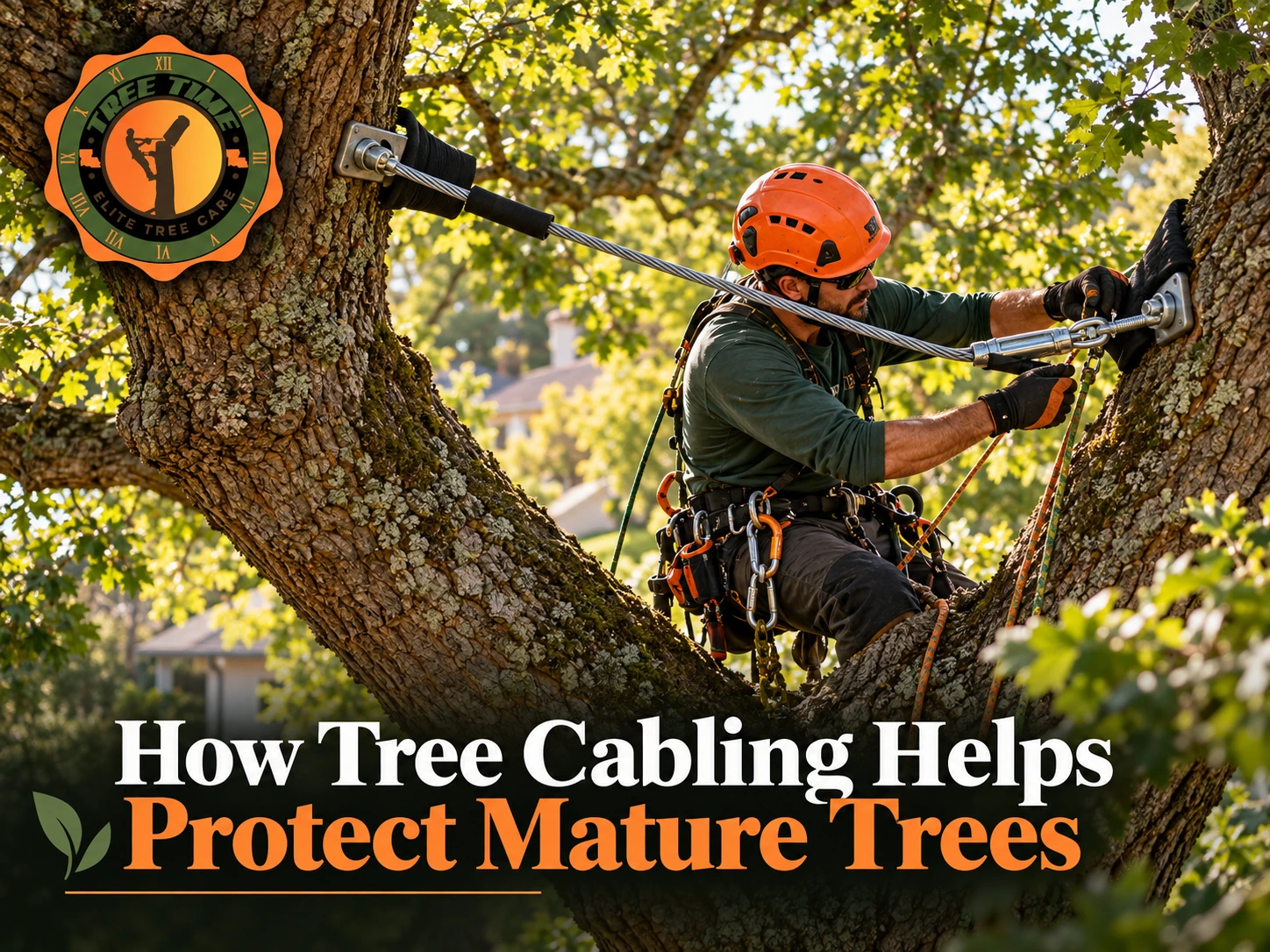
Big old trees hide their problems well. A weak spot may remain there for many years without showing on the crown. Tree cabling for mature trees in Bossier City, LA works on a simple concept. A pro installs cables between specific limbs or stems and provides additional support for the tree. That support cuts down excessive movement or strain at a vulnerable connection. How well it performs relies on the tree and the installation. As the trees grow, they keep adding weight to the frame they built when they were young. Cabling cures nothing. It makes a good tree last longer.
How Tree Cabling Supports the Long-Term Preservation of Mature Trees
Preservation is the end goal. If a mature tree has one weak spot that can be handled, such as a co-dominant stem that divides the trunk in two. There, a cable can provide support. The shade of the tree remains, as does its crown. A pro keeps an eye on that one connection.
Set aside the issue of age for a moment. There’s no need to fear old age. It doesn’t sound like sound either. Tree cabling is only effective in a healthy tree with good wood on either side of the weak point. Cabling may not be worthwhile if the tree is already declining. The first step to mature tree protection is a critical examination of the big picture.
Don’t cable a tree with severe decay. This system can offer some support but cannot fix the underlying structural issue. Not all trees are equal when it comes to tree support. Good long-term tree care involves first asking the question, “Is support necessary?” There is, at times, a yes. It doesn’t always take the form of this.
How Cabling Helps Manage Stress on Vulnerable Tree Structures
Picture a guy wire on a tall pole. The pole still does the real work. The wire just takes some strain when things get rough. A cable high in the crown plays a similar role when a heavy limb pulls hard on a weak connection. It does not fix wood. Nobody should expect that. It shares the load, and that is the whole idea behind tree branch cabling and most tree structural support work.
Supporting Vulnerable Branch Connections
Watch the connection, because that is where issues start. A branch union handles only so much strain before it begins to separate. A cable between selected limbs or stems limits how far they can pull apart. It works as backup. It never replaces the wood doing the real work.
Plan every tree on its own terms. Cable placement matters a lot. So do the attachment points, the branch shape, and the condition of the wood that will hold the hardware. A cable in the wrong spot does little. A cable in weak wood does less. Cookie-cutter installs are a red flag.
Allowing Movement Without Promising Complete Protection
Let the tree move. Wind bends the crown and flexes the limbs, and that is normal. A good system does not lock the tree stiff. It gives supplemental support and limits excessive movement at one weak point. The rest of the tree keeps doing what trees do.
Respect wind load and regional weather risks. Strong gusty storm fronts and heavy winter ice accumulation in Northwest Louisiana put immense weight and stress on a heavy crown. Cabling may ease strain on a vulnerable connection, but it cannot make a tree stormproof or iceproof. Other limbs can still fail. The trunk and roots still take the hit. Anyone who guarantees total security is overselling.
Why Preserving an Established Tree Can Benefit a Property
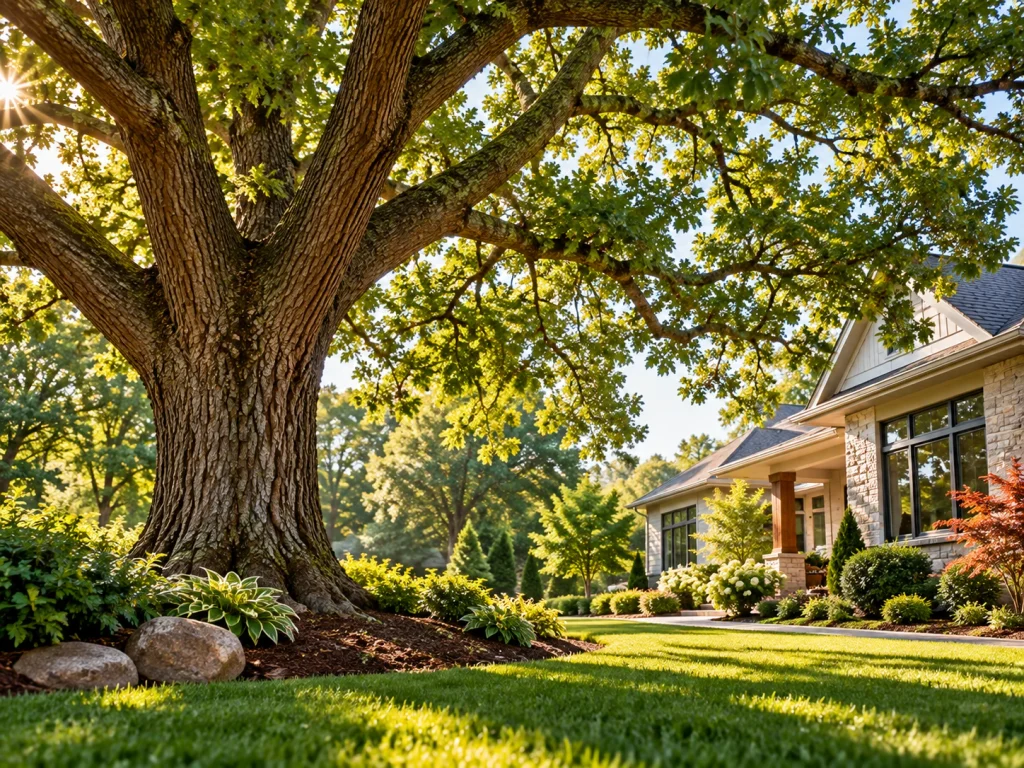
Keep track of the years it took that shade to grow. A mature canopy cools the yard and covers the patio. It gives the place a settled look. A replacement tree needs many years to catch up. Until then, the yard has less cover than before. Anyone who has parked under a big canopy on a hot afternoon knows what that is worth.
Notice how a big tree shapes everything around it. Beds, lawns, and walkways often follow its shadow. Pull it out, and the whole layout feels different. Some owners shrug at that. Others would rather fight to save what they have. That can be a reasonable choice if the tree is healthy enough to support itself.
Keep it grounded, though. Not every mature tree deserves saving. Nobody can promise that saving one raises property value. Ask whether this tree is healthy enough and whether the risk stays low enough to justify support. Sentiment alone should not make that call.
What Determines Whether Mature Tree Cabling Is Suitable?
Request an arborist to study the entire tree. The branch that looks weak is only part of the story. Here is what goes into the call:
- Overall health and vigor. Thin, struggling growth leaves a tree with less to work with. No cable changes that.
- Location and extent of the defect. Where it sits and how bad it is decide whether a cable can reach the right spot and carry the real load.
- Wood condition. Cable attachment points need sound wood.
- How the limbs or stems relate. Size, angle, and spacing shape what support is even possible.
- Fit of the fix. Support has to match the problem. If it cannot, another approach or removal may come into play.
Identifying the signs a tree may need cabling or bracing is only the first step. Deciding how to deal with those problems is another step entirely. Cabling cannot make up for every decayed section, root problem, or widespread structural failure. Sometimes another approach works better. In some cases, removing the tree is the safest option.
Why Professional Installation and Follow-Up Matter
Drop the idea that cabling means tying two branches together. A pro starts with a close look at the structure. Which parts of the tree bear the most weight? Where does it flex? Those answers shape a plan. Only then does anyone pick up hardware.
Match the cable hardware and attachment points to that tree. Think about growth too. The tree keeps getting bigger, so a system that fits today may need attention later. Good tree cable installation accounts for expected growth and movement. It follows the tree’s needs, not a standard pattern.
Plan on follow-up. Trees change. Wood ages. Hardware can wear or shift. A professional should look at the support system again and at the tree’s overall condition too. That ongoing tree inspection keeps a good decision good. Skip it, and a sound plan can quietly turn into a problem.
What Tree Cabling Can and Cannot Guarantee
Cabling helps. The help has limits. Treat it as one part of a care plan. Here is the honest split.
What it may do
- Provide supplemental support at selected connections
- Help manage movement or strain at a vulnerable point
- Help a suitable tree stay in the landscape while a professional monitors it
What it cannot do
- Repair decayed wood
- Correct every structural defect
- Stop every branch from failing
- Promise that a tree will stay standing through severe Northwest Louisiana weather, including tornadoes, severe straight-line winds, or heavy ice accumulation
Remember that a cabled tree is still a tree. Trees can still fail. That is why the right answer changes from yard to yard. One tree may need cabling. Another may need different care or simple monitoring. Some need removal, and that is the safest call when support will not hold. An honest arborist will tell you which one you have.
Frequently Asked Questions
Is it possible to maintain an older tree with tree cabling?
Sometimes. It doesn’t depend on age. When overall the tree is healthy and the wood on which the cabling is installed is sound, then cabling can be used to help support a selected structural weakness. Before deciding if support is appropriate, an arborist needs to make an overall assessment of the trees.
Will tree cabling save branches from breaking in storms in Bossier City?
Not completely. Cabling minimizes movement and stress at specific connections during extreme weather conditions and can’t stop all failures. Does not provide a complete protection guarantee for the extreme elements in Northwest Louisiana (severe straight-line winds, severe thunderstorm clusters, winter freezing rains, etc.). The main trunk and root systems, along with uncabled limbs, may be damaged.
Do mature trees need inspections after cabling?
Yes, follow-up matters. The tree grows. Its condition changes. The support system gets old. A professional will determine if the cables and hardware still fit the tree. This will vary from tree to tree and will require individual advice from your arborist.
Protecting Valuable Mature Trees Through Informed Care
Treat cabling as supplemental support for selected weak points. It may help preserve a suitable mature tree. It guarantees no complete protection.
Tree Time Elite Tree Care helps Bossier City homeowners make that call. Kevin Lee is a Louisiana-licensed arborist with 30 years of professional tree service experience. The company delivers tree cabling and bracing across Bossier City and Northwest Louisiana. For any mature tree, a proficient assessment is the right place to start. Call Tree Time Elite Tree Care at (318) 470-5867 to talk through an evaluation or request a free estimate.