
Planting a tree might seem like a no-brainer weekend task: dig a hole, put the tree in, fill in the hole, and water it. In fact, some decisions made prior to and during planting can have an impact on the tree’s ability to establish over the years.
For Louisiana homeowners, the choice between professional tree planting and doing the work yourself often depends on more than labor costs. The difficulty of the project can vary depending on size, location, conditions, root health, and equipment needed. This guide discusses the two options, compares them, and helps you determine which is right for you.
The Biggest Difference Is Not Just Who Digs the Hole
A successful planting starts before the shovel goes into the ground. The tree must be compatible with the space, soil, sun, and future requirements.
Louisiana State University AgCenter suggests planning for the mature size of a tree when selecting the site for planting and also inspecting the site for potential conflicts with structures, paved surfaces, and overhead utilities. The LSU suggests that large trees should be planted at least 15 feet away from a house or paved surfaces.
One aspect where professional installation can be beneficial is during the planning phase, especially if the homeowner is not sure about tree selection or the planting location.
What DIY Tree Planting Can Work Well For
DIY planting can be a practical option when the project is straightforward. With a healthy, manageable tree and an accessible planting site, special equipment and a large crew may not be necessary.
Homeowners may be comfortable handling the project when:
- The tree is small enough to move safely.
- The planting area is clear and easy to access.
- There are no concerns about overhead or underground utilities.
- The soil and drainage conditions are already understood.
- The homeowner has time for proper planting and first-year care.
Another benefit of DIY is that it allows homeowners to have more control over the process. But if the tree is planted incorrectly from the outset, the low upfront cost will not result in long-term value.
The Most Common DIY Mistakes
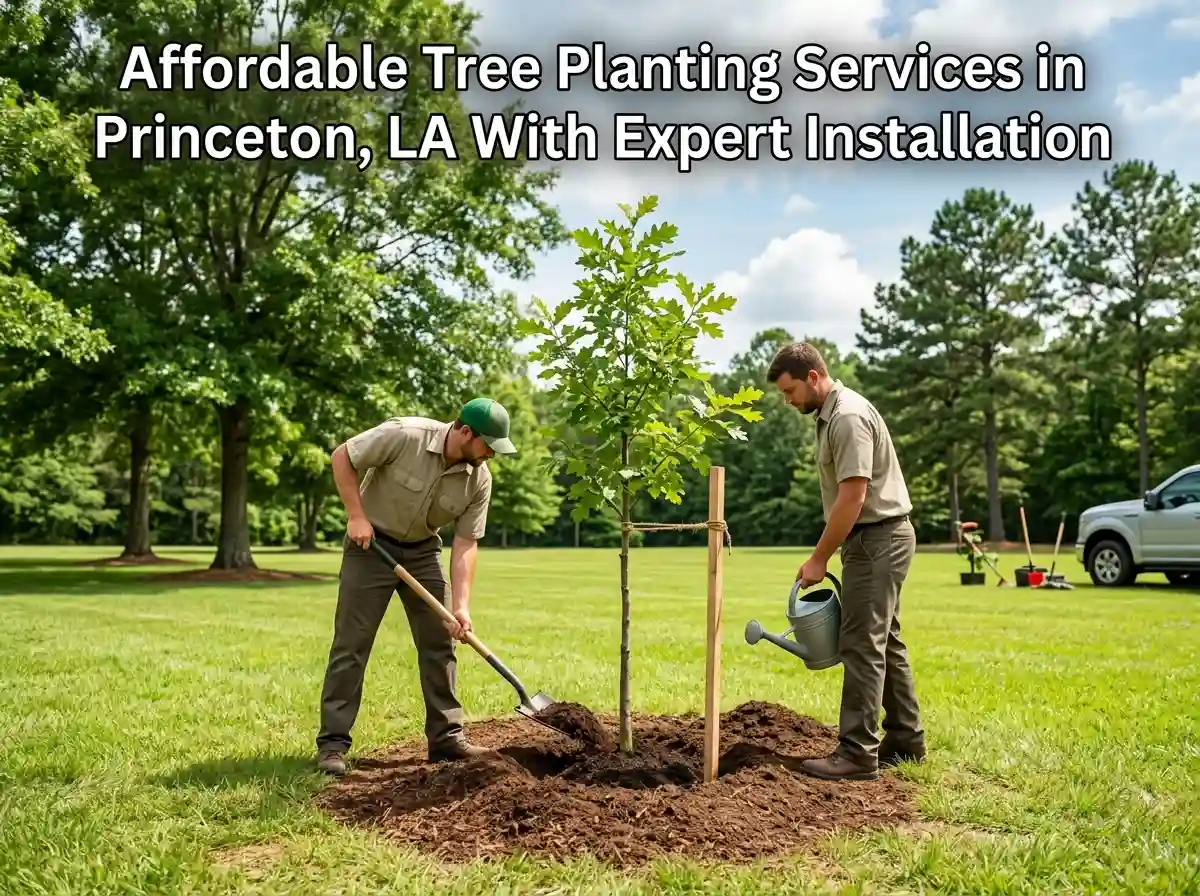
One of the most serious planting errors is to plant too deep. LSU AgCenter recommends the hole be at least twice the diameter of the root ball and be no deeper than the root ball. The root ball’s top should remain even with or just above the nearby soil. Common errors are failing to treat circling roots, planting too deep, over-fertilizing the planting hole, and planting a tree where it will outgrow.
These errors may not always cause immediate decline. Oftentimes, root issues or improper tree site selection may not become apparent for several months after a tree is planted.
Where Professional Tree Planting Adds Value
Professional tree planting is more beneficial when the job needs a plan, equipment, or experience that can’t be achieved with just hand tools. A site assessment will help to discover practical concerns prior to planting, such as mature tree size, access, drainage, soil conditions, existing structures, and utility conflicts. This can help minimize the chances of selecting a site that causes issues later on.
Tree Selection and Placement
No single tree is ideal in every landscape in Louisiana. Species that can grow on one site may not be able to grow on another site. LSU AgCenter emphasizes matching trees to local growing conditions and considering factors such as long, hot summers, mild winters, available space, and the tree’s intended purpose.
A professional can also assess if the chosen tree is suitable for the site location, as well as selecting based on its appearance at the nursery.
Root Protection and Correct Planting Depth
Root systems should be carefully examined prior to planting. Excess potting soil can cover the root flare, and container-grown trees can form circling roots. LSU advises examining the root system and pruning out circling roots, if applicable. The root flare should also not be planted too deep in the soil.
For a homeowner with just one small tree to plant, this might be feasible if done with care. Larger root balls can be more challenging to inspect, lift, and place the right way.
Equipment and Physical Demands
A small container tree is very different than a large balled and burlapped tree. The greater the tree size, the heavier the root ball will be, and the more controlled handling is required. Moving a tree incorrectly can damage the trunk or root system. LSU recommends lifting larger trees by supporting the root ball rather than pulling or lifting them by the trunk.
This is one situation where hiring a professional can make sense even if the actual planting process seems straightforward.
Professional vs. DIY: A Practical Comparison
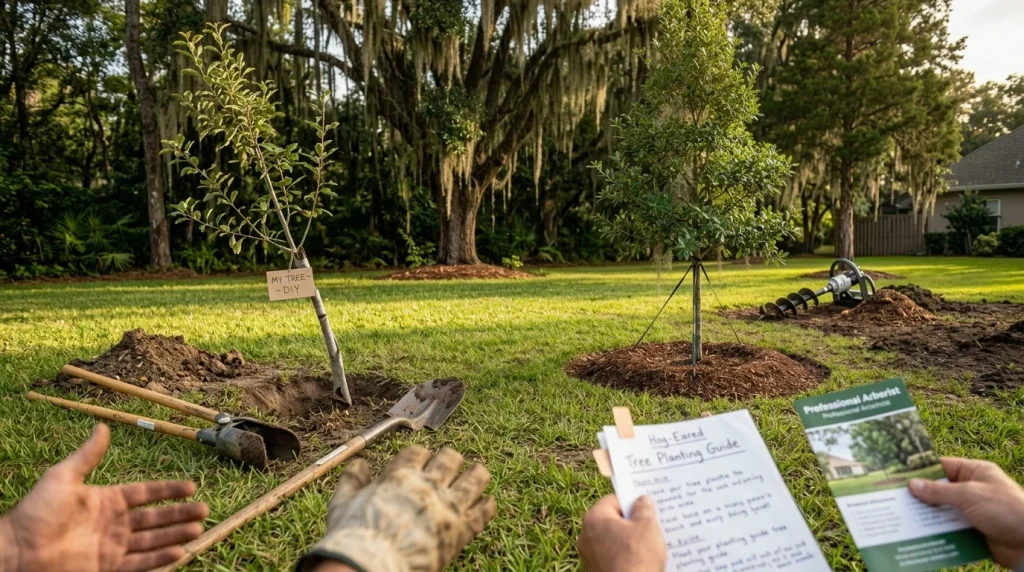
| Factor | DIY Tree Planting | Professional Installation |
| Upfront cost | Usually lower | Includes labor and service costs |
| Tree selection | The homeowner researches options | Site and tree selection expertise may be available |
| Equipment | Limited to available tools | Better suited for larger or difficult installations |
| Time required | The homeowner handles planning and labor | Can reduce personal time and physical work |
| Root preparation | Requires homeowner knowledge | Experienced handling can reduce common errors |
| Best for | Small, straightforward projects | Large trees or more complex sites |
Neither option is automatically better. The right choice depends on the actual project.
Louisiana Conditions Can Change the Decision
Proper timing and establishment are critical in Louisiana. LSU AgCenter recognizes the window of November through March to be a favorable time for planting many hardy landscape trees since the roots can still grow while above-ground growth is reduced. The trees planted at this time can get established before the summer heat.
In some areas, container-grown trees might be able to be planted earlier or later, but the proper handling and post-harvest management are still important. The LSU guidelines for container-grown trees state that they should be planted in the fall between October and May, depending on the type of tree and local conditions.
For homeowners in Northwest Louisiana, planting during a favorable season can make the process easier, but it does not correct mistakes involving depth, root preparation, or poor site selection.
The Cost Question: Where Does DIY Actually Save Money?
Sure, DIY means you skip paying for a pro, but you still pay for the tree, mulch, tools, maybe even some gear if you’re dealing with a heavy tree. And don’t forget about hauling everything home.
The real money question is whether you can tackle the project without running into trouble. If a tree fails because it wasn’t planted right, you end up spending even more—especially if you bought something big and expensive.
A smaller tree that is planted correctly may also provide better long-term value than paying for a large tree that is difficult to establish. LSU guidance notes that proper planting and establishment practices are important because poor performance is often linked to mistakes in planting and follow-up care.
When It Is Worth Hiring a Professional
Professional services may be the better option when the project involves:
- A large or heavy tree
- Difficult access to the planting site
- Uncertain drainage or soil conditions
- Questions about mature size and placement
- Root-bound or complicated nursery stock
- Multiple trees require coordinated installation
- Nearby structures, paved areas, or utility concerns
For a simple project, DIY may be entirely reasonable. For a more complicated installation, professional expertise can reduce preventable mistakes before the tree becomes established. Tree Time Elite Tree Care can assist homeowners who need professional installation and site-specific guidance for tree planting projects in Northwest Louisiana.
First-Year Care Still Matters After Professional Installation
Even when a professional plants your tree, your job isn’t over. That first year matters: watering, mulching, and keeping an eye on things help your tree settle in.
LSU AgCenter recommends applying approximately 1 to 2 gallons of water per inch of trunk diameter during watering and continuing regular irrigation until the tree becomes established. Louisiana trees may require roughly three months per inch of trunk diameter for establishment, although species, climate, and watering practices can affect that timeline.
Mulch helps, too—it keeps grass from stealing nutrients and holds moisture in. LSU recommends spreading mulch about 2 to 4 inches deep, but don’t let it touch the trunk. Getting the tree in the ground is just the beginning. Sticking with the care afterward makes all the difference for long-term health.
Frequently Asked Questions
Is professional tree planting worth the cost?
When you’re working with a large tree, a tricky spot, or you’re unsure where or how to plant, the extra cost is worth it. Smaller, straightforward projects may be suitable for DIY work. The decision should depend on the complexity of the installation rather than assuming every tree requires professional services.
Can I plant a tree myself in Louisiana?
Yes, many homeowners can successfully plant a small tree. The important steps include selecting a suitable species, choosing enough space for its mature size, planting at the correct depth, inspecting the roots, and providing consistent aftercare. LSU recommends avoiding excessively deep planting and using the native soil for backfill.
What is the best time to plant trees in Louisiana?
LSU AgCenter says the cool stretch from November through March is best for most hardy trees. Fall and winter planting gives roots time to settle before Louisiana’s tough summer heat hits. Exact timing depends on tree type and whether yours is from a pot or bare-rooted.
How soon will a newly planted tree become established?
LSU AgCenter provides a general estimate of about three months per inch of trunk diameter under Louisiana conditions, although the actual timeline can vary. Tree species, weather, watering, root condition, and planting quality all affect establishment. Larger trees generally require a longer period of consistent monitoring and care.
Final Thoughts: Choose the Approach That Fits the Project
DIY planting can work well for a small tree and a straightforward site, especially when the homeowner understands correct planting depth, root care, and first-year maintenance. The savings can be worthwhile when the project stays within those limits.
Larger trees and more complicated properties can benefit from professional planning and equipment. Tree Time Elite Tree Care can provide support when the project requires a more experienced approach, helping Northwest Louisiana homeowners focus on proper placement and a healthier start for their trees.