
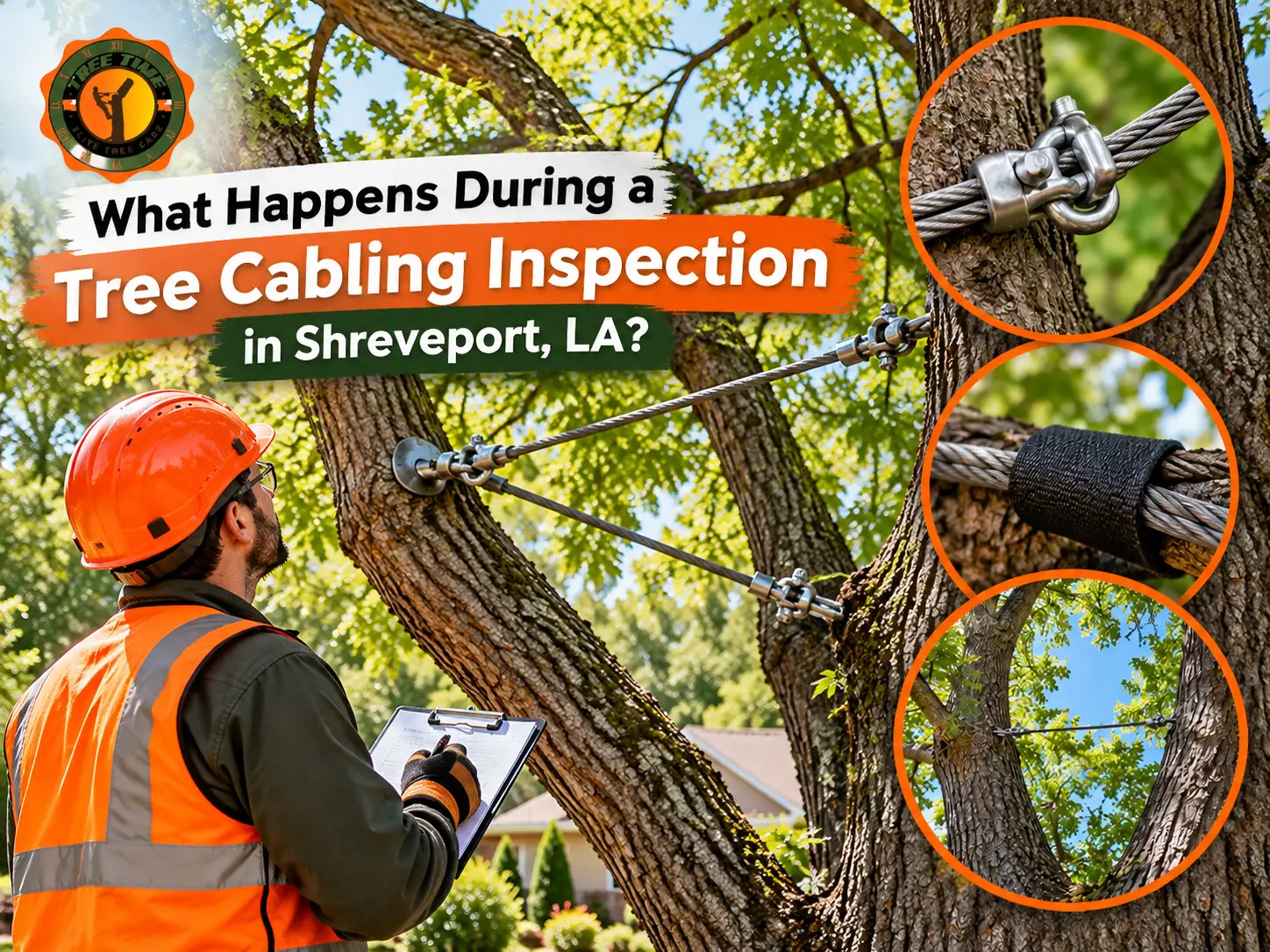
A steel cable has hung between two oak stems for years. Nobody has looked at it since. Or a fork in the trunk started to bother you. Either way, a tree cabling inspection in Shreveport, LA has one job. An arborist checks the tree’s build and how its hardware is holding up.
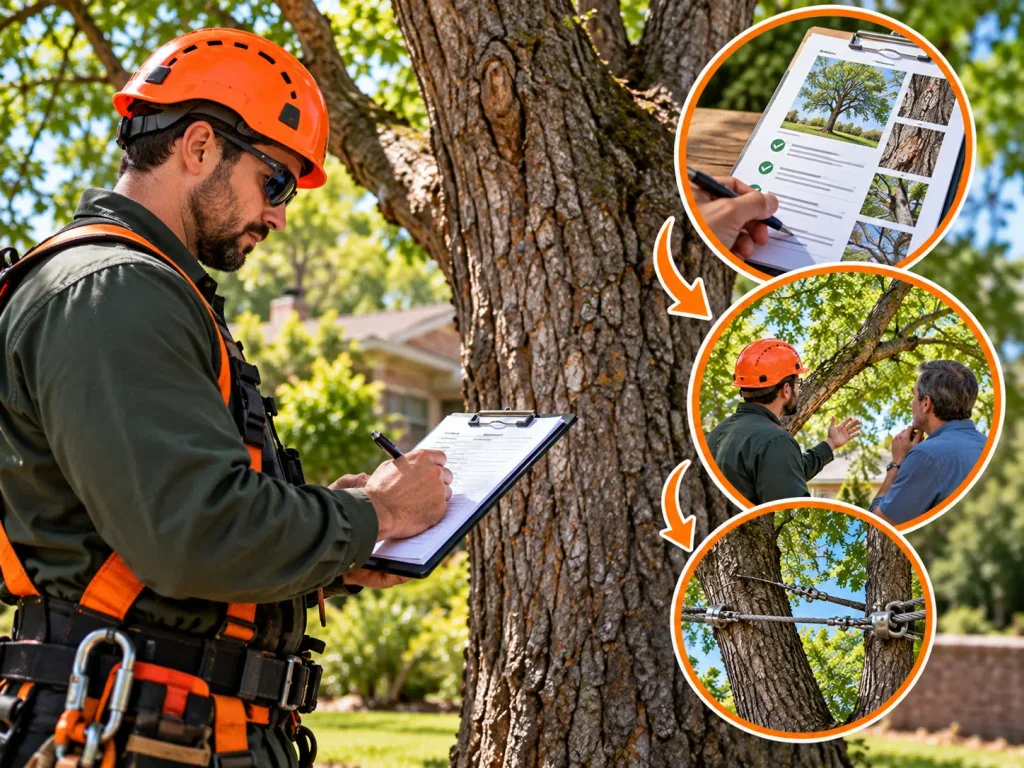
The visit usually starts on the ground with a look at the whole tree. Then the focus narrows to the unions and cracks that matter most. A cable already in place gets its own check. How deep it goes depends on the tree and what turns up.
What Does a Tree Inspection in Shreveport, LA Cover?
A tree inspection in Shreveport, LA looks at the whole tree, not just the cable. Hardware is only as strong as the wood it grips. So the arborist reads health and structure together. It starts up top. Thin leaves in the crown get noticed. Dead wood up there does too.
Next come the branch unions. The arborist looks for included bark or co-dominant stems at those joints. Cracks and splits in the trunk get a careful look. So do other defects you can see. Cable attachment points get checked if they can be seen or reached.
Movement matters too. A tree that has started to lean or shift needs a closer look. Then the arborist checks what sits below. That might be your house or the driveway. It might be a part of the yard you use every day. That changes the stakes.
None of these findings stands alone. A tight fork in a strong, full tree is one thing. Put that same fork in a tree that is thinning out, and the picture changes. The arborist weighs it all together before drawing a conclusion about the tree.
How Does a Tree Cabling Assessment in Shreveport, LA, Progress?
A tree cabling assessment in Shreveport, LA usually moves from wide to narrow. The arborist gets the big picture first. Then they zero in on the trouble spots. Each tree may need a slightly different approach. Size plays a part. Access does too. So does the reason for the visit.
The Arborist Starts With a Ground-Level Review
The arborist usually begins by walking around the tree and looking at it from different angles. Then the arborist reads the shape of the crown and checks if weight sits on one side. They find the branch unions or stems that led to your call. Fresh wounds get noted. So do hanging limbs and bark that has split away.
Then the arborist looks down and around. A limb over a bedroom roof carries different stakes than one over an empty corner of the yard. A second lap from another angle helps. Binoculars help too. A crack can hide on the far side of a stem.
Branch Unions and Structural Defects Receive Closer Attention
Branch unions get the most scrutiny. The arborist checks how the stems join. They also look for bark pinched inside the union. The term for bark trapped between the stems is included bark. It keeps the wood from forming a solid bond across the joint. These stems also need a thorough inspection.
Co-dominant stems are two stems of about equal size growing from one point. Cracks get traced next. The arborist wants to know where each one starts and which way it runs. A tap with a rubber mallet can point to hollow wood within reach of the ground.
The defects that tend to prompt a homeowner’s first call are the same ones that shape what happens during a tree cabling inspection. The arborist starts with them and works outward. Still, one defect rarely tells the whole story. The rest of the tree matters too.
Existing Cables and Attachment Points Are Checked
A tree that already carries a cable gets a second round of checks. The arborist runs an eye along the line. Fraying is one warning sign. Rust is another. Kinks matter too. A slack cable gets noted. So does one pulled tighter than it should be.
At the attachment points, the worry is hardware that has shifted. Wood swelling around the hardware is another concern. Trees keep growing after a system goes in. New wood can slowly swallow an anchor. The original placement may also stop matching where the load sits now.
The arborist checks the supported stems for new cracks and extra movement. All of it feeds one decision. Should the system be left alone? Does it need maintenance? Or does the tree need a closer look from above? What the arborist finds guides the next steps.
Additional Inspection Methods Depend on the Findings
Plenty can be judged from the ground. Some things can’t. Hardware high in the canopy is hard to read through binoculars. Decay inside a stem does not always show on the bark. In those cases, the arborist needs a better view of what is going on.
Climbing is one way to get closer. A lift is another. A drone camera can bring upper unions and hardware into view. If internal decay is suspected, the arborist may suggest specialized testing. It helps estimate how much sound wood is left. None of this is routine. It comes in when real questions stay open.
What Happens After the Arborist Completes the Inspection?
This is where observations turn into conclusions. The arborist considers the tree’s condition and what they observed. They also consider what is underneath it. Then they explain, in simple language, where the tree stands. Typically, the next step falls into one of the following categories.
Sometimes, no change is necessary here and now. The arborist might recommend monitoring at that time. At other times, the existing cables require work. Support hardware maintenance/repair may be appropriate. It may be necessary to remove weight from a stressed limb by pruning. Other tree care measures can also be beneficial.
The findings are not always clear-cut. When they leave doubt, further evaluation is the sensible next step. In the case of severe structural issues, a different discussion will follow. The arborist will be able to guide you through other risk management strategies. These choices will depend on the tree and site.
A good arborist walks you through the reasoning, not just the verdict. Ask them what they saw and why it is important to you. If they offer a date for the next examination, record the date. Things that are not visible from the porch are easy to forget.
What Can Affect the Inspection and Its Recommendations?
No two inspections look exactly alike. The tree pushes the scope one way or the other. So does the site around it. Existing hardware adds its own set of checks. These are the factors that most often shape the visit and the advice you get.
| Inspection factor | Why it may matter |
| Tree size and crown access | A big or hard-to-reach canopy may need more evaluation. |
| Visible structural concerns | Cracks and weak unions may need a closer look. So may shifting branches. |
| Existing support hardware | The arborist may check cables and attachment points within reach. |
| Recent storm damage | New damage can widen the assessment or make it more urgent. |
| Surrounding property | Nearby buildings and busy spots shape how a possible failure is weighed. |
A small tree with one clear concern may need little more than a careful look. A big, mature oak is a different case. Add old hardware and a crack near a union, and the job grows. The time and methods follow the tree and what the arborist finds.
Frequently Asked Questions
How Often Should a Tree Cabling System Be Inspected?
No single schedule fits every tree. Timing depends on the tree’s condition and the type of support system. Growth rate plays a role. So does whatever sits underneath. A check after a major storm makes sense. The arborist who installs or inspects the system should recommend an interval for that tree.
Does a Tree Cabling Inspection Require Climbing?
Not always. Many inspections start from the ground with binoculars. Hardware high in the crown may call for climbing or a lift. A drone camera is another option. A concern that is hard to see from below may need the same tools. The method depends on what the arborist needs to see.
Can an Inspection Guarantee That a Cabled Tree Will Not Fail?
No. An inspection cannot remove every risk. It cannot promise that a tree or branch will never fail. Cables give extra support. They do not fix a weak tree. Severe weather can still break sound wood. What an inspection gives you is better information for your next decision.
How Can Tree Time Elite Tree Care Help With a Tree Cabling Inspection in Shreveport?
A cabling inspection checks the tree’s structure. If the tree already has a support system, that gets checked too. What turns up decides the next move. Monitoring might make the most sense. Maintenance might fit better. Sometimes further evaluation or another option is the right path.
Tree Time Elite Tree Care serves homeowners in Shreveport and across Northwest Louisiana. Kevin Lee leads the company as a Louisiana-licensed arborist with 30 years of professional tree-care experience. The team offers tree cabling and bracing. They also run drone inspections for trees that are hard to see from the ground.
Got a tree with old cables? Or a union that keeps nagging at you? Call Tree Time Elite Tree Care at (318) 470-5867. You can talk it over with someone who knows Shreveport trees. From there, you can set up an assessment that fits your tree.