
Sometimes a new tree looks healthy when first planted, but suffers a few weeks later. It takes time for its roots to get used to a new soil, moisture, temperature, and other surrounding properties.
Proper newly planted tree care is especially important in Louisiana, where long growing seasons, summer heat, dry spells, and severe weather can all affect tree establishment. This guide is for the benefit of young trees and will provide some helpful hints on the steps that can be taken to build a better root system and encourage a healthy young tree during its first year.
Why Newly Planted Trees Need Extra Attention in Louisiana
While Northwest Louisiana receives ample rainfall, this is not enough to give a newly planted tree a rain diet. Average annual precipitation is 51.3 inches in the Shreveport-Bossier area, with August averaging less than 3 inches, according to the National Weather Service. The growing season is also short, at an average of 230 to 240 days a year.
The issue is that a newly planted tree hasn’t yet developed a root system that grows through the soil. Its roots are still primarily clustered around the original root ball, so it’s possible for the rest of the yard to be plenty hydrated while the root ball is still dry.
Water Based on Soil Conditions, Not Just the Calendar
The amount of watering is one of the most critical aspects of post-planting care, especially in the first summer. The idea is to maintain a constant moistness around the root without letting it get too wet.
LSU AgCenter guidance provides a useful starting point: apply approximately 1 to 2 gallons of water per inch of trunk diameter at each watering. Another LSU recommendation suggests watering once or twice a week during hot, dry weather and considering supplemental water when about seven days pass without a good rain.
Do not let the watering schedule be automatic and daily – watering should be done according to the soil around the root ball. If still wet, hold off. When the root zone is dry, water slowly to allow water to penetrate rather than flow over the surface.
Quick Watering Example
The LSU guideline suggests a 2” diameter tree requires about 2 to 4 gallons of water during watering. Another recommended watering method for the first year is a slow trickle of water near the trunk for approximately 20-30 minutes.
Avoid relying exclusively on sprinklers to keep your grass green. They can wet down the surface and not give the new roots enough moisture!
Mulch Correctly to Protect the Root Zone
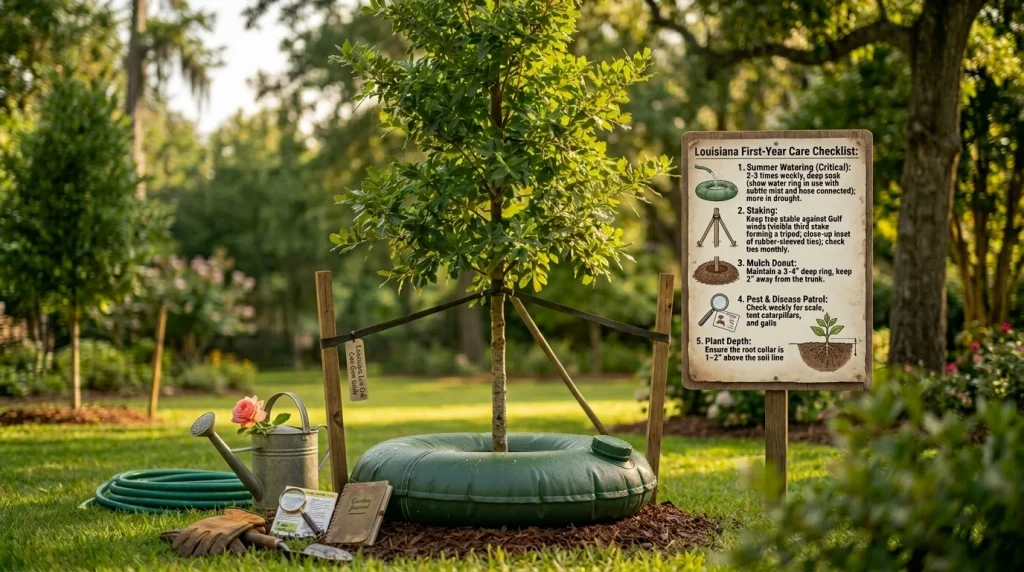
Mulch can improve soil moisture levels in newly planted trees, suppress weed and grass growth, and regulate soil temperature. LSU AgCenter guidance recommends keeping an area about 2 feet out from the trunk free from grass and maintaining an even mulch layer of around 3 inches. Organic options such as wood chips, pine bark, and similar materials can work well.
The root flare needs to remain visible. Do not pile mulch directly against the trunk. This common error, sometimes referred to as a mulch volcano, can cause water to remain in the bark against the trees and cause decay and other issues. Mulch should be slightly away from the tree trunk.
Do Not Rush to Fertilize
The assumption that fertilizer will help a young tree to establish quickly is easy to make, but it cannot always be assumed that more fertilizer is better. LSU AgCenter fertilization recommendations indicate that establishment-year fertilizer is of little value for new trees, and other Louisiana sources agree that establishment-year fertilization does not promote survival.
If a soil test or qualified professional has ruled out a nutrient deficiency, then water, mulch, and limit stress. Excessive fertilizer can cause other issues during root development.
Pruning: Less Is Usually Better During the First Year
Newly planted trees require their leaves to generate energy and aid the development of their root system. Excessive tree pruning following planting may result in the loss of leaves that the tree requires during this important establishment period.
Remove branches that are:
- Dead
- Damaged
- Diseased
- Crossing or rubbing against other branches
Major shaping can usually wait until the tree has had time to establish. LSU guidelines strongly recommend that no unnecessary pruning be done in the first year or two.
Watch for Signs of Transplant Stress
Trees may experience temporary stress following transplant shock from a nursery or container to a new site. Symptoms such as wilting, reduced growth, or leaf drop could happen, but if they continue to get worse, they should be given more attention.
Check your tree regularly for:
- Dry or unusually saturated soil
- Loose soil or excessive leaning
- Damaged bark from lawn equipment
- Unusual leaf spots or discoloration
- Insect activity
- Broken branches after storms
- Mulch or soil covering the root flare
Remember, not all yellow leaves are a sign of disease. Prior to applying pesticides or other treatments, try to determine the cause of the problem.
Should You Stake a Newly Planted Tree?
Not all young trees require support. A stable tree does not need to be staked, and any natural movement will serve to strengthen the trunk.
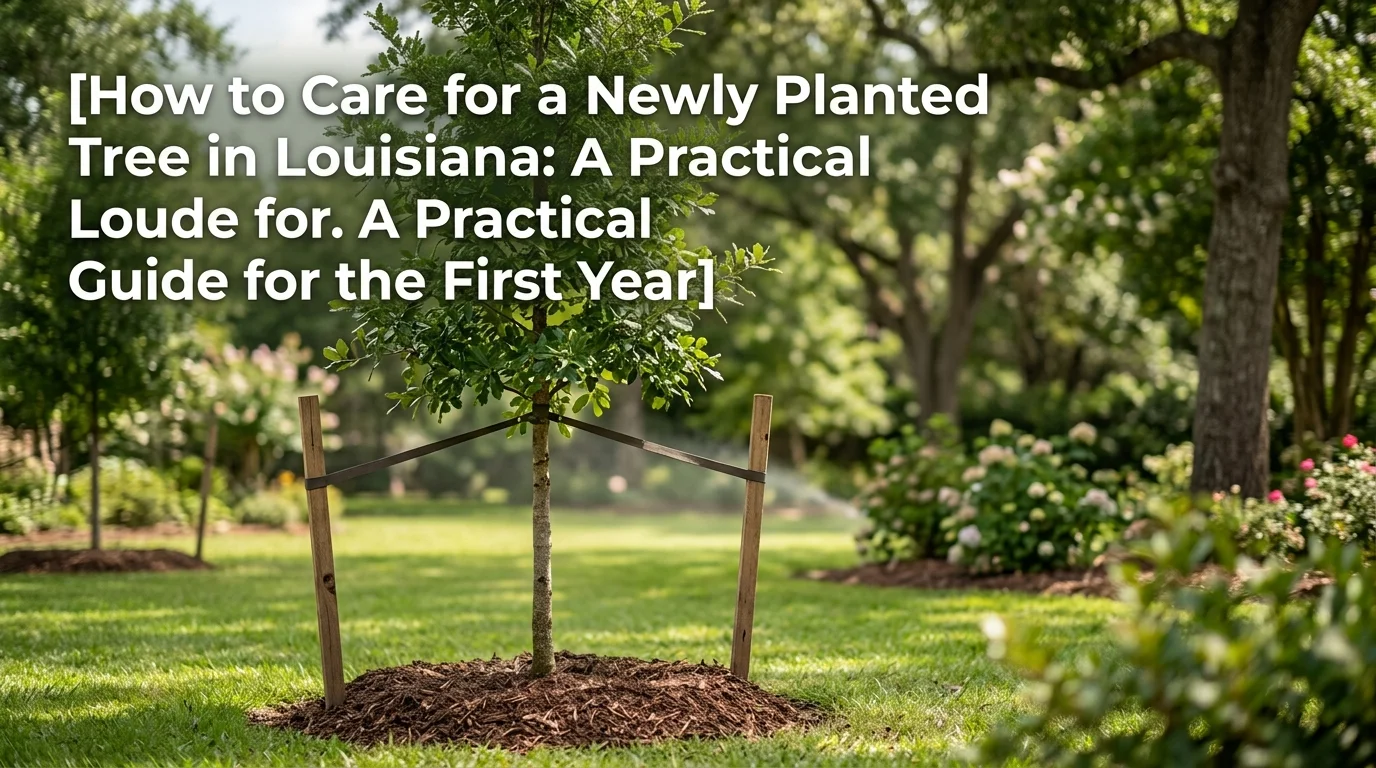
Stakes can be used in tall, top-heavy, and unstable trees. LSU recommendations are to install 2-3 stakes outside the root ball and use soft stakes that won’t harm the bark. Typically, the use of support structures should be discontinued within 9-12 months.
A Simple First-Year Tree Care Schedule
The critical first year of establishment is the most important, but the subsequent maintenance program doesn’t have to be overly complicated.
During the First Few Weeks
Check soil moisture frequently, especially after hot or windy weather. Inspect the planting area for settling soil, exposed roots, and mulch that has shifted against the trunk.
During the Growing Season
Adjust watering based on rainfall and temperature. The mulched area should be free of grass and weeds and monitored for pests or diseases.
During Dry Periods
A brief shower might not be enough to irrigate the entire root zone. Instead of making assumptions about rainfall, be sure to check the soil.
After Severe Weather
Northwest Louisiana gets its fair share of thunderstorms and strong winds. After a big storm blows through, take a close look at your tree. Check for any broken limbs, branches leaning in a weird way, loose stakes, or damage to the trunk.
Common Mistakes to Avoid
Most tree trouble starts with people trying to help, but doing what the tree doesn’t actually need.
Avoid:
- Watering every day without checking soil moisture
- Relying only on lawn sprinklers
- Piling mulch against the trunk
- Automatically adding fertilizer at planting
- Heavy pruning during the first year
- Leaving stakes attached for years
- Ignoring the tree after the first few months
New trees sometimes take longer to settle in than you’d expect. LSU AgCenter says it can take anywhere from three months to a full year for every inch of trunk diameter, depending on what kind of tree it is and how it’s growing. Bigger trees take even more time, so keep up with watering and checking on them.
When Professional Help May Be Needed
Some things are easier to fix early on. If you planted your tree too deep, the roots are tangled badly, a storm ruined it, or it keeps declining even after care, it’s time to call a professional
For homeowners looking for guidance on professional tree planting in Northwest Louisiana or ongoing tree care maintenance, Tree Time Elite Tree Care can help evaluate practical concerns based on the tree and site conditions.
Frequently Asked Questions
How often should I water a newly planted tree in Louisiana?
It all depends on rain, heat, your soil, and the size of your tree. In hot, dry weather, LSU usually recommends watering once or twice a week. If it hasn’t rained for about a week, check the root zone. Keep the soil moist, but don’t let it get soggy.
How much mulch should go around a new tree?
Louisiana guidance generally recommends an even mulch layer of about 2 to 4 inches, depending on the source and planting situation. Spread it across the root zone, but pull it away from the trunk so the root flare remains visible and moisture does not stay trapped against the bark.
Should I fertilize a newly planted tree?
Not automatically. Several LSU AgCenter resources advise against fertilizing at planting or note that fertilization during establishment may not improve survival. A soil test can identify actual nutrient deficiencies. Until then, proper watering and mulching are usually more important for early tree establishment.
How long does it take for a newly planted tree to establish?
It varies, depending on size, species, weather, and how you care for it. LSU AgCenter says you’re looking at three months to a year for each inch of trunk diameter. The bigger the tree, the more time and attention it needs.
Final Thoughts: Consistent Care Gives New Trees a Strong Start
Caring for a new tree isn’t complicated; it just takes consistency. Keep an eye on soil moisture, mulch the right way, don’t go overboard with fertilizer or pruning, and check the tree regularly during the first year.
Louisiana’s long growing seasons, hot summers, dry spells, and rough weather all make a difference. When a tree shows persistent stress or a planting issue is difficult to diagnose, Tree Time Elite Tree Care can provide practical support for healthier long-term establishment.