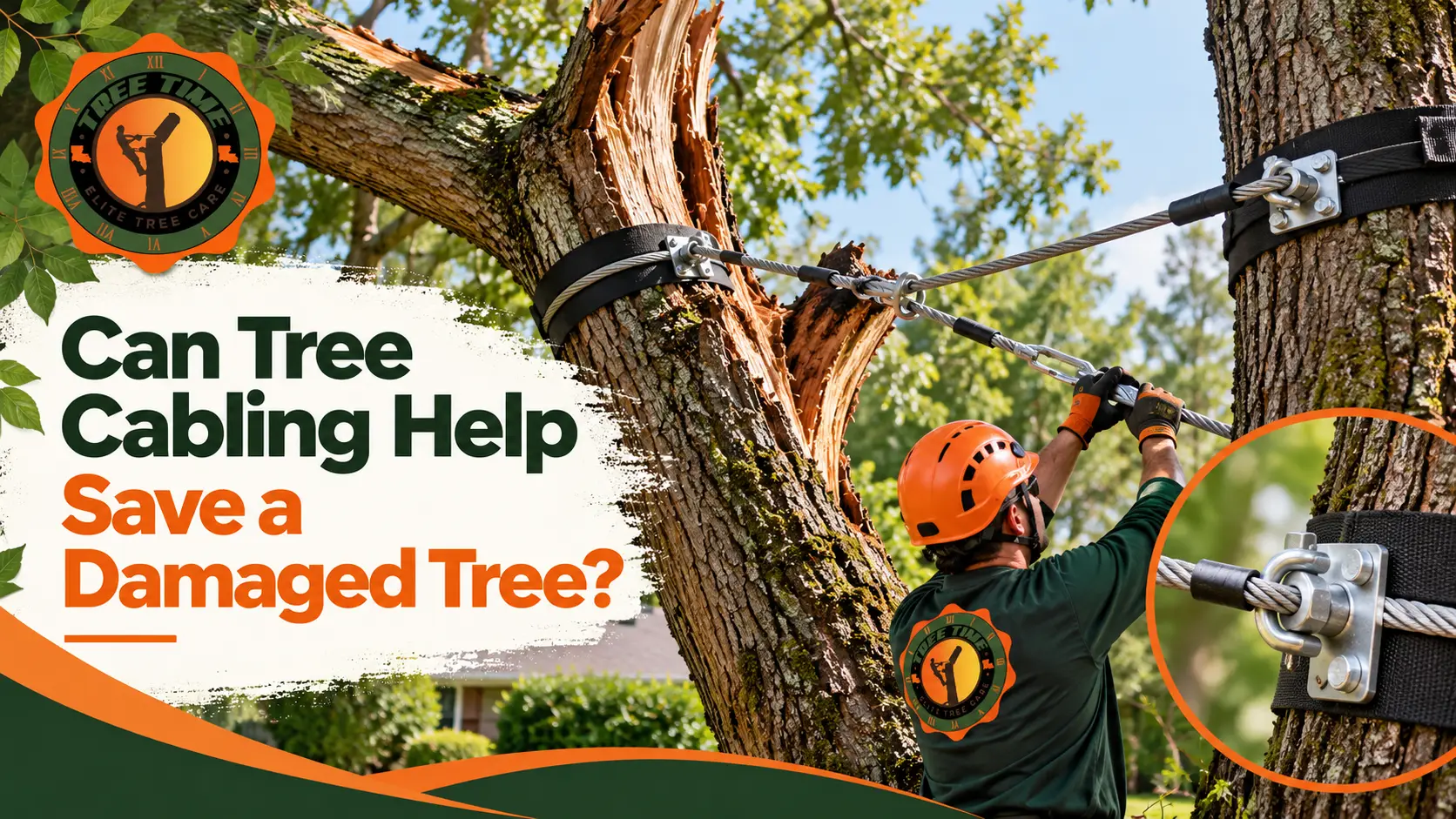
You step outside after a night of wind and rain. Then you see it. A long crack runs down the fork of your oak. Maybe a big limb is gone, and the one next to it looks loose. Can tree cabling save a damaged tree? Sometimes it can. It depends on the damage and how sound the rest of the tree is.
Cables give a tree extra support. That’s all they do. They don’t glue cracked wood back together. They can’t promise an injured tree will live. So have a trained arborist look at the tree up close before anyone picks a fix. A good call now can spare you a bigger mess later.
How Can Tree Cabling Help a Damaged Tree?
A damaged tree often has one weak spot. That spot takes most of the strain. Cabling shares the load with stronger parts of the tree. Think of it as backup support. The tree still carries its own weight. The cable just limits how far the weak parts can move in the wind.
Supporting Weak Branches and Unions
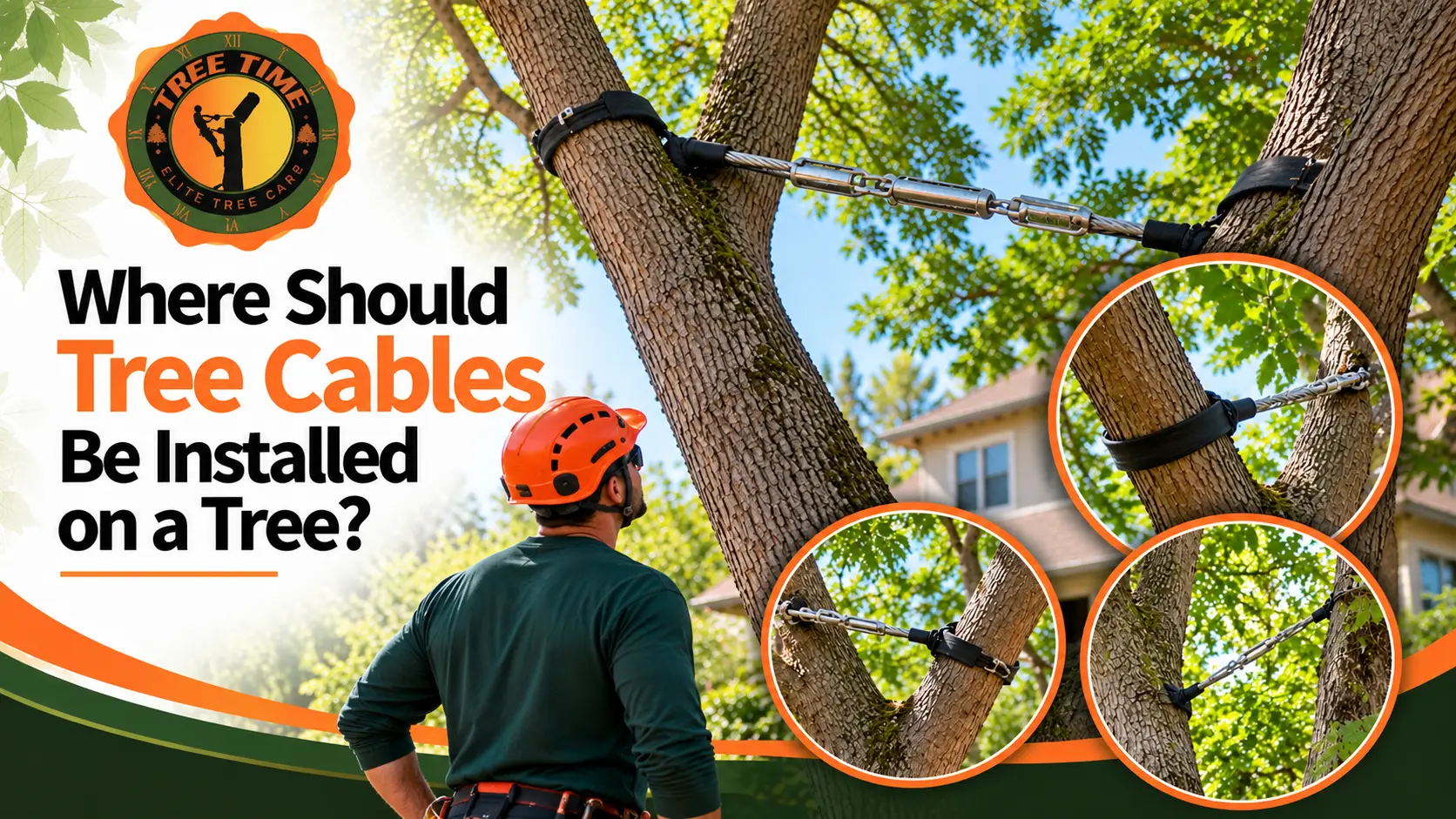
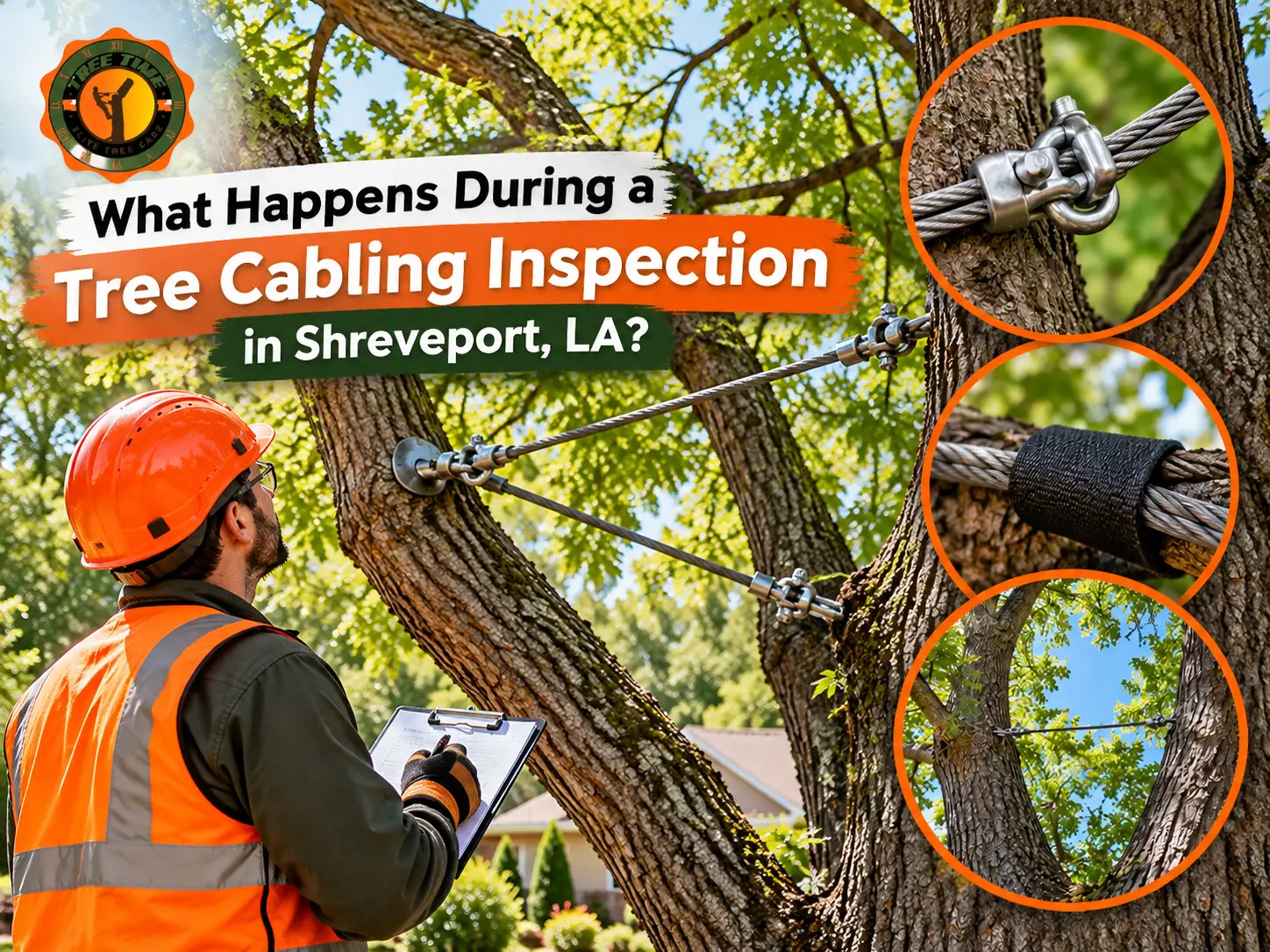
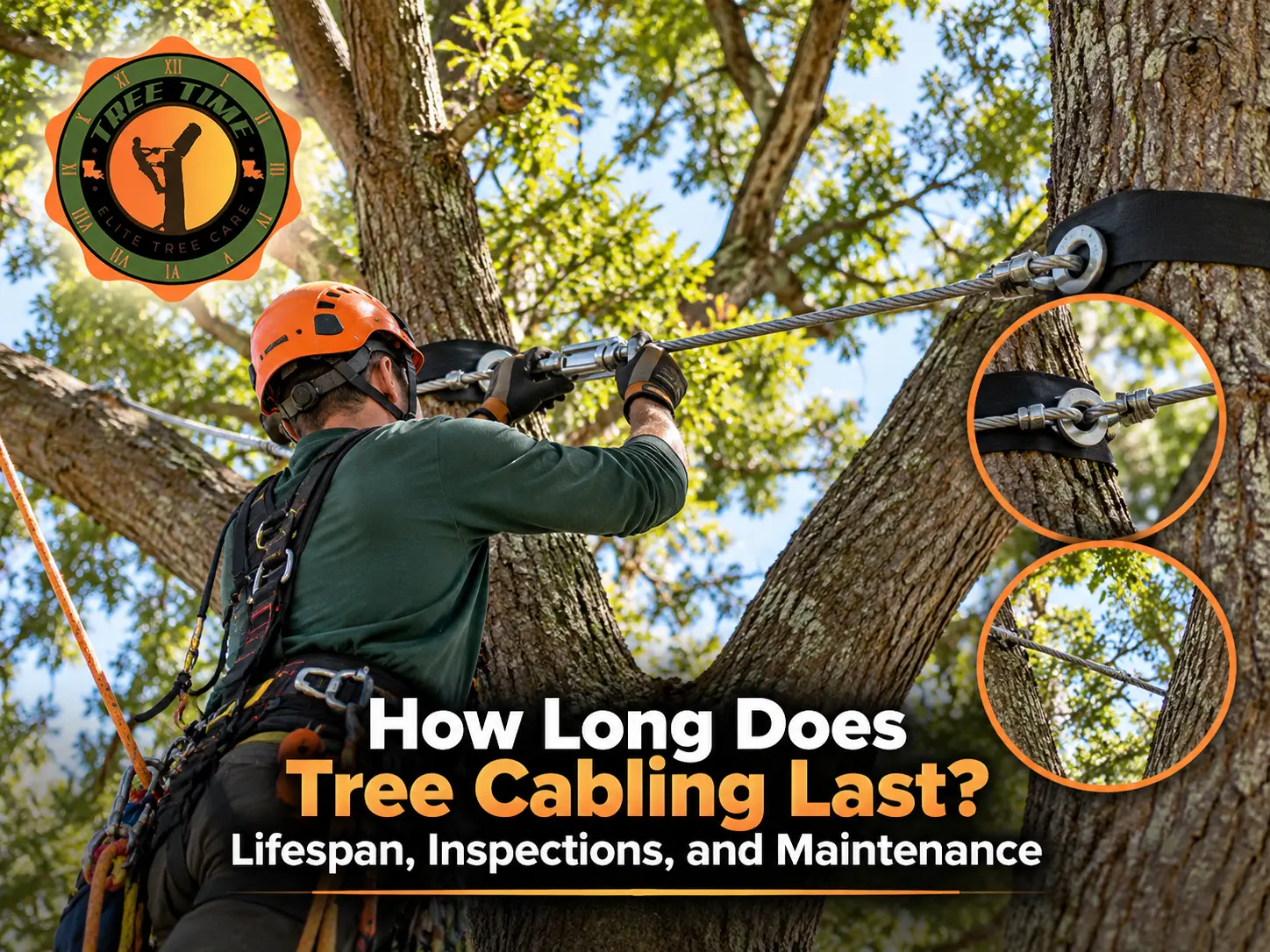
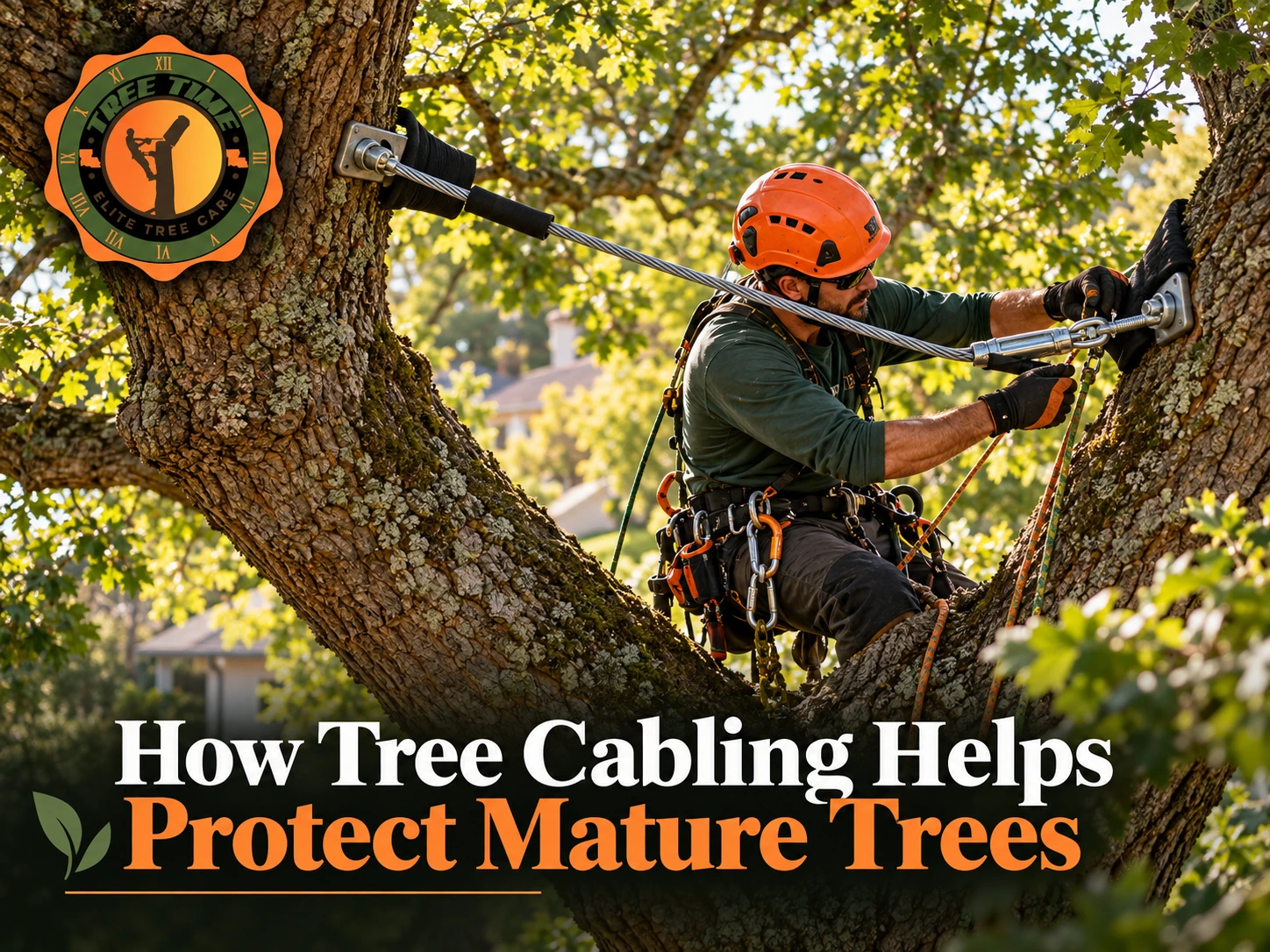
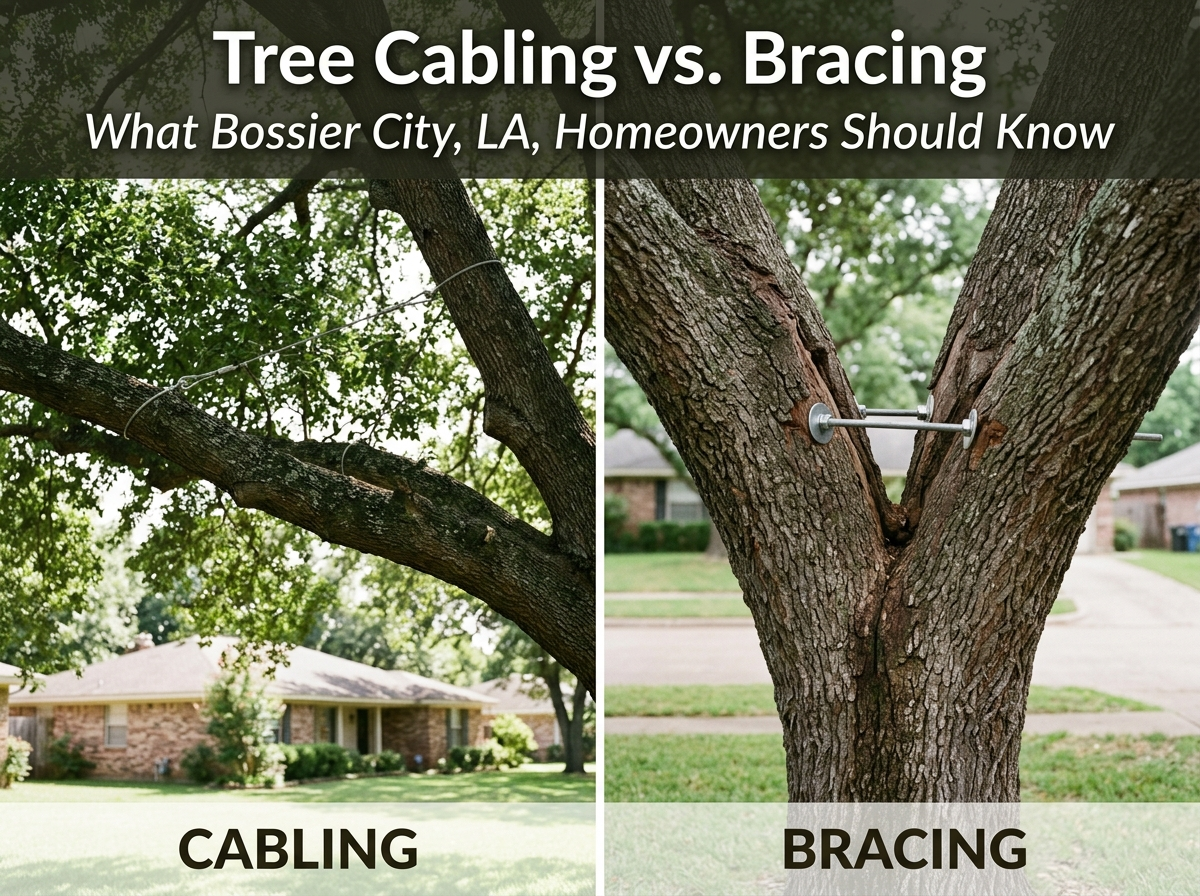
An arborist installs a cable between two limbs or stems, usually high in the crown. When wind shoves one side, the cable keeps it from swinging too far. That eases the pull where the two stems meet below. Arborists call that spot a branch union. A cracked union takes a beating every time the canopy sways. Still, the cable does not make damaged wood strong again.
Reducing the Risk of Further Structural Failure
Partial splits tend to grow. Each storm can pry the crack open a little more. A well-designed cable system helps hold the two sides in check as loads shift. In a suitable tree, that may lower the odds of the union tearing the rest of the way. Lower odds are not zero odds. Cable cut risk in the right tree. They won’t stop every break.
Which Types of Tree Damage May Benefit From Cabling?
Where the damage sits matters more than how scary it looks from the yard. A messy break near the tip of a small limb might be minor. A thin crack at a main fork could be serious. The amount of sound wood left around the injury often decides what comes next.
Split Branches and Weak Branch Unions
A fork with a fresh partial split is a common candidate for support. Tight V-shaped unions often cause trouble. Bark gets pinched between the stems and weakens the joint. If the split is shallow and the wood around it is solid, a cable may help. A deep or rotted split is a different story. Support only works when healthy wood remains.
Storm-Damaged Trees With Major Limbs Still Intact
Plenty of trees lose a few branches and keep their main frame. If the trunk and big scaffold limbs came through in good shape, the tree may be worth keeping. Pruning usually comes first. It cleans up broken stubs and lightens stressed limbs. Cabling can then back up a union that took a hit.
| Watch for hanging limbs. A broken branch stuck up in the canopy can fall without warning. Don’t walk or park under one. Don’t try to pull it down on your own. It needs professional attention right away, even if the rest of the tree looks fine. |
Cracked Trunks and Severe Structural Damage
A crack in the trunk calls for a much closer look. In some cases, an arborist may suggest brace rods. These are threaded steel rods set through the wood. They hold a split stem or trunk more rigidly than a flexible cable can. Still, bracing is not the answer for every crack.
Some trees are simply past saving. Heavy decay is one sign. A trunk that shifts or leans after the storm is another. When too much of the structure has failed, keeping the tree just leaves a hazard standing in your yard. That’s a hard call. It’s often the right one.
How Does an Arborist Decide Whether a Damaged Tree Can Be Saved?
You can’t judge a hurt tree by the wound alone. Two trees with nearly the same crack can need very different care. One might be strong. The other might have been failing for years. An arborist looks at the whole tree and the space around it.

Assessing Tree Health and Remaining Structure
The first question is how many good trees are left. An arborist weighs the species and its overall vigor. They note how much of the crown survived. They check where the damage sits. The trunk and major branches get a hard look. Branch unions get special attention for cracks and hidden decay. A full, healthy canopy gives a tree more to work with.
Considering the Tree’s Location and Potential Hazards
A damaged pecan in the back corner of a big lot is one thing. The same tree leaning over your roof or driveway is another. Location changes the stakes. Can the tree survive? That’s one question. Can its risk be managed safely around your home? That’s a separate question. A tree might live for years and still be too risky to keep next to a bedroom.
Choosing the Appropriate Next Step
| Assessment finding | Possible next step |
| Limited structural weakness and suitable overall condition | Consider cabling and appropriate monitoring |
| A damaged limb that can be safely removed or reduced | Consider pruning, with structural support if warranted |
| A split that may benefit from rigid reinforcement | Assess whether bracing is appropriate |
| Severe instability, extensive decay, or damage that cannot be managed safely | Consider removal or another professional recommendation |
Treat this table as a rough guide, not a diagnosis. Your tree might fit more than one row. The real answer comes from an arborist studying your tree in person. They can spot what a photo or a quick glance from the kitchen window will miss.
Can Tree Cabling Repair Storm Damage or Help a Tree Recover?
Holding a tree together and helping it heal are two different jobs. Cabling handles the first one. A cable can steady a weakened union. It can’t reattach a limb that snapped clean off. It won’t undo a trunk that split wide open or started to rot.
Pruning does much of the cleanup instead. Trees don’t heal wounds the way people do. They seal off hurt areas and grow new wood around them. How well that works depends on the tree’s health and how bad the injuries were. Soil and water play a part. So do our long Louisiana summers. Fresh growth means the tree is alive. It doesn’t mean the damaged wood is safe.
What Should Homeowners Do After Discovering Tree Damage?
Safety comes first. The decision about saving the tree can wait a day or two. An injury from a falling limb can’t be undone. So before you make any plans, take a few simple steps to protect the people around you. Then get an expert’s eyes on the tree.
- Keep kids and pets away from broken limbs and leaning trees.
- Stay out from under damaged branches.
- Don’t try to install cables or brace rods yourself.
- If a limb touches a power line, stay well clear. Call the utility company or emergency services.
- Book a professional tree damage assessment.
- Ask whether cabling or bracing fits. Pruning, monitoring, or removal might fit better.
Storm damage often hides. A crack can run deep inside the wood with very little showing on the bark. Roots can tear loose underground. A tree that looks fine from the porch can still be hiding trouble. So get it checked, even if the damage looks small.
Frequently Asked Questions
Every damaged tree is different, so these answers stay general. The right treatment depends on the tree’s condition and how far the damage goes. Use them as a starting point for your talk with an arborist, not as a stand-in for a real site visit.
Can Tree Cabling Save a Split Tree?
Sometimes. Cabling may support a split branch union or stem when enough sound wood remains around the injury. A severe split may need brace rods instead. In other cases, the tree may have to come down. Only an in-person assessment can tell you which path fits your tree.
Is Tree Cabling Enough to Fix Storm Damage?
Usually not by itself. Cables address certain structural weak points. They don’t treat broken limbs. They don’t close trunk wounds. Those problems often need pruning or other care. Some storm injuries are bad enough that removal is the only safe choice. A full plan often mixes two or more of these steps.
Should a Damaged Tree Be Cabled or Removed?
That depends on how stable the tree is and how healthy it remains. Damage location matters just as much. So does whatever sits below the tree. If the risk to people or property can’t be brought down to a safe level, removal is the responsible choice.
Final Thoughts
Cabling can help some damaged trees stay standing. It works best when the tree is still healthy. The damage has to be the right kind in the right place. Safety always gets the final vote. If a cable can’t make the tree safe, it’s time to look at other options.
Tree Time Elite Tree Care serves homeowners across Northwest Louisiana, including Shreveport and Bossier City. The company offers tree cabling and bracing. It also handles pruning and removal. Owner Kevin Lee is a Louisiana-licensed arborist. If storm damage has you worried about a tree, Contact our team at (318) 470-5867. Book a professional assessment and talk through your options.