
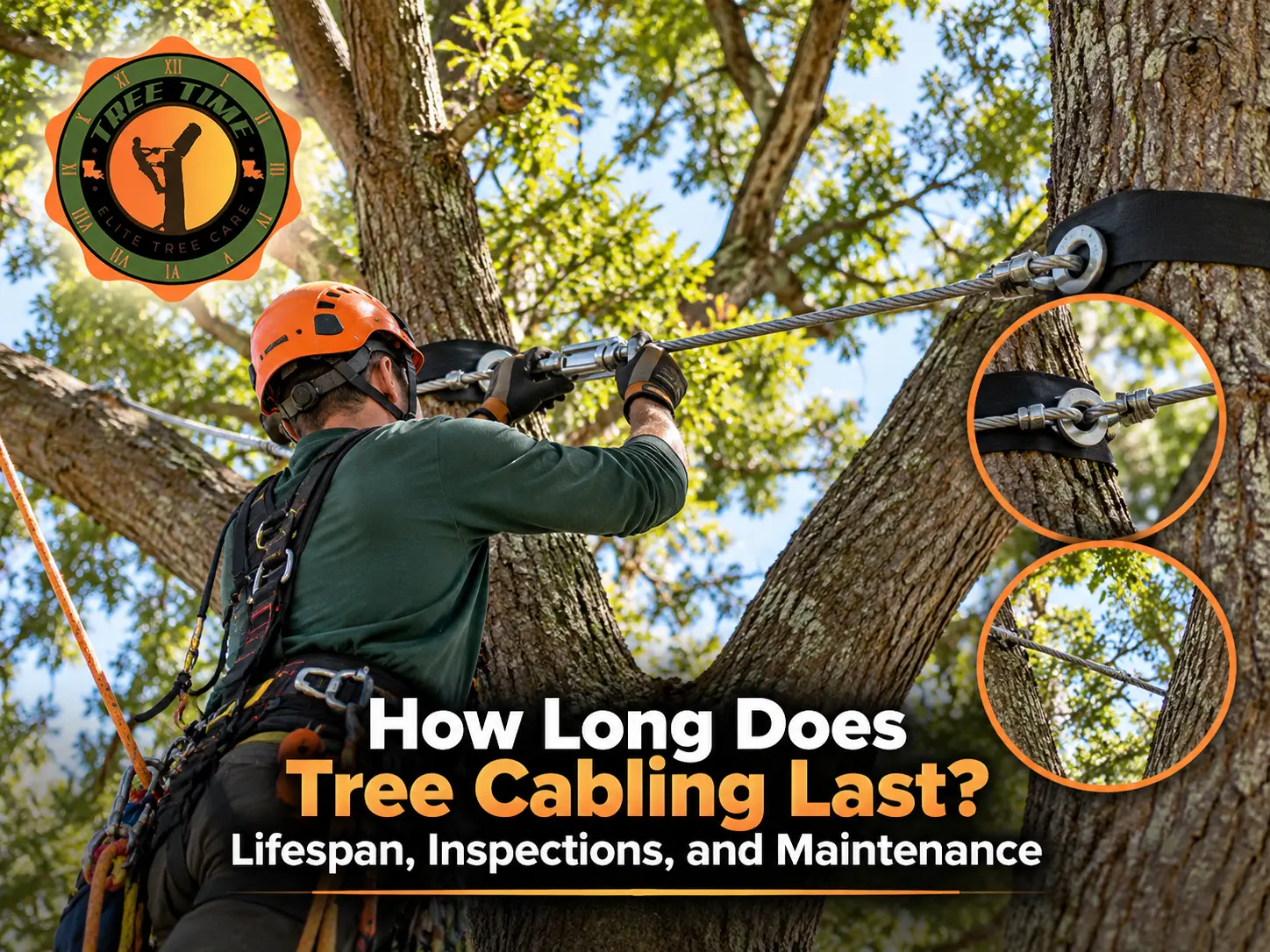
Cables went into your tree a few years back. Now you want a straight answer: how long does tree cabling last? Most systems carry a typical range of useful years. A cable system can age in ways that aren’t obvious from the ground. The hardware may wear out, while new growth can change how well the cables support the tree. The work doesn’t stop once the cables are in place. Routine checks help you spot changes and decide whether the system requires attention.
How Many Years Can a Tree Cable System Last?
Plan on about ten years. Published estimates run from roughly 7 to 15 years before adjustment or replacement comes due. Synthetic systems are generally rated for 8 to 12 years. Steel cable can last far longer. Still, manufacturer literature says most systems need repositioning or replacement within 10 to 15 years as the tree grows taller and wider. Industry guidelines from the International Society of Arboriculture (ISA) advise regular inspections and possible system evaluation after 7 to 10 years.
Tree cable lifespan runs on two clocks. One is the hardware wearing out. The other is the tree outgrowing the system’s position. Materials and installation set the starting point. Weather and upkeep decide how fast things change. Sound-looking hardware doesn’t prove the system still fits the tree. Treat any lifespan figure as a planning range. Think of it as a general guide, not a set date when the system must be replaced.
What Shapes Tree Cabling Lifespan Over Time?
Age alone says surprisingly little about a cable system. A ten-year-old setup in good shape can outlast a five-year-old one that took a beating. Three forces shape tree cabling durability. They all work at the same time. None of them waits for the others. Each plays out differently in every tree.
Hardware Materials and Installation Quality
Steel cable and other support hardware are usually galvanized to slow rust. That coating can wear thin. Synthetic rope won’t rust. Sunlight and rubbing can still break it down, though. No material is immune to wear. Installation matters too. A system is only as strong as its weakest part. One poor connection can undo good work everywhere else on the tree.
Tree Growth and Changing Attachment Points
Trees keep growing after the hardware goes in. Cables are typically set about two-thirds of the way from the branch union toward the limb tips. As the tree grows taller, a cable that was positioned correctly may sit too low in the crown. Bark and new wood may also close in around anchors. That doesn’t make every growing tree unsafe. But attachment points need a fresh look over time.
Weather Exposure and Environmental Conditions
Moisture is hard on metal. Humid air and frequent rain can speed up cable corrosion wherever coatings have worn. Strong storms load the system hard. Years of ordinary wind movement add up too. They wear the hardware and slowly deteriorate the cable. A cable may come through one storm without obvious damage, but repeated storms can wear it down over time
What Should a Professional Tree Cable Inspection Check?
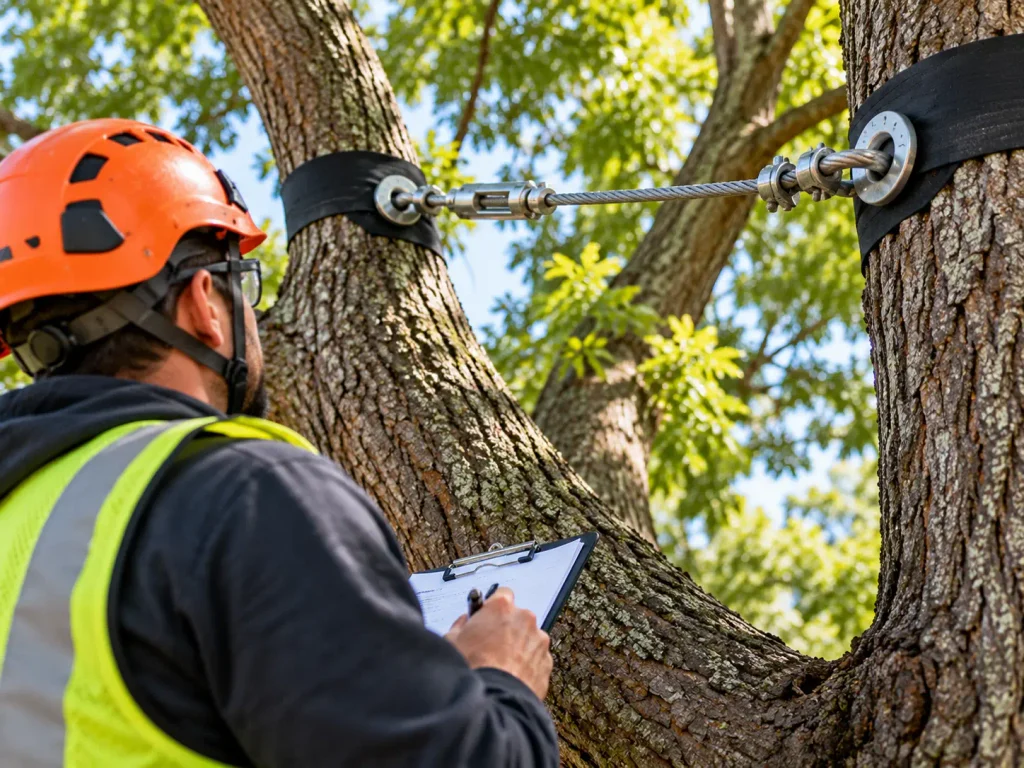
A professional tree cable inspection treats the hardware and the tree holding it as one system. The arborist isn’t just looking at metal or rope. They are looking at how the whole setup works together. The table below shows the main areas an arborist may review.
| Inspection Area | What May Need Assessment | Why It Matters |
| Cable condition | Visible deterioration or damage | May affect continued serviceability |
| Hardware condition | Corrosion, wear, or movement | Can indicate a need for further evaluation |
| Cable tension | Changes from the intended arrangement | May require professional assessment |
| Attachment points | Hardware position and surrounding tree growth | Helps identify changes affecting the connection |
| Tree structure | New cracks, movement, or other structural changes | May change the support system’s needs |
Findings only make sense in context. Light surface rust on a washer is a very different matter from a frayed cable hanging over the driveway. One visible sign doesn’t prove the system has failed. It doesn’t automatically mean replacement either. A professional weighs each sign against the rest of the picture.
An arborist usually has to climb or use a lift to inspect tree cables properly. A view from the ground can catch obvious trouble. It can’t confirm the condition of the support system. Regular inspection by someone who can actually reach the hardware fills that gap. Ground checks still help between visits.
Which Changes May Mean the Cable System Needs Attention?
Some changes deserve a professional look. Small ones count too. None of them proves on its own that the system has failed. Look for these signs while standing safely on the ground. Don’t climb the tree to get a better view. Leave that part to the arborist, who has the right gear.
- Fraying or rust on the cable, which can signal cable deterioration
- Hardware that looks bent or has shifted
- Hardware that looks unusually worn
- A cable that sags or looks much tighter than before
- Bark or new wood swelling over an attachment point
- New cracking near the supported limbs
- Unusual branch movement near the supported limbs
- Broken branches or loose hardware after a storm
Treat these as reasons to book an assessment. Leave it to a professional to figure out what’s wrong. It could sit in the hardware. It could sit in the tree. Sometimes it sits in both. A trained eye can sort that out. What happens next depends on what a professional finds up close.
When Should You Schedule Tree Cable Maintenance?
Cable system maintenance mostly comes down to remembering the system is there. It’s easy to forget about cables once they’re out of view. Industry guidance makes arranging periodic inspections the tree owner’s job. That means you. A simple schedule makes the job easy to keep up. Here is what it should include:
- Set an inspection plan with the arborist who installed or last assessed the system.
- Follow the manufacturer’s instructions for that specific hardware.
- Base timing on the tree’s condition and growth. Factor in its exposure and what sits underneath.
- Book a reassessment whenever you notice a real change.
- Ask for an earlier arborist inspection after significant storm damage.
- Keep a simple record of each inspection and any work completed.
None of this calls for a weekly chore list. Good tree cabling maintenance looks like a date on the calendar and a folder of notes for the next inspector. Notes help the next arborist see what changed. That small habit keeps tree structural support maintenance from turning into a guessing game.
When Might Tree Cable Repair or Replacement Be Necessary?
Inspection findings drive repair and replacement decisions. Age rarely decides it alone. Damaged or badly worn tree cabling hardware usually calls for corrective work. Tree cable replacement may make sense when the tree has outgrown the system. In that case, support needs to move higher in the crown. Before choosing a fix, an arborist weighs the hardware’s condition against the tree’s current structure.
Swapping one worn part isn’t always the right call. That’s especially true if the wood around an anchor has changed. Old cables generally shouldn’t come out until new support is in place. They may still be holding parts of the tree together. That alone makes this professional work. It is not a weekend project.
The recommendation might be continued monitoring or targeted corrective work. It could also be a replacement. Or it could be a different tree-care decision altogether. Tree support system lifespan is judged by those findings. The calendar doesn’t get the final word. Every tree and every system is a little different.
What Should Homeowners Do After Storm Damage or a Sudden Change?
Don’t wait for the next scheduled inspection after a hard storm. The same goes for a sudden change in the tree. Storm damage can alter the tree and its hardware in a single afternoon. Treat major damage as a tree-safety issue first. Treat it as a maintenance item second.
If You Notice Possible Cable Damage
- Keep clear of the affected area if the tree or limb appears unstable.
- Do not climb the tree or touch, tighten, or adjust the support hardware.
- Arrange a professional assessment if visible damage or a new structural change is present.
Frequently Asked Questions
How Long Do Tree Cables Last Before They Need Replacement?
No fixed replacement year fits every system. The product and the tree’s growth both shift the timeline. A steel system and a synthetic one age differently. A fast-growing tree outpaces a slow one. Condition should set the date. A professional assessment should confirm it. Age alone shouldn’t.
How Often Should Tree Cables Be Inspected?
Schedules vary by system and tree. For large trees, professional standards suggest a yearly ground check, along with a closer climbing inspection by an arborist every one to three years. Many arborists prefer annual visits. Manufacturer guidance can shift that schedule. So can weather exposure. Ask your arborist which rhythm fits your tree.
Can Tree Cabling Hardware Be Adjusted or Replaced as a Tree Grows?
Often, yes. Growth can leave a cable too low in the crown. It can also leave the cable under the wrong tension. A qualified professional should decide what to do. That might mean adjusting the system or replacing it. It might mean another approach entirely. Don’t loosen or tighten anything yourself.
Maintain Your Tree’s Support System With Tree Time Elite Tree Care
A cable system’s age never answers the lifespan question alone. Condition and exposure matter. So do tree growth and steady maintenance. Tree Time Elite Tree Care provides tree cabling and bracing across Northwest Louisiana. Follow-up inspections come after installation. Louisiana-licensed arborist Kevin Lee leads the company and brings 30 years of experience. You can call (318) 470-5867 to talk it through or arrange an assessment.