Cabling and bracing are usually mentioned together because both are meant to help a weakened tree cope with the loads it carries. Despite their similar goals, cabling and bracing work differently to support a tree. The two methods address different kinds of weakness, and the wrong one can leave the actual problem where it was. For homeowners weighing tree cabling vs. bracing in Bossier City, LA, the better question is not which method wins. The right choice comes down to where the tree is weak and which method is suited to that problem.
Why Cabling and Bracing Aren’t Interchangeable
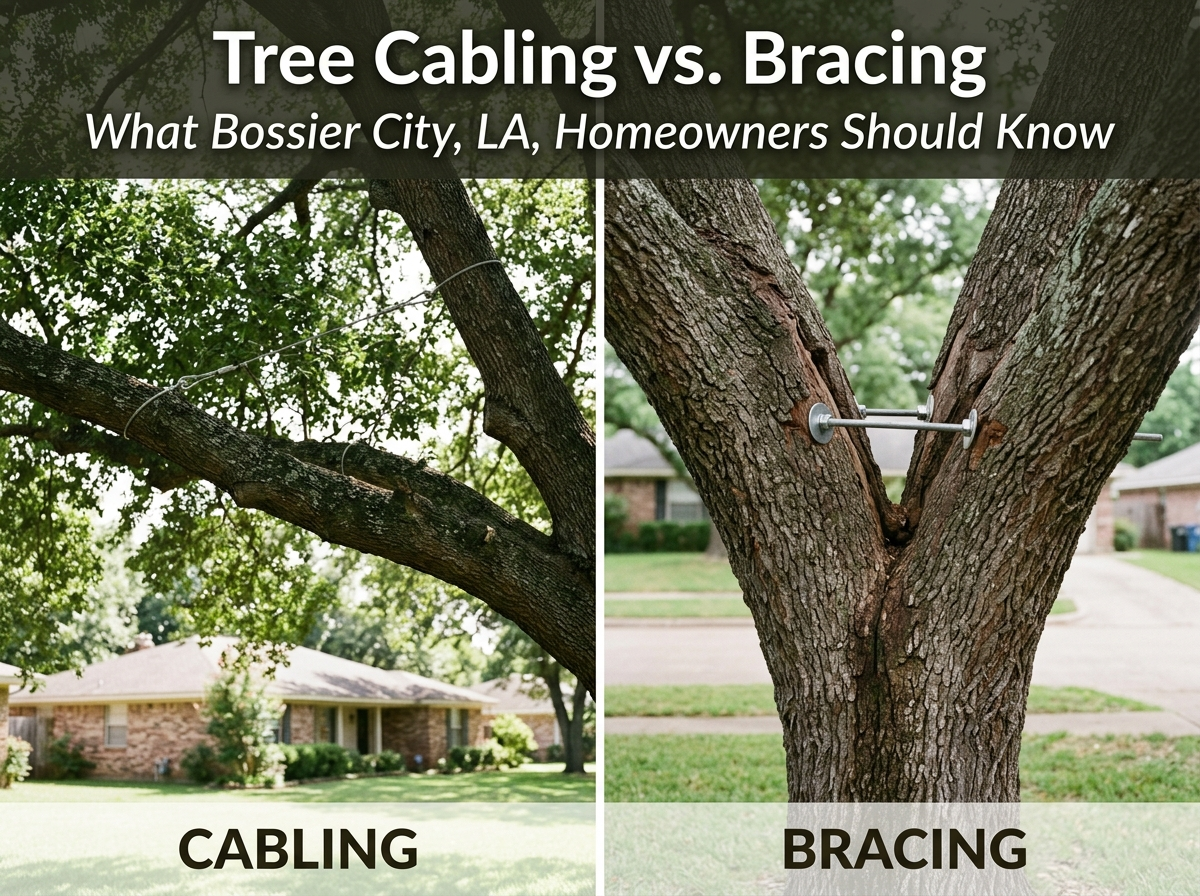
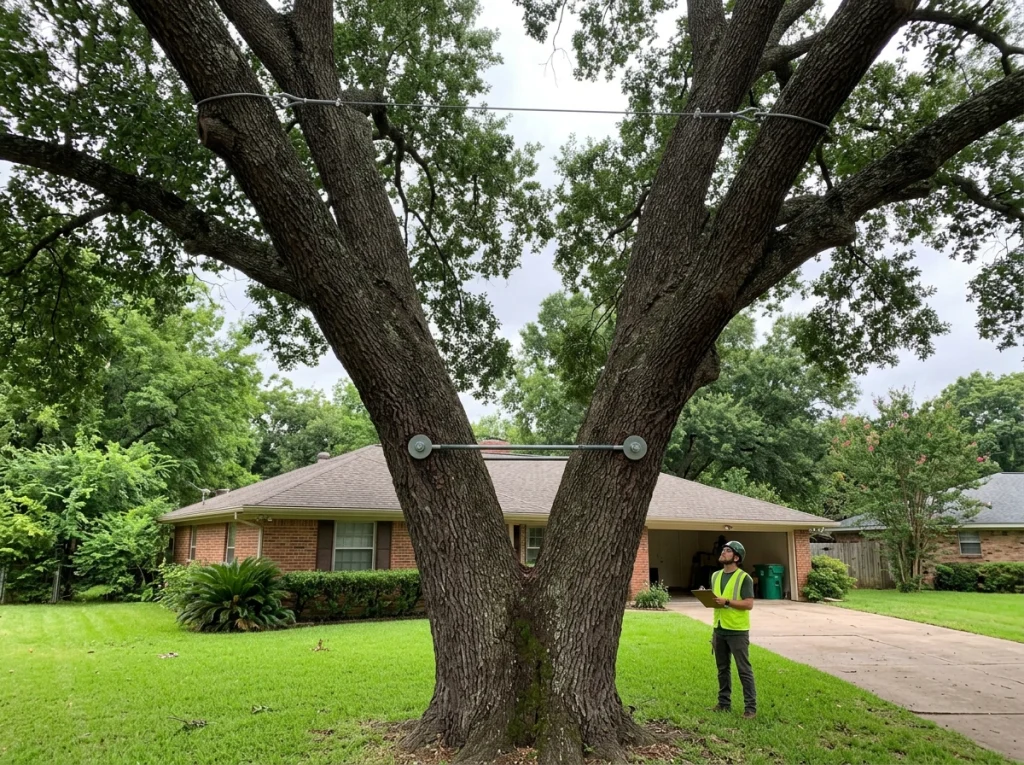
Cabling links two parts of a tree with a flexible connection that works under tension. This helps control how far the stems or limbs can separate without stopping all movement. A brace rod, by contrast, is rigid. Fastened through the wood, it fixes parts in position at one spot, so it can also resist the sideways slipping a cable has little grip on.
Those are answers to different problems. One concerns how far stems or limbs can travel; the other concerns whether a particular union or split is allowed to open or shift at all. An arborist is required to determine the nature of the tree’s weakness before choosing a support method.
What Tree Cabling in Bossier City, LA, Actually Does
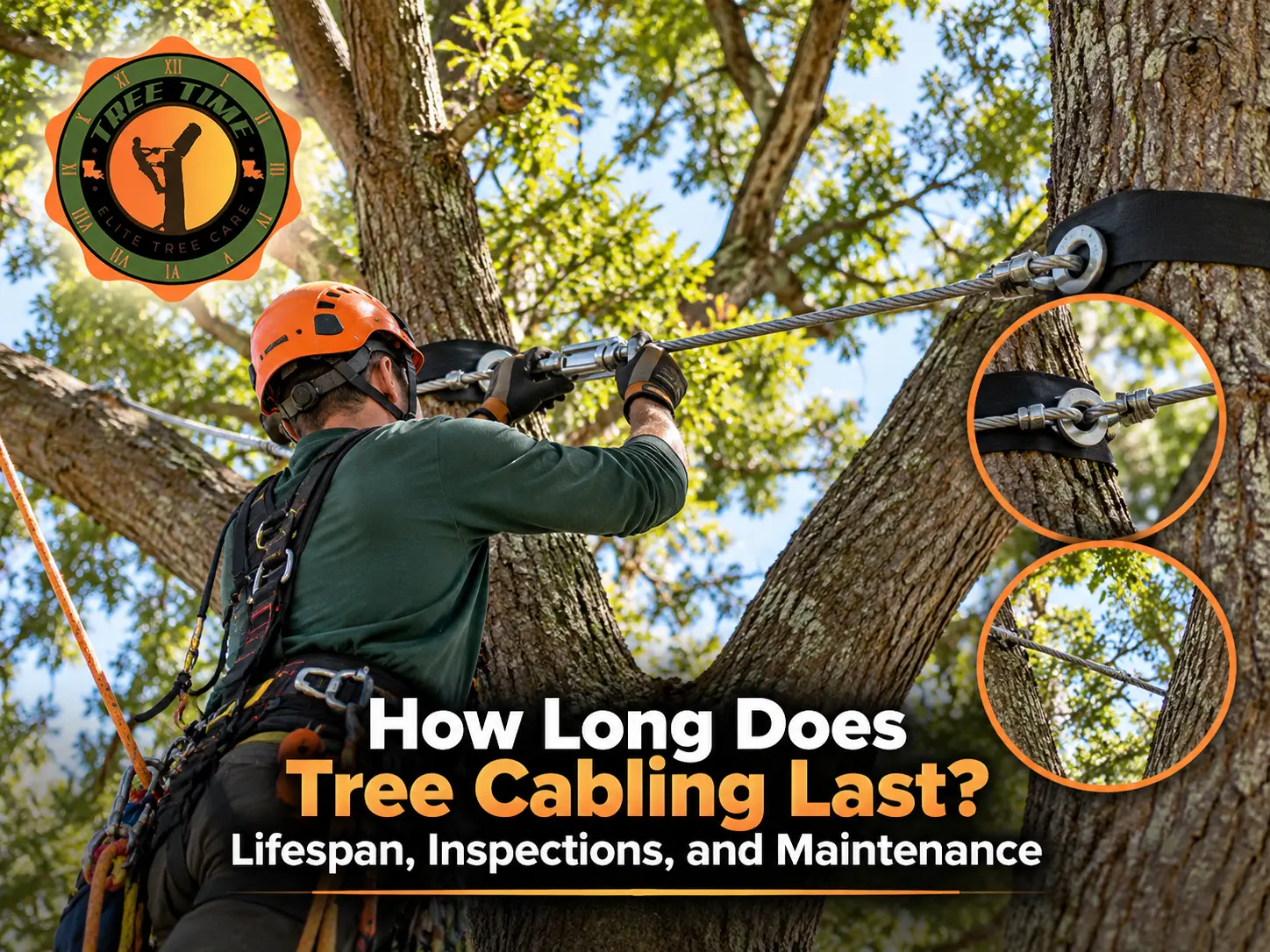
A cable system attaches to stems or limbs above the weak union, not at it, and works as flexible support. From there, it limits how far those parts can swing apart, which reduces the strain they put on the union below, and it can pass some of that load to a stronger part of the tree. The tree still moves. The cable only sets the outer limit of that movement.
How well that works depends on the layout. A pair of equal-sized stems rising from one point loads a union differently than a single long limb stretching away from the trunk, so where the cable goes and what it connects to changes with the tree.
Pruning to lighten a limb sometimes comes first, and the cable is added to that work, not in place of it. Steel is the usual material, but some systems use synthetic rope fastened without drilling, an option worth raising with the arborist.
How Tree Bracing Works in Bossier City, LA
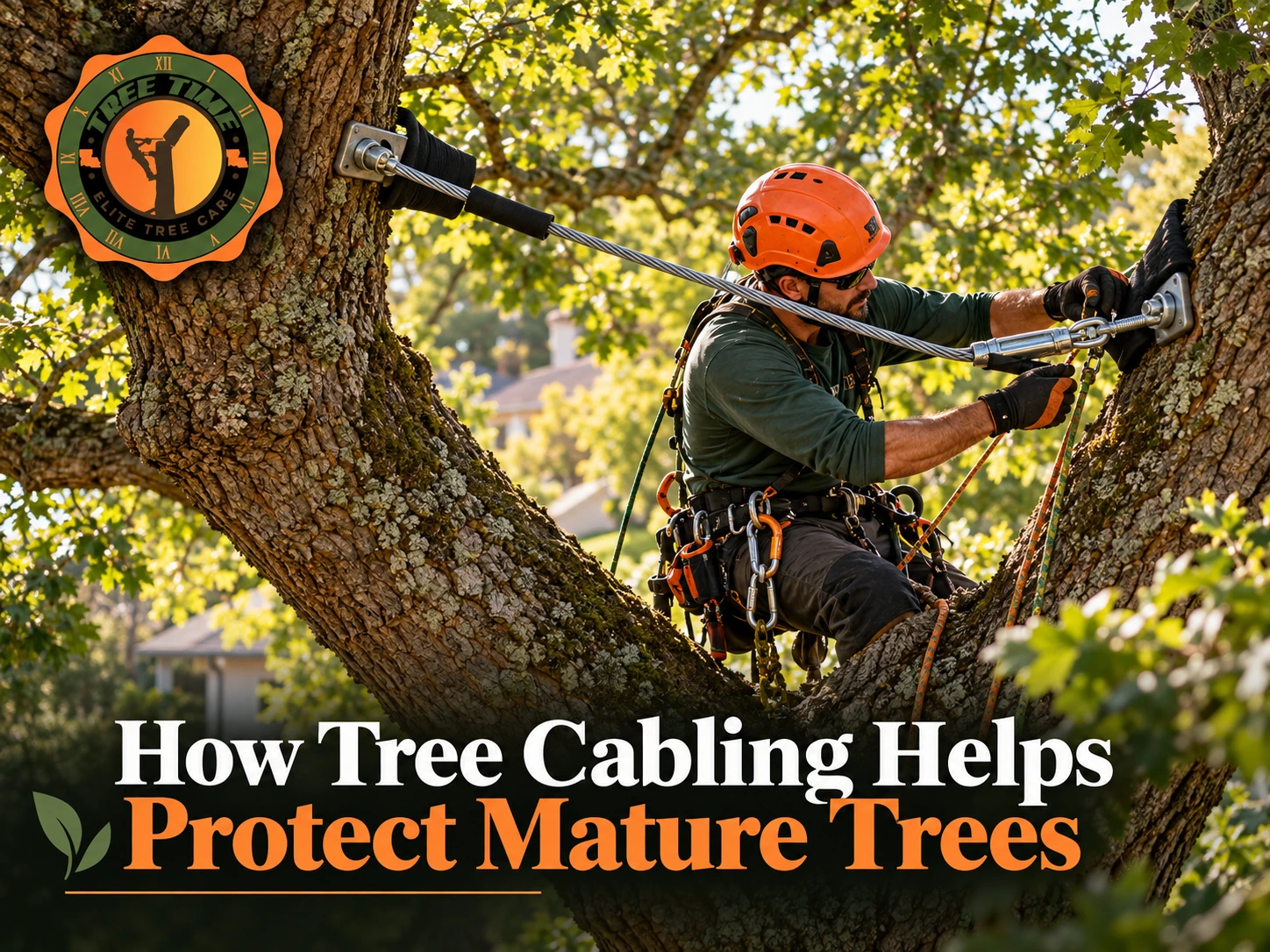
A brace rod does its work inside the wood. It runs through the union or across the split and holds the parts against each other, so the surfaces on either side can neither spread nor slide. That is rigid support, and it is why bracing suits a spot where something has already started to open.
A cable above the spot can slow the stems that pull on it, but it doesn’t hold the faces of a crack together the way a rod does. The strength of a brace rod depends on the condition of the surrounding wood, which continues to change as the tree grows. Both are reasons a braced tree gets checked again later and why the wood is examined before any hole is drilled.
| Comparison point | Cabling | Bracing |
| How it works | Flexible link that resists parts moving farther apart | Rigid rod that fixes parts in position |
| Where it acts | On stems or limbs, above the weak union | Through the union or across the split itself |
| Movement left | Some sway, up to a set limit | Very little at the braced spot |
| Question behind the choice | How far do these parts travel, and how much strain reaches the union? | Is there a particular area that must be stabilized, and can the wood safely support a rod? |
| What it can’t promise | That a limb or stem cannot break or fail. | That the defect is permanently resolved |
Each method only works where it is attached, so the choice follows the location and behavior of the weakness. A cable restrains parts that pull against its own line. A rod holds the surfaces it passes through. A problem that sits beyond the reach of either calls for a different answer.
How an Arborist Decides Between the Two
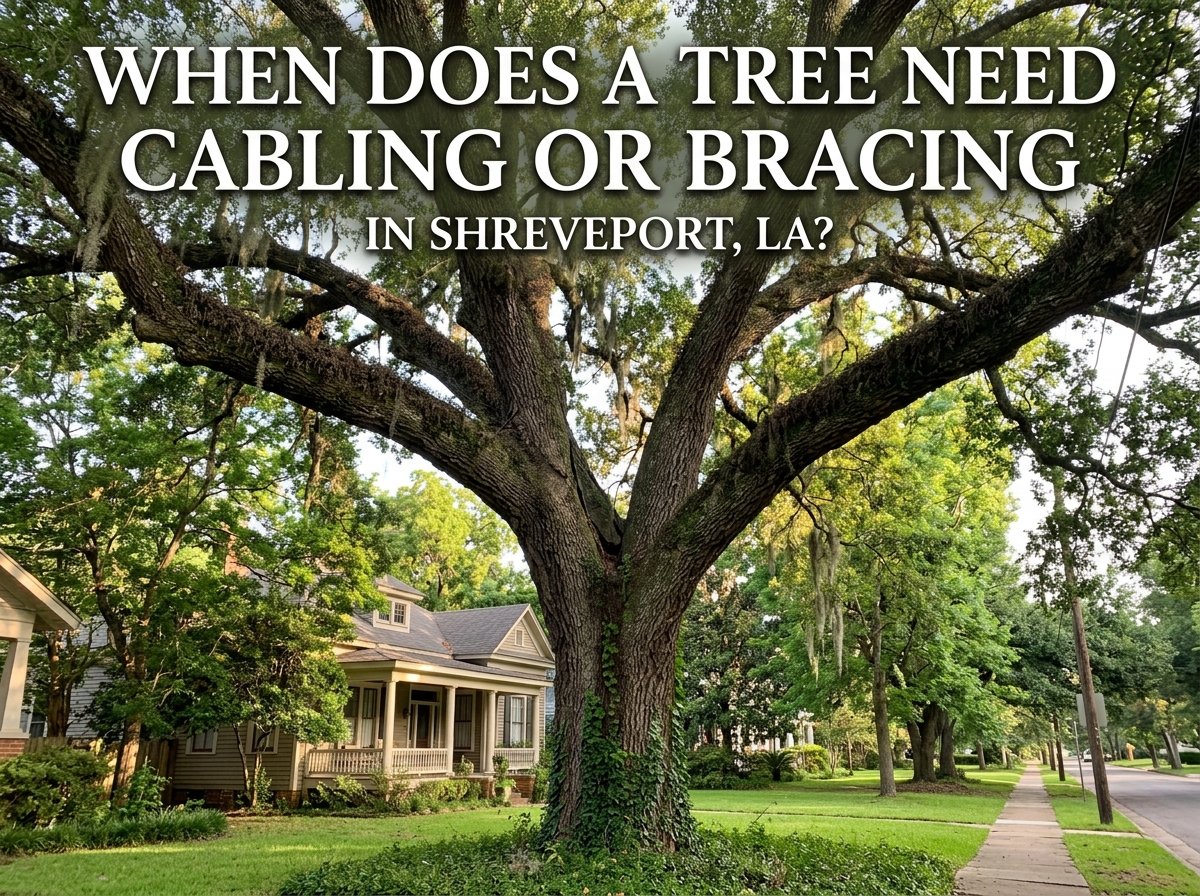
The assessment starts at the union. An arborist looks at how the stems join and how long and heavy each one is beyond that point, because longer stems put more strain on the junction. A common example is a tree with two primary stems that are nearly the same thickness. Where included bark is trapped between them, the stems aren’t joined by continuous wood the way a sound union is, which changes what the support has to accomplish.
Behavior matters as much as shape. A union that is merely vulnerable and one that has cracked or begun to separate call for different responses, and how much the parts move in wind is part of the evidence.
Then comes the wood. Hardware needs sound tissue to hold, so decay at the union can change the recommendation outright. The site enters in too. The tree’s location also affects the decision. A tree hanging over a roof in Bossier City may pose a greater concern during spring thunderstorms than one with open space around it. The arborist also considers whether pruning or removal would be more appropriate.
When One Tree Gets Both Methods
Occasionally a tree has two separate weak points or one weak point with two behaviors. Stems that swing too far above a union that has also started to split can call for both: a cable to limit the swing, a rod to hold the split.
Adding more support equipment will not always improve a tree’s stability. Each piece is another hole in the tree and another part to inspect, so every cable or rod needs a stated reason to be there. A plan that uses both has to account for each piece. Where one method covers the problem, the second only adds work.
What Supplemental Support Can’t Do
The tree needs sound wood and a stable structure for cabling or bracing to work as intended. Severe decay or compromised wood at the union may leave a bolt or rod with little to grip, and a failing root system or disease in another part of the tree is beyond a cable’s reach no matter how well the installation goes. In those cases, the better answer may lie elsewhere, and an honest recommendation will say so.
Even a good fit has limits. Cabling reduces movement without ending it, and bracing holds a spot without repairing the wood around it. Neither method guarantees a tree will come through a severe storm intact, and supported trees need periodic rechecking.
Questions to Put to Your Arborist Before Approving the Work
A sound recommendation can usually be explained in plain terms. These questions are a good place to start:
- What is the hardware meant to restrain, and where is it in the tree?
- Why this method rather than the other one, or rather than pruning?
- What condition is the wood in where the hardware will be fastened?
- How often will the system be inspected after installation?
FAQs About Choosing Between Cabling and Bracing
Does the species of tree change which method is used?
Species can influence how a tree forms its unions and how its wood holds up under load, so an arborist takes it into account. It is one input among several, next to the particular defect and how sound the wood is.
Is one method harder on the tree than the other?
Not in any simple way. Steel cable systems and brace rods both involve drilling through wood, so each leaves wounds, and a rod passes completely through the union. Some rope-based cabling systems avoid drilling. Which trade-off is acceptable depends on the tree, and the arborist should explain it.
What happens if neither cabling nor bracing is the right fit for the tree?
The arborist may look at other options: pruning to reduce load, monitoring the tree over time, or removal where the risk can’t be brought down to an acceptable level. Which one fits depends on how the tree is doing and what sits underneath it.
Choosing Between Cabling and Bracing Starts With an Assessment
The two methods aren’t rivals. A cable keeps parts of a tree from drifting too far apart; a rod pins one particular spot in place. Which one belongs in a given tree depends on what that tree is doing, not on a preference for either.
Tree Time Elite Tree Care provides tree services in Bossier City and across Northwest Louisiana. Kevin Lee, the company’s Louisiana-licensed arborist, has 30 years of professional tree-care experience. The company offers professional tree cabling and bracing, and each job starts with an assessment of the tree itself. Bossier City homeowners who are unsure about a tree can reach out to Tree Time Elite Tree Care to discuss its condition and which support options, if any, are worth considering