
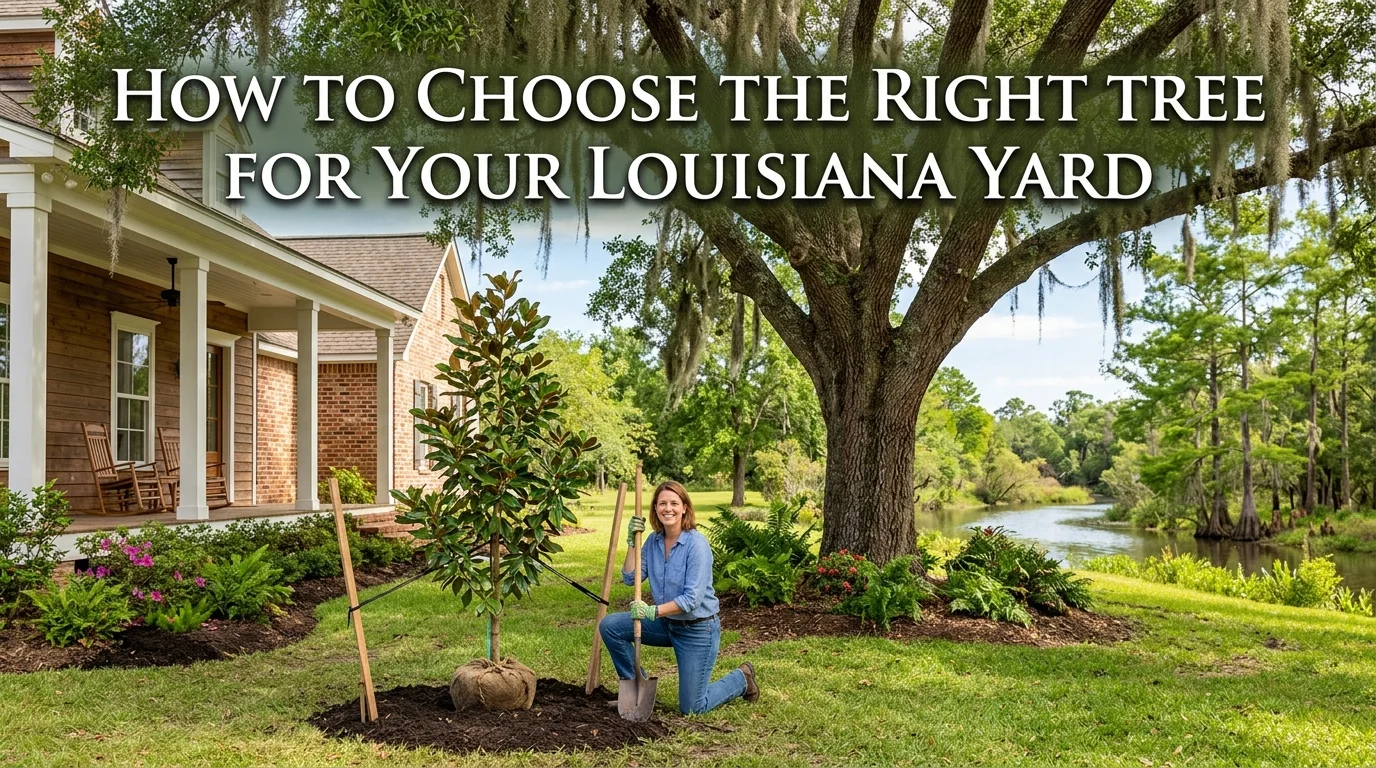
When looking for trees to plant in your yard, there is more than just visual appearance being taken into consideration. While a tree may be perfect in one Louisiana landscape, it may not thrive in the other due to variations in soil, drainage, available sunlight, space, and moisture.
For homeowners in Northwest Louisiana, choosing a tree for your yard also means thinking about how that tree will look and behave 10, 20, or even 50 years from now. Though you might not realize it at the time of purchase, a small tree in a container can grow into a significant piece of property, so it’s important to factor in the location and future shape of the tree before you purchase it. Furthermore, understanding the best time to plant tree in your specific region is crucial, as planting during the optimal season helps ensure strong root development and long-term survival.
Start With the Planting Site, Not the Tree
The most common error is selecting a species before locating a suitable site for it. It makes more sense to consider the property prior to visiting the nursery.
Look at four basic conditions:
| Site Factor | What to Check |
| Sunlight | Full sun, partial shade, or mostly shade |
| Soil | Clay, loam, sand, drainage, and moisture |
| Available space | Canopy width and room for root development |
| Nearby structures | House, driveway, sidewalk, fences, and utilities |
Louisiana State University AgCenter suggests choosing trees for your site, considering mature size before planting.
Why Northwest Louisiana Soil Matters
Clay soils are heavier in parts of Northwest Louisiana and areas where soil moisture remains after significant rainfall. Species that will grow in poorly drained soils may do better in a wet yard than species that require consistently well-drained soil.
For wetter locations, LSU AgCenter lists options such as bald cypress, Nuttall oak, swamp red maple, river birch, willow, and tupelo gum among trees that can tolerate wet soils.
Not all trees that tolerate water can be used in all yards. The mature size is still a factor, as is the amount of available space.
Match the Tree to the Amount of Sun
The tree’s growth can depend on the amount of sunlight it receives.
Before Tree planting, observe the proposed location throughout the day. A spot that looks sunny at 10 a.m. may receive considerably more shade after a nearby house or mature tree blocks the afternoon sun.
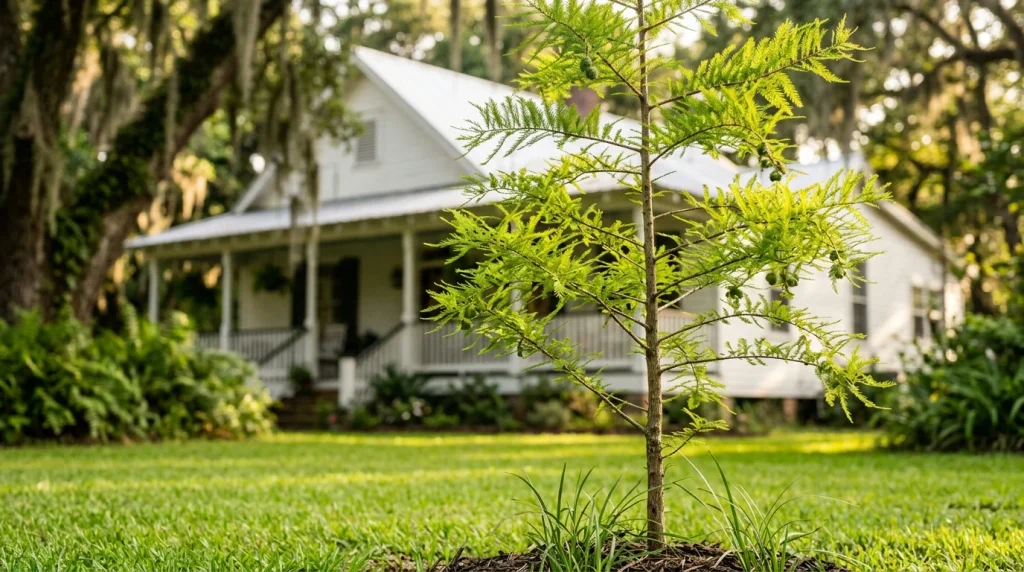
Full-Sun Locations
Typically, crape myrtles thrive best in full sun. LSU AgCenter says crape myrtles require approximately 8 hours of sunlight daily for optimal growth and flowering.
For a sunny Northwest Louisiana yard, you can consider:
- Crape myrtle
- Nuttall oak
- Southern live oak
- Bald cypress
- Southern red oak
Partially Shaded Areas
If your planting site receives several hours of sun but is shaded for part of the day, the species list changes. Some magnolias, red maples, and other adaptable trees can work better than species that demand full exposure.
The important point is to match the tree’s light requirements to the actual planting site, rather than assuming Louisiana’s generally sunny climate is enough.
Think About Mature Size Before You Plant
A tree that is 8 feet tall today may eventually have a canopy several times wider. Ignoring that growth is one of the most common causes of poor tree placement.
Consider both height and canopy spread when planning.
| Tree | Typical Mature Size/Characteristic | Best Consideration |
| Bald cypress | Often 50–70 ft tall and about 25 ft wide | Large landscapes and moist areas |
| Nuttall oak | Around 50 ft commonly; can reach 80–100 ft | Large yards and shade |
| Southern live oak | Large, broad, spreading canopy | Requires substantial open space |
| Crape myrtle | Varies greatly by cultivar | Select based on mature size |
| Red maple | Medium-to-large shade tree | Moist sites with adequate room |
LSU AgCenter reports that bald cypress commonly reaches 50–70 feet in height and about 25 feet in width, while Nuttall oak commonly reaches around 50 feet and can grow considerably larger.
That is why a tree that fits beside your driveway today may not be appropriate there permanently.
Choose Native and Well-Adapted Species
Native trees are not automatically the best choice for every location, but species naturally adapted to Louisiana conditions can offer an important advantage.
Some Louisiana-native or well-adapted choices include:
- Bald cypress
- Southern live oak
- Nuttall oak
- Red maple
- River birch
- Southern magnolia
- Eastern red cedar
- Mayhaw
LSU AgCenter’s Louisiana native tree resources specifically include species such as bald cypress, red maple, river birch, mayhaw, and persimmon for landscape consideration.
A Few Northwest Louisiana-Friendly Choices
Bald cypress: A Louisiana state tree, bald cypress is especially useful in times when you need a large tree that will grow in moist but somewhat dry conditions. It has also been adapted to Louisiana’s hot, humid climate.
Nuttall oak: This native tree is a good choice if you are seeking large shade trees. Tolerant of a variety of soil types, and can offer satisfactory fall color and wildlife food.
Southern live oak: This is an iconic Louisiana landscape tree with a broad canopy. Its eventual size makes adequate planting space essential.
Decide What You Want the Tree to Do
This ‘best’ tree is very much subject to the needs of the task it is required to perform.
For Shade
Trees that can grow large canopies are the best choice if you want to provide shade in an outdoor space or over a portion of the landscape.
Good possibilities include:
- Nuttall oak
- Southern live oak
- Red maple
- Bald cypress
For Flowers and Appearance
Where aesthetics are the primary consideration, then ornamental options might be a better choice.
Crape myrtles bloom in the summer and come in various sizes when fully grown. Southern magnolia has evergreen leaves and large, sweet-smelling flowers. According to LSU AgCenter, both are listed in the list of popular Louisiana landscape trees.
For Wildlife
Species to consider for providing wildlife food and/or cover include Nuttall oak, mayhaw, yaupon, eastern red cedar, pawpaw, and pecan.
This allows for more meaningful species selection rather than just for ornamental purposes.
Do Not Ignore Power Lines and Hardscape
Even healthy trees can be problematic if planted in inappropriate locations.
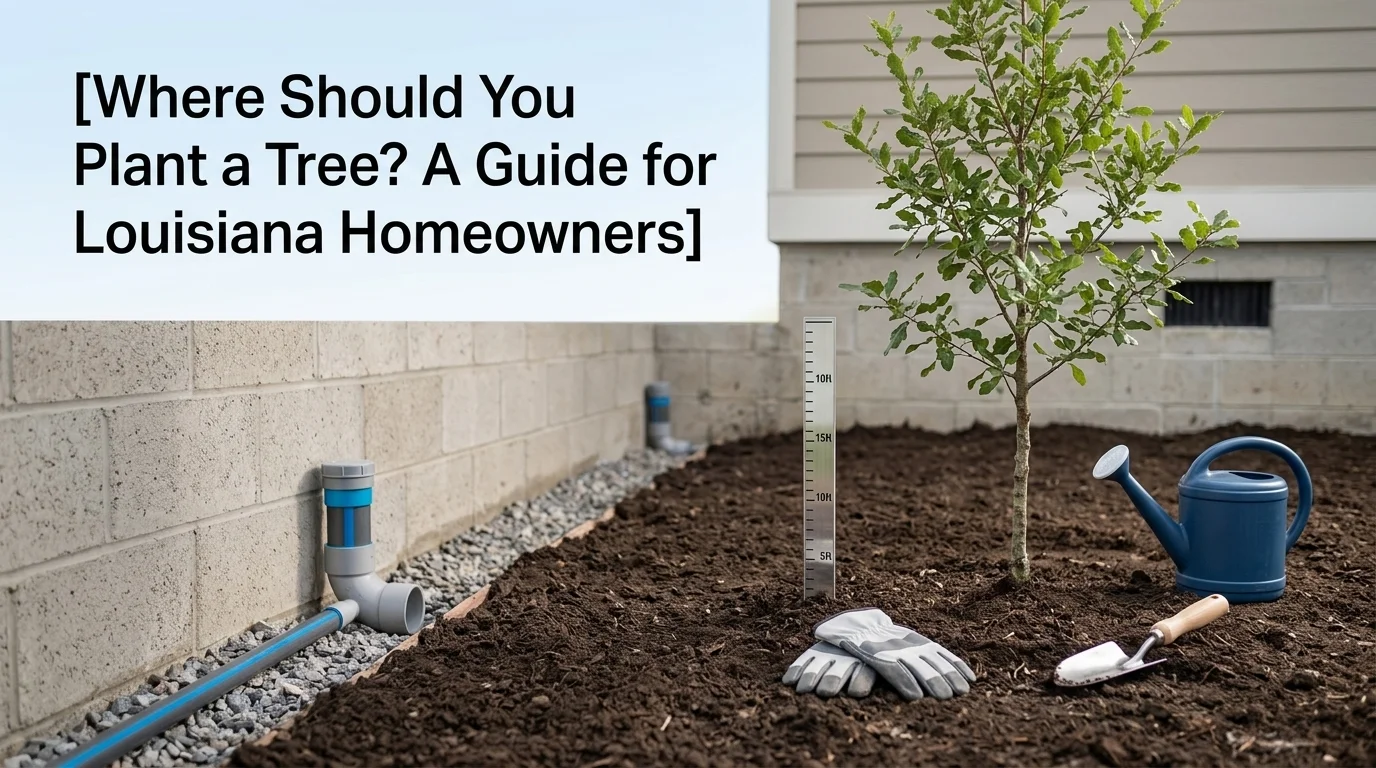
Before planting, look upward and outward. Check for overhead utility lines, rooflines, fences, driveways, sidewalks, septic areas, and underground infrastructure.
A large tree should not be squeezed into a narrow strip simply because there is currently enough room for its trunk.
Use This Quick Placement Checklist
Before purchasing, ask:
- Will the mature canopy reach the house?
- Could branches interfere with utility lines?
- Will roots conflict with nearby hardscape?
- Is there enough room for the trunk to expand?
- Will falling leaves create a problem over a pool or gutter?
- Does the location provide enough sunlight?
Spending a few minutes planning for your plants could save years of cut and prune problems going forward
Consider Growth Rate Versus Long-Term Maintenance
The appeal of fast growth is obvious: You want shade and want it now! But faster-growing trees also require more room and a bit closer attention to structure as they age.
An example: Nuttall oak is listed by LSU AgCenter as moderate to fast growth, whereas bald cypress is also listed as moderate to fast.
Instead of choosing solely based on speed, consider the complete package:
| Priority | What to Look For |
| Fast shade | Moderate-to-fast growth |
| Low-space yard | Smaller mature species |
| Wildlife | Fruit, nuts, seeds, or habitat value |
| Wet location | Wet-soil tolerance |
| Flowering | Ornamental species with suitable sun |
| Long-term structure | Strong branching and appropriate mature form |
The goal is not necessarily to find the fastest-growing tree. It is to find a tree whose growth rate fits your property.
What About Tree Planting Services?
Even after selecting the right species, installation can affect how well the tree establishes.
Having a professional tree-planting service will help assess the site, place the tree properly, and calculate the mature height before the root ball goes into the ground.
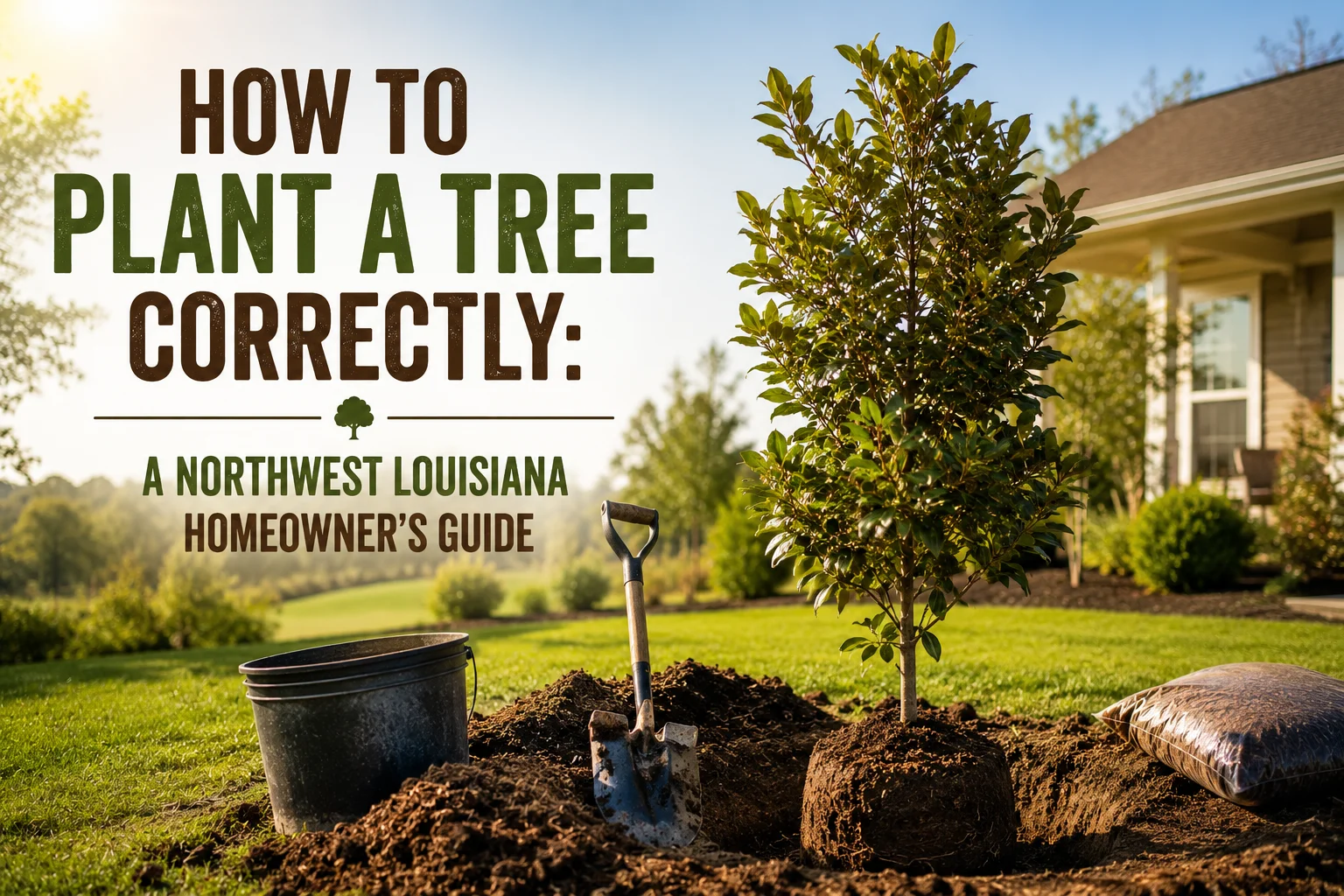
LSU AgCenter recommends a planting hole approximately 2–3 times wider than the container, while keeping the hole no deeper than the tree’s root ball.
For larger trees or difficult planting locations, professional installation can also reduce the risk of poor placement, root problems, or damage to surrounding property.
For homeowners looking for tree planting services in Northwest Louisiana, Tree Time Elite Tree Care can help evaluate the site and select an installation approach based on the tree’s long-term needs.
Frequently Asked Questions
What is the best tree to plant in a Louisiana yard?
There is no single best species for every yard. For large properties, bald cypress, Nuttall oak, and Southern live oak can provide substantial shade and long-term landscape value, while crape myrtle may be better when flowering and a more manageable mature size is a priority.
What trees grow well in Northwest Louisiana?
There are a number of Louisiana-native or well-adapted species that can do the trick, including: bald cypress, Nuttall oak, red maple, river birch, chopped magnolia, Southern live oak, and mayhaw. The end pick must, however, fit your soil, drainage, sunlight, and area.
How much space does a bald cypress need?
In general, a bald cypress will grow to about 50–70 feet in height and approximately 25 feet wide at the base, but size may be much larger on older specimens. So, it is more appropriate for an open piece of the property than a narrow planting strip.
Is Nuttall oak a good shade tree for Louisiana?
Yes. Nuttall oak is native to Louisiana, grows at a moderate-to-fast rate, and commonly reaches about 50 feet, with some trees reaching 80–100 feet. It also adapts to a relatively broad range of soil conditions.
Should I choose a fast-growing tree?
Yes. Nuttall oak is a native Louisiana species, classified as slow-growing to medium-fast, typically attaining about 50 ft in height, with some trees up to 80–100 ft. It is also adaptable over a fairly large spectrum of soil conditions.
Final Thoughts
The largest, fastest-growing, prettiest tree at the nursery may not be the best choice for your Louisiana yard. It is the species that best fits your soil, sunlight, moisture, available space, and long-term stewardship expectations.
For homeowners in Northwest Louisiana, taking those factors into account before planting can help create a healthier landscape and reduce problems later. If you need help with species selection or professional installation, Tree Time Elite Tree Care can help you choose and plant a tree with its mature growth and your property’s conditions in mind.