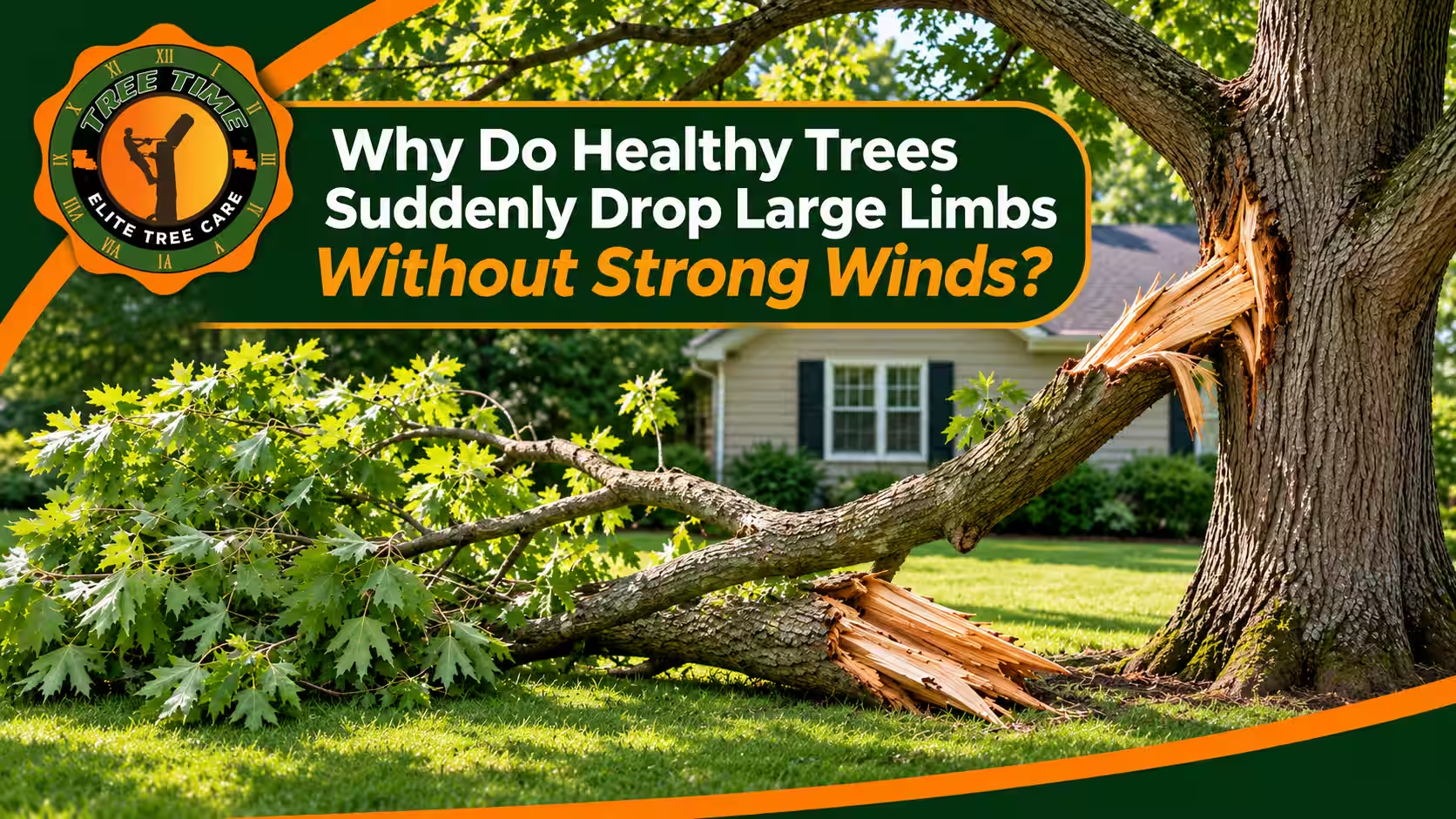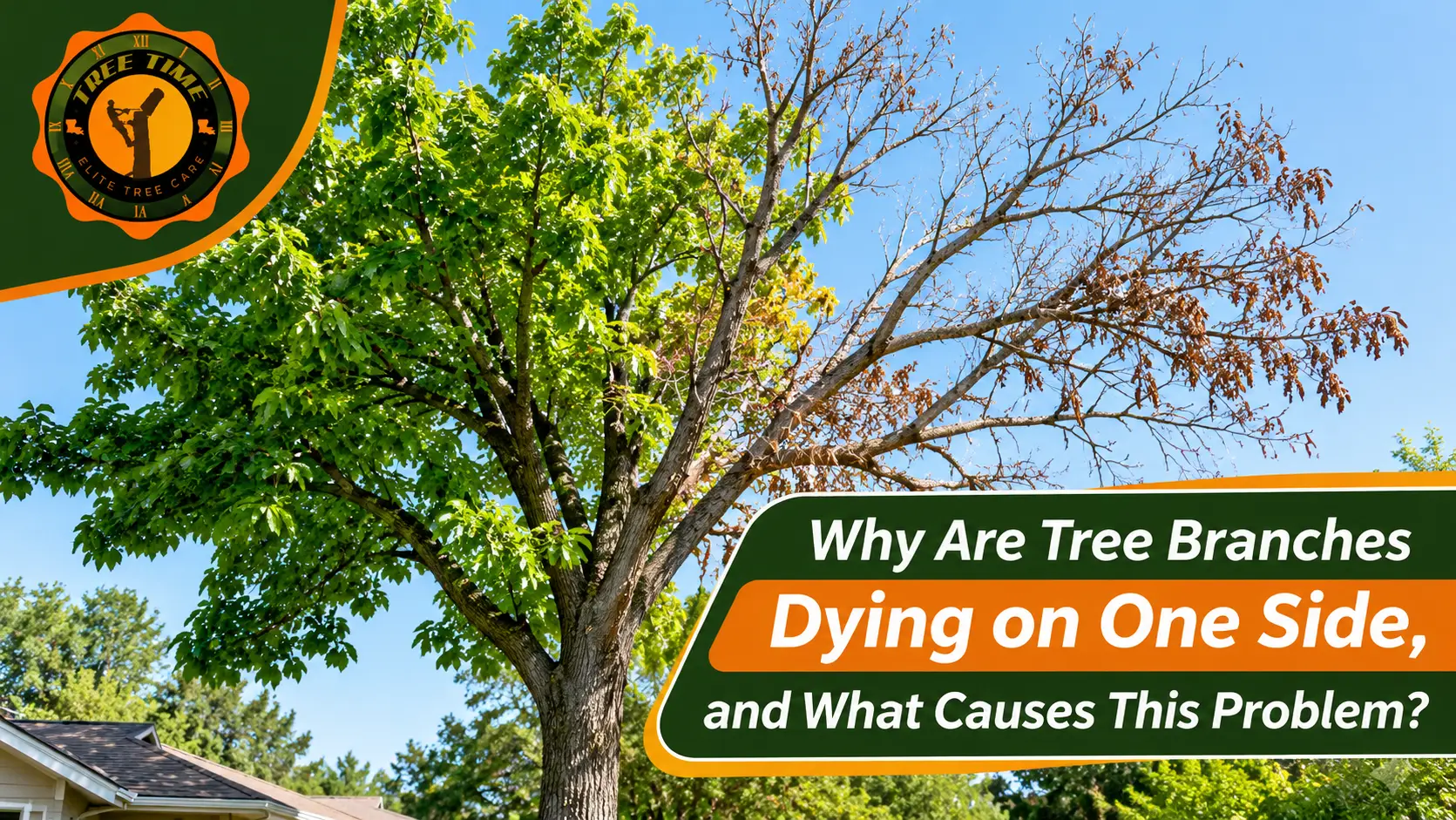


The wind quits, and you walk out to check the yard. One big limb on the oak hangs by a strip of bark. A fork higher up has a fresh crack in it. The tree still stands, but something looks off.
What you see from the ground is only part of the story. Splits and weak unions often run deeper than they look. Tree cabling and bracing after storm damage in Bossier City, LA, can add support to some trees and buy them more years. For others, it won’t help at all. Only a professional look at the whole tree can tell you which. This guide walks through storm damage, first steps, and when support makes sense.
How Can Storms Affect a Tree’s Structure?
Wind pushes hardest on the crown, where all that leaf surface acts like a sail. The force runs down through the limbs and unions into the trunk and roots. Soaked Louisiana soil grips roots less firmly, which makes things worse.
Common Signs of Storm Damage
Walk the yard from a safe distance and look up. Watch for:
- Broken or hanging branches
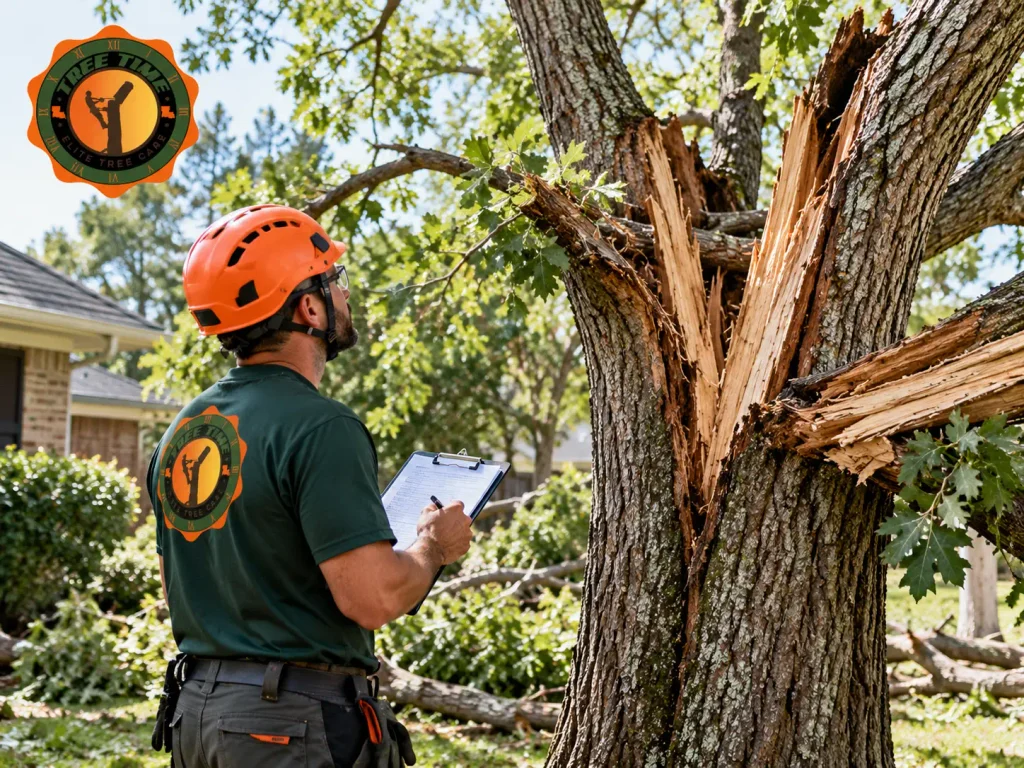
- Split limbs or cracked unions
- Cracks in the trunk
- Torn or lifted roots
- A sudden new lean
- Big limbs that sag or bounce
Not every one of these means the tree is done. A snapped limb on the outer canopy is usually a pruning job. A crack through the main union is a different conversation.
Why Some Structural Problems Are Not Immediately Visible
Storms find weak spots that were already there, like a union with bark trapped inside or an old wound where decay crept in. Wind loads those spots past their limit, and a crack opens. A tree can stay upright and fully leafed out while a split works down inside a union. That doesn’t mean every storm-hit tree is secretly failing. A healthy look from the driveway just isn’t proof the structure is sound.
What Should Homeowners Do Before Considering Tree Cabling or Bracing?
Slow down before you think about fixes. Safety comes first. Then the tree needs someone who knows what they’re looking at.
Look for Immediate Safety Concerns
Some damage can’t wait. Treat these as urgent:
- A large limb hanging loose
- A major crack in the trunk or main fork
- A tree that shifts in the wind
- Soil heaving on one side of the base
- Damaged branches over the house or driveway
Keep kids and pets well away, and stay clear yourself. Don’t climb the tree or yank on hanging limbs. If a tree threatens your home, call a qualified tree professional right away. Call 911 or your electric utility if lines are down or someone is hurt.
Arrange a Professional Tree Damage Assessment
Get an arborist out before anyone talks about hardware. A cable on the wrong tree can give you false confidence about a tree that should come down.
The arborist looks at the trunk and major branches for cracks. They pay close attention to branch unions, where storms do a lot of damage. They check the root area for lifting. They also weigh overall health and any weaknesses that existed before the storm. The answer might be support, pruning, or removal.
When Can Tree Cabling Help After Storm Damage?
Cabling fits when the tree is worth keeping and the problem is limited to certain limbs or stems. It adds support. It doesn’t fix what’s already broken.
Supporting Weak Branches and Unions
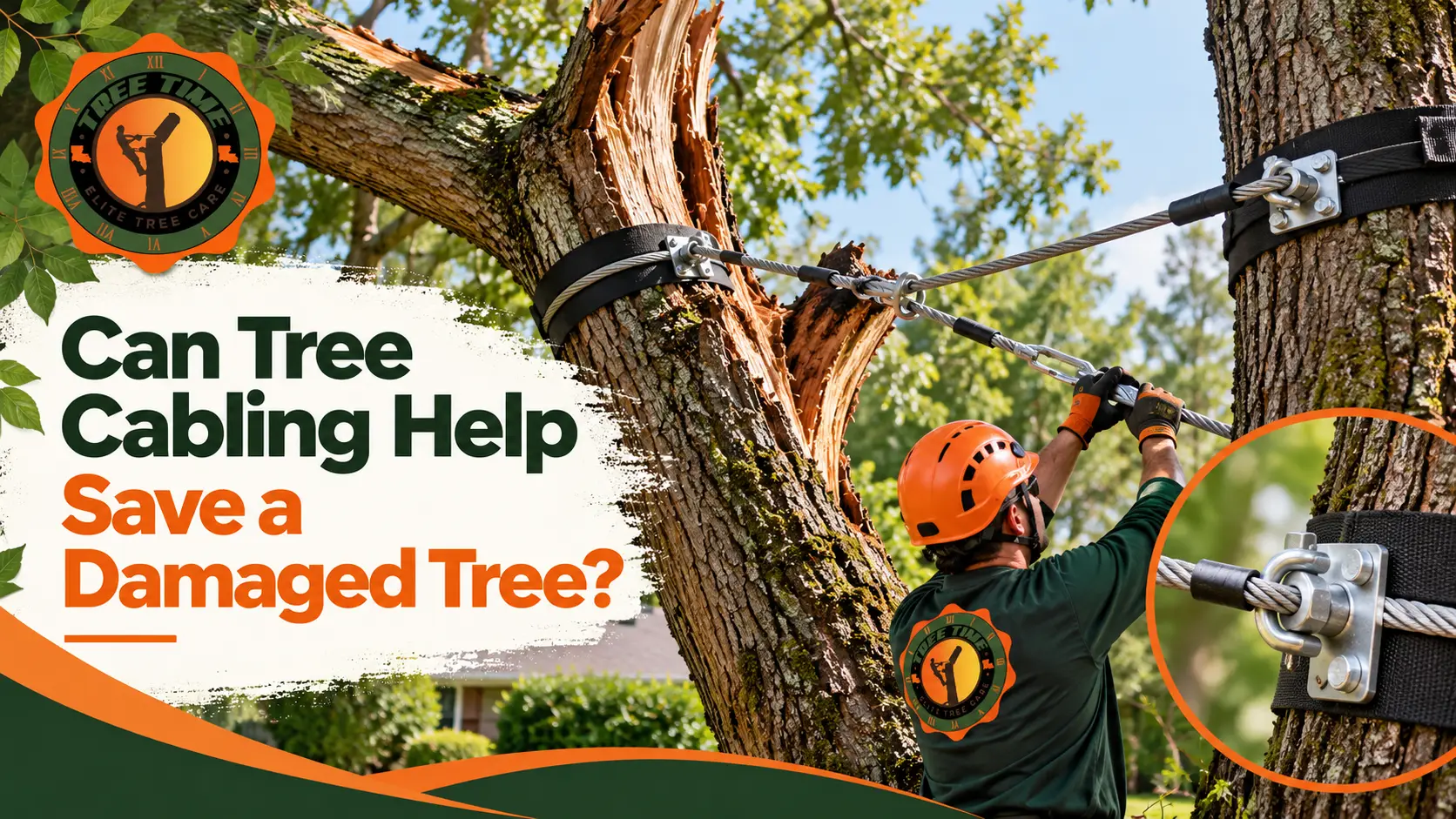
A cable connects selected parts of the crown, usually two stems or major limbs. When wind hits, they move more as a unit instead of whipping against each other. A union that took a beating may now be weaker. A cable can cut the stress on that spot during the next blow.
Placement is everything. The arborist judges where the weakness sits and whether the surrounding wood is still sound. A cable can’t glue a split limb back together. It can’t promise a limb will never fail either.
When Cabling May Not Be Appropriate
Some trees are past helping. Heavy damage across the crown is one red flag. Advanced decay is another. A cracked-through trunk or torn-loose roots usually rule cabling out. The arborist has to look past the one limb that caught your eye. But if the trunk below is hollow, the tree is still a hazard. Pruning or removal is often the honest answer then.
When Is Tree Bracing Necessary After a Storm?
Bracing tackles a different problem. It’s used when a union or fork is weak or starting to split, and the tree still has enough healthy wood to keep.
How Brace Rods Support Weak Tree Structures
Brace rods are steel rods installed through the wood. They pass through selected parts of the tree, usually near a weak union. Their job is to hold those sections together and limit how far they shift apart.
A fork that opened up in a storm is the classic case. A rod across that area adds rigid support right where the weakness is. The extent matters, though. A short split in a solid union is very different from a long crack running into the trunk.
Why Bracing Requires a Professional Assessment
The arborist checks the split union and the wood around it, including any decay where rods would go. They also look at the trunk and the structure above and below the damage. Get it wrong, and the rod may miss the real weakness. Even a well-placed brace doesn’t remove the risk of future failure. It reduces stress on one area. That’s all.
What Is the Difference Between Tree Cabling and Bracing After Storm Damage?
Both methods add support to a tree worth saving. They just handle different parts of the problem.
| Feature | Tree Cabling | Tree Bracing |
| Main support method | Cables link selected limbs or stems | Brace rods pass through selected sections of wood |
| Typical purpose | Adds support and limits movement | Adds support where a union is weak or split |
| Possible application | Vulnerable branches or stems | Certain compromised unions |
| Main consideration | Right placement on a tree suitable to keep | Right rod placement in sound wood |
| Professional evaluation | Needed to decide if cabling fits | Needed to decide if bracing fits |
Neither one wins across the board. The type of damage and its location point toward one method or both. Sometimes they point to neither, and the tree needs a different plan. Get the assessment before you settle on anything.
What Happens After a Tree Receives Cabling or Bracing?
Installing support isn’t the finish line. The tree keeps growing, and the storms keep coming.
Follow-Up Inspections and Tree Monitoring
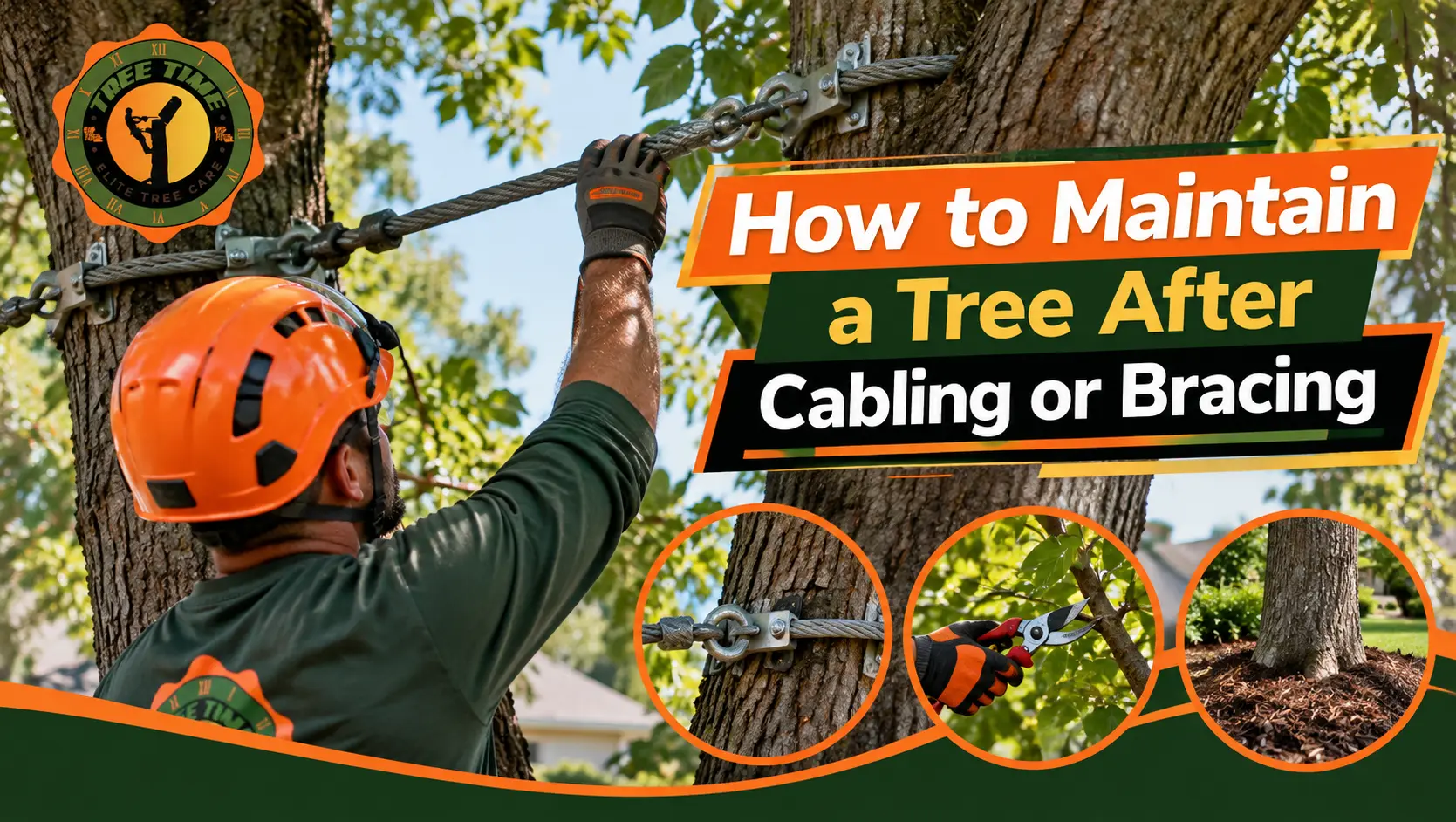
Look the tree over after big storms. Watch for new cracks or a change in how a supported limb moves. Your arborist will tell you how often a pro should check the system, since that depends on the tree and the hardware.
Why Support Systems Do Not Eliminate Tree Failure Risks
Cables and rods add support. They don’t make a tree storm-proof. A severe enough storm can still bring down a supported limb. Decay can spread, and roots can weaken over time. If your arborist recommends another look later, take it seriously.
When Should a Storm-Damaged Tree Be Evaluated by an Arborist?
Some damage needs a pro, especially when a heavy limb sits over places where people live and walk. Call for an evaluation if you notice:
- A major limb split or partly torn away
- A broken branch dangling over a sidewalk or patio
- Cracks opening in the trunk
- A tree that suddenly sits differently
- A gap forming at a main fork
- Torn roots near the base
How bad the damage is and where it’s located shape the response. Some trees turn out to be good candidates for support. Others need pruning or removal. No sign on this list automatically means cabling or bracing.
Frequently Asked Questions
Here are straight answers to common questions from Bossier City homeowners.
Can Tree Cabling Save a Storm-Damaged Tree?
Sometimes. If the tree is basically healthy and the damage is limited to certain limbs or unions, a cable can add support. It can’t guarantee the tree stays safe. And it won’t rescue a tree with a failing trunk or badly damaged roots.
Is Bracing Better Than Cabling for a Split Tree?
Not automatically. It depends on where the split is and how far it runs. Some splits call for bracing. Others need cabling or both. Some trees need to come down instead. An arborist has to see the tree to know which.
Should Homeowners Install Tree Cables After a Storm?
No. Climbing a damaged tree is dangerous, and the wrong hardware or placement can make things worse. Get a professional assessment first. If support makes sense, a trained crew should choose and install it.
Final Thoughts
Storm damage deserves a careful look before anyone reaches for cables or rods. The tree’s overall condition decides whether support makes sense or whether pruning or removal is smarter. Tree Time Elite Tree Care is a family-owned company serving Bossier City and Northwest Louisiana, led by Louisiana-licensed arborist Kevin Lee. The team offers tree cabling and bracing backed by assessments that weigh the whole tree. Not every damaged tree can be saved, but you’ll know where you stand. Contact Tree Time Elite Tree Care to talk through your tree care needs.