
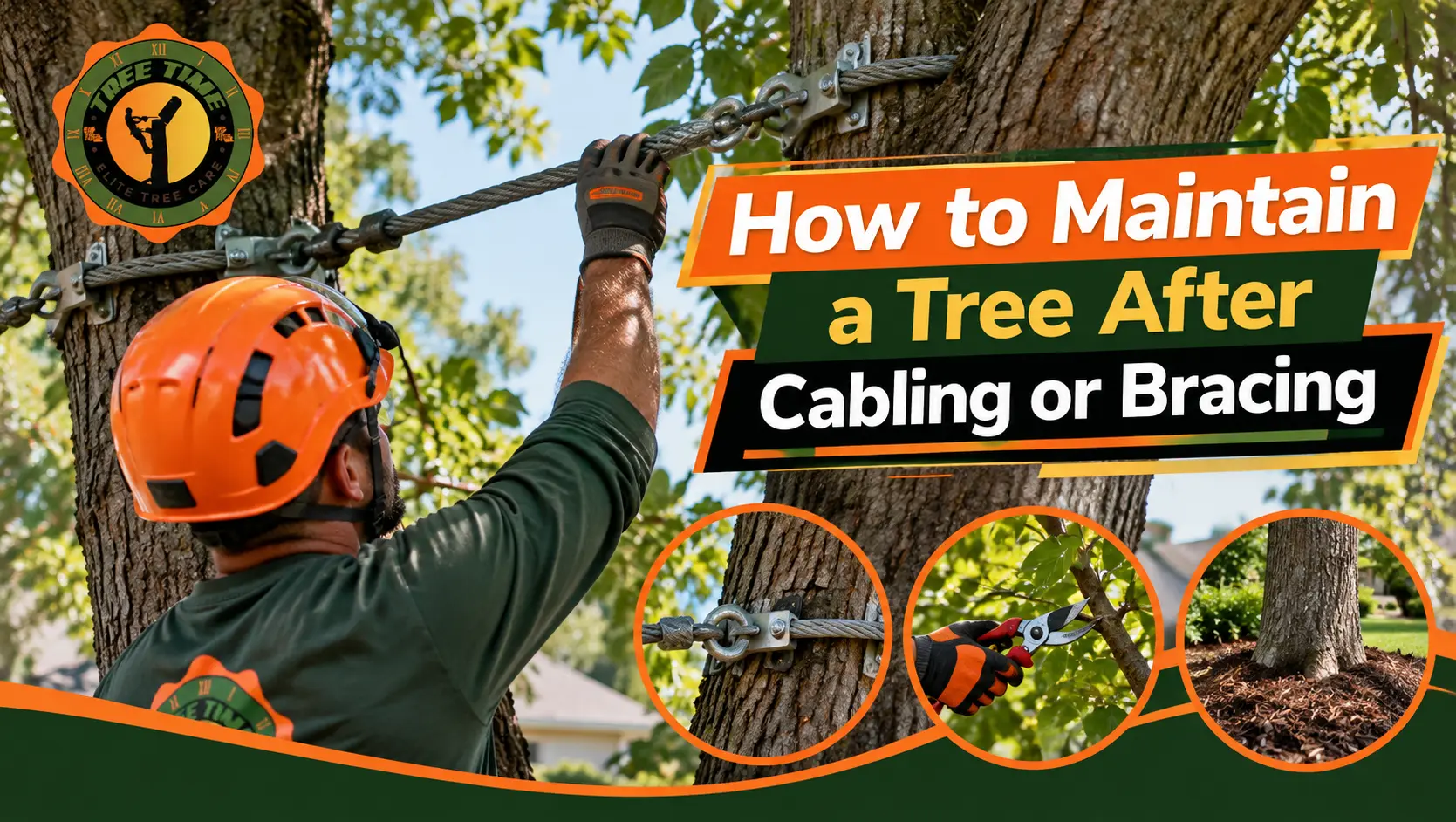
The crew packed up their gear and drove off. Now your big oak has a steel cable running between two heavy limbs, and maybe a brace rod through an old split. So what happens next? A lot of homeowners figure the job ended when the hardware went in. It didn’t. Your tree keeps growing. Louisiana storms keep rolling through, and steel left out in the weather wears down. Good tree cabling and bracing maintenance mostly comes down to paying attention. Below, you’ll learn what to watch from the ground, what to do after storms, and when to call a pro.
Why Does a Tree Need Attention After Cabling or Bracing?
Cables and brace rods add extra support to a weak spot in a tree. That’s their whole job. They don’t lock the tree in place. They don’t stop it from changing either. The tree keeps living and growing around them. So that support needs a fresh look now and then.
Tree Growth Can Affect the Support System
Every limb in that crown keeps getting longer. It gets heavier too. New wood slowly builds up next to the hardware. A system that fit well on install day may sit differently a few years later. That’s not a mistake. It just means a trained eye should confirm the fit.
Hardware and Tree Conditions Can Change Over Time
Steel takes a beating outdoors. Rain and our sticky summer humidity can lead to cable corrosion and hardware wear. The tree changes as well. A supported branch can weaken. Here’s the catch. Hardware that looks fine from your yard doesn’t prove it still works. A shiny cable can hold a decaying limb.
What Should Homeowners Watch for After Tree Cabling or Bracing?
You don’t need a ladder or a climbing rope for this part. Just walk around the tree every so often and look up. Learn how it normally looks in each season. Once you know its usual shape, changes will jump out at you right away.
Look for Changes Around Branches and Attachment Points
Start with the wood itself. The tree often shows trouble before the hardware does. Spot one of the signs below? Don’t panic. A change doesn’t always mean the system failed. It does mean an arborist should take a look. Snap a few photos from the ground.
- New cracks near a supported branch or union
- A branch that hangs lower or moves more than before
- Torn bark around the attachment areas
- Limbs rubbing your roof or another branch
- Dieback in the supported section
Notice Visible Changes in Cables, Rods, and Hardware
The steel can tell you things too. Follow the cable with your eyes. Keep your hands off, though. Never pull on a cable or crank on a fitting. You could get hurt. If something looks off, take a photo and call a professional. Look for these:
- Rust or what looks like corrosion
- Frayed strands or a damaged cable
- Loose or shifted hardware
- Dents or bends after a storm
How Can Tree Growth Affect Cabling and Bracing?
Growth is a good sign. It means the tree is healthy and strong. But every inch of new wood changes how the tree and its support system fit together. Some of those changes are harmless. Others need a pro. The trick is knowing where to look.
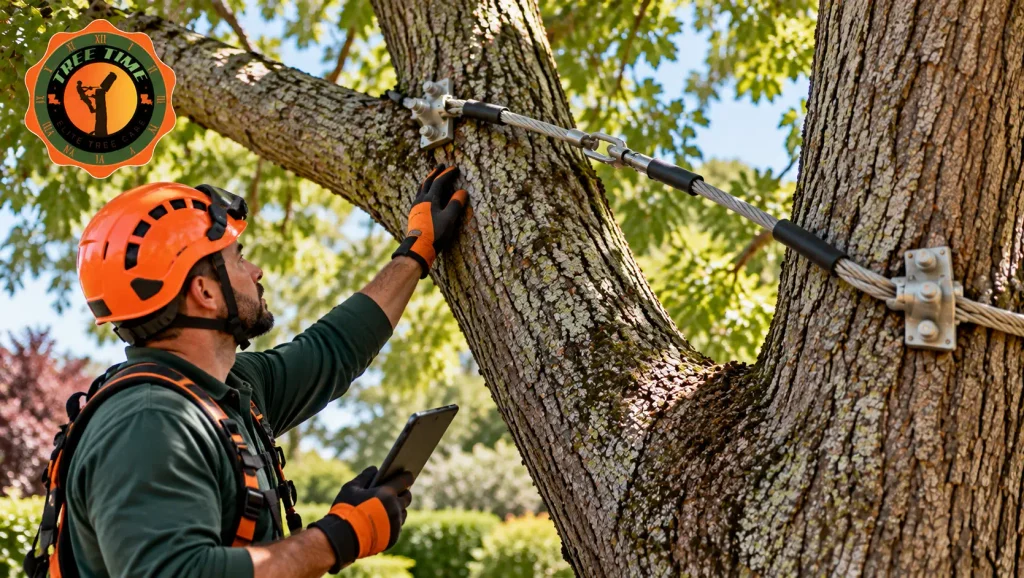
Monitor Growth Around Cable and Hardware Locations
Watch the spots where hardware meets the tree. As a limb widens, wood slowly fills in around a bolt or anchor. Bark may roll over the hardware. A new shoot may sprout beside a cable. Mention changes like these to an arborist. Plenty of trees grow around their hardware just fine.
Understand Why Support Systems May Need Reassessment
The original setup fit the tree as it stood back then. Trees don’t stand still. New limbs add weight in new places. Growth pushes toward sunlight and away from shade. Each shift can change whether the system still suits the tree. An arborist weighs it all. They might adjust or replace it. Sometimes they leave it alone.
What Should You Do After a Storm Affects a Cabled or Braced Tree?
Bossier City gets its share of hard wind. Spring thunderstorms can roll in fast. A big blow can stress both the tree and the hardware holding it together. Once the weather clears, it’s tempting to rush outside and poke around. Slow down. A careful look from a safe spot works.
Check the Tree from a Safe Distance
Stay on the ground and keep real space between you and the canopy. Look for broken or hanging limbs. Check the trunk for fresh cracks. Notice whether the tree leans differently. Then scan the cables and rods for anything snapped or bent. Keep these safety rules in mind:
- Keep kids and pets out from under the branches.
- Don’t climb the tree or touch damaged hardware.
- Stay far away from downed power lines.
Arrange Professional Attention When You Notice New Damage
New damage changes the whole picture. A fresh crack in a supported limb might mean the original plan no longer fits. A broken branch can throw weight onto the cable in new ways. An arborist needs to reassess the tree and its system together. More hardware isn’t always the answer.
Can Homeowners Adjust or Replace Tree Cables and Bracing Hardware?
Short answer? No. You might be the first person to notice a problem, and that’s valuable. You live with the tree every day. But the fix belongs to someone trained to read the whole tree. They see how every part works together. A DIY repair can do more harm than good.
Why Cable Tension and Hardware Adjustments Require Expertise
A tree cable isn’t a guitar string you tune by feel. Its tension works with the limbs and the union as one system. Crank it too tight and you can stress the wood. Loosen it and the branch may swing too much. So leave the tension alone. Don’t move or test the hardware yourself.
When Might Tree Cable or Hardware Replacement Be Needed?
Replacement usually comes up when something has visibly gone wrong. Heavy corrosion can make hardware unsuitable. So can a frayed cable or a bent rod. Tree changes matter just as much. A system can stop fitting a tree that has shifted. Age alone doesn’t settle it. An arborist checks both first.
How Often Should a Cabled or Braced Tree Be Professionally Inspected?
Your eyes catch the obvious stuff. A trained arborist catches what you can’t see from the yard. They check the wood near each anchor up close. They also judge how the system handles the tree’s current weight. Your checks and their visits work best as a team.
Follow a Maintenance Schedule Based on the Individual Tree
No single number fits every tree. A fast-growing tree may need checking sooner than a slow one. The support type matters. So do the installation details. Wind exposure and overall health play a part. Your arborist should set a schedule for your tree. Write the next date down.
Know When an Earlier Inspection May Be Necessary
Some things shouldn’t wait for the next planned visit. A small issue can grow if it sits for months. If you notice any sign below, call sooner rather than later. It’s better to have an arborist find nothing than to miss a problem that keeps growing.
- A major storm or strong wind event
- New cracks in the supported structure
- Apparent cable or hardware damage
- Unusual movement in the tree
- Rust that seems to be getting worse
What Can Homeowners Do to Support a Healthy Cabled or Braced Tree?
The hardware is just one piece of the puzzle. The tree still needs decent growing conditions to stay strong. These habits take little effort and help you avoid needless damage. They don’t replace a professional inspection, though. Think of them as your half of the deal.
- Keep mowers and trimmers away from the trunk.
- Don’t dig through major roots.
- Never hang swings or lights from cables or rods.
- Ask an arborist before pruning a supported branch.
- Keep a file of installation details and arborist notes.
- Call a pro instead of grabbing a wrench.
Frequently Asked Questions
Homeowners tend to ask the same few things once the crew leaves. Below are short, straight answers to the ones that come up most often. If your question isn’t covered here, ask your arborist. They know your specific tree better than any general guide can.
How Often Should Tree Cables Be Inspected?
It depends on the tree. Growth rate affects the timing. So does the type of system. Weather exposure matters too. Follow the schedule your arborist recommends. If you spot damage or a big change, call before the next visit. Don’t wait for a calendar date.
Can Tree Cables Become Too Tight as a Tree Grows?
Growth can change how the tree and its hardware fit together. That shift can affect cable tension. A professional should check whether the system still suits the tree. Don’t try to adjust the tension yourself. Even a small change can throw off how weight is shared.
When Should Tree Cables or Bracing Hardware Be Replaced?
Replacement depends on the condition of the hardware. Visible wear is a big clue. Tree growth and overall fit matter too. Age alone doesn’t decide it. Have an arborist look over the whole setup. They’ll say if it needs an adjustment or a full replacement.
Final Thoughts
A cabled or braced tree still needs you. Watch from the ground and call for help when something changes. Tree Time Elite Tree Care serves homeowners in Bossier City, Shreveport, and nearby Northwest Louisiana communities. Their Tree Cabling & Bracing team includes a Louisiana-licensed arborist who can assess your tree and its hardware. Contact our team at (318) 470-5867 to discuss your tree care needs.