
Planting a tree is easy, but picking a location that will support its growth over the next few decades is harder. A young tree that is not a concern next to a house, driveway, or utility may become a problem later in life when the canopy, height, and root system become a problem not visible when planting.
Good tree placement starts with planning for the mature tree rather than the tree you bring home. For Louisiana homeowners, that also means considering heat, heavy rainfall, soil conditions, drainage, and the long-term space available on the property.
Start With the Tree’s Mature Size
Determine the size to which the species will grow before selecting a site. Consider three factors: mature size, canopy width, and root system characteristics.
A 60-foot-tall tree is going to require a very different setting from a small ornamental tree that is only expected to grow to 15 feet or so. The same holds true for the width of the canopy. It is possible for a well-spaced tree to be overcrowded if the mature branches grow into a roof, driveway, or neighbor’s property.
When choosing the right tree, ask:
- How tall can it become?
- How wide can the mature canopy spread?
- Does it need full sun, partial shade, or more protection?
- How much open space will it need as it grows?
- Is the species suited to your local soil and climate?
The intention isn’t just to locate a vacant spot. It is to identify a site that will accommodate the full-size tree.
Keep Enough Distance From Your Home and Other Structures
Tree roots do not automatically destroy every nearby foundation, but planting too close to structures can create avoidable conflicts. Many of these problems, such as large roots, falling limbs, moisture problems, and restricted access for tree care, can become concerns over time.
Distance varies by species and size of the mature plant. Rather than planting one number for each tree, match the available space with the tree you want to plant.
| What Is Nearby? | What to Consider Before Planting |
| House or foundation | Mature height, canopy spread, roots, and maintenance access |
| Driveway or sidewalk | Root growth and future lifting or cracking |
| Roof | Branch clearance and falling debris |
| Property boundary | Mature canopy and root spread |
| Patio or outdoor area | Future shade and branch clearance |
| Other trees | Competition for light, water, and growing space |
Small trees may be able to be planted in more confined landscape spaces. Larger shade trees require much more space to grow without causing conflicts.
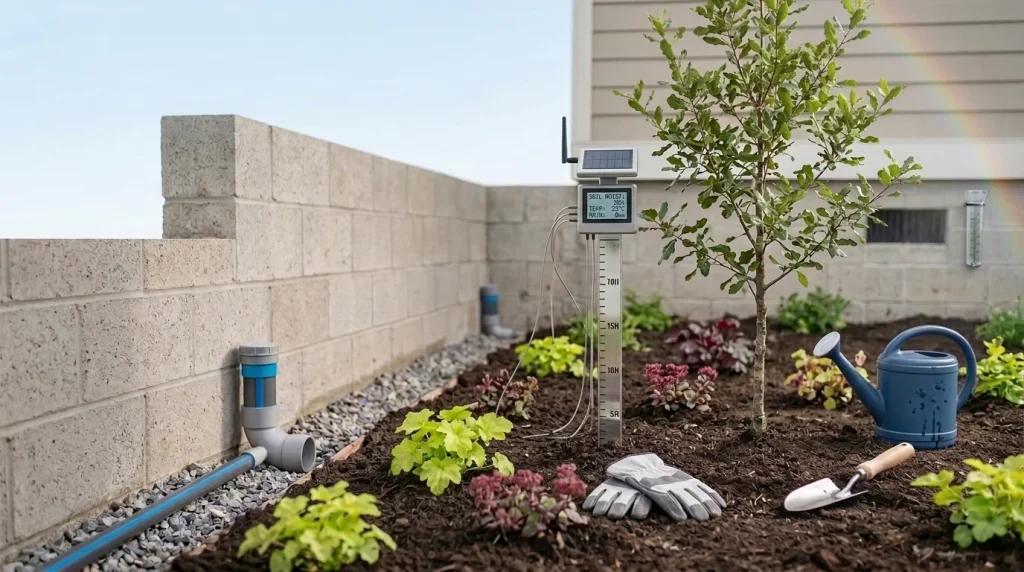
Check Overhead and Underground Utility Lines Before You Plant
One of the greatest considerations in site selection is utilities. Before planting, look for overhead power lines and consider the tree’s mature height. A tree that will grow into an electrical line can pose safety hazards and may need periodic pruning.
Underground utilities also matter. Water, gas, electrical, sewer, and communication lines may cross areas that appear completely open. Before digging in Louisiana, homeowners can use the state’s Louisiana 811 notification system to have participating underground utilities marked before excavation. Louisiana 811
Do not assume that a visible utility box tells you where every underground line runs. Checking before digging is a basic part of responsible property planning.
Consider Sun Exposure and Future Shade
The planting site can be sunny now, but different in the future depending on the growth of surrounding trees or buildings. Take a moment to notice the sunlit areas of the land. Consider how the new tree will be affected and what it will shade.
A large shade tree can be beneficial on one side of the house, but on the other side of the house, it can eliminate sunlight for a garden, lawn, or fruit tree. The shade forms should also be considered for the future, especially when multiple tree and shrub combinations are being planted.
Pay Attention to Louisiana Soil and Drainage
The soil conditions throughout Louisiana vary, and water management is important in the selection of tree planting sites. Some areas may be saturated with rainwater, and other areas may run off much quicker.
Before planting, look for:
- Areas where water regularly pools
- Slopes that direct runoff toward or away from the planting site
- Compacted soil
- Extremely dry areas
- Changes in soil texture across the property
A tree that prefers well-drained soil may struggle in a location that remains wet after storms. However, a species that can withstand periodic wetness will be more appropriate for some low-lying areas. Homeowners in Northwest Louisiana can find even a few different varieties of different conditions within a single yard. Rather than assuming that all soil and drainage are similar, it is important to check to prevent future complications.
Think About the Tree’s Roots Before You Plant
Roots require space, air, water, and appropriate soil. They can grow beyond the trunk area visible to the naked eye and can compete with other plants in the vicinity or come into contact with hard surfaces as the tree gets older.
This does not mean every tree needs to be planted in the middle of a huge open field. It means the species needs enough space for its expected root spread and mature growth. Don’t just pick the spot because there is no other place else in the yard. For instance, if a house is set right next to a driveway, narrow strips of land may not be adequate even though the young tree fits in the narrow area physically now.
Do Not Forget Property Boundaries
Planting on or very close to a property line can cause future conflicts if branches or roots grow over the line, or if maintenance needs become an issue on the neighbours’ property. Check the boundary before choosing a permanent planting location. After that, think about the tree’s future canopy, not just how far the tree’s trunk is from the property line.
With a little extra planning, a tree can never be a long-term source of conflict.
Match the Right Tree to the Best Spot
The best location depends partly on the tree species, and the best species depends partly on the location. These two decisions should happen together.
For instance, a small ornamental tree can be planted by a patio, where a large shade tree would eventually take up too much room. If there is sufficient space between buildings, fences, and utilities, a large tree could be more appropriate for an open area of the property.
When homeowners are uncertain about species selection, spacing, or long-term tree care, Tree Time Elite Tree Care can help evaluate the available space and identify practical options for the property.
A Simple Tree Placement Checklist
Before you plant your trees, walk through this checklist:
- Check the tree’s mature height and canopy width.
- Consider the expected root spread.
- Look for overhead power lines.
- Have underground utilities identified before digging.
- Measure the available clearance from structures and hard surfaces.
- Check property boundaries.
- Observe sun exposure and future shade patterns.
- Evaluate soil conditions and drainage.
- Consider other mature trees and shrubs nearby.
- Make sure the location will still work years from now.
This is a longer process than selecting a location by appearance alone, but it can potentially result in less future property damage, tree removal, or costly pruning.
When Professional Guidance Can Help
Some properties are straightforward. Others have multiple mature trees, limited space, overhead utilities, drainage concerns, or structures that make tree positioning more complicated.
Professional guidance can be particularly useful when planting a large tree that may remain on the property for decades. Tree Time Elite Tree Care can help homeowners think beyond the initial planting and consider how the tree may affect the landscape as it matures.
Frequently Asked Questions
What Is the Ideal Distance to Plant a Tree Away From Your Home?
The answer will depend on the tree’s mature size, spread, and root system. Most trees will require significantly more clearance than small ornamental species, and it is best to verify the mature requirements for the species chosen.
Can I plant a tree near power lines?
The tree will only be suitable if the mature size and form the tree is likely to attain are suitable for the available space. Don’t use a species with future growth that will come in contact with overhead electric wires.
Should I plant a tree in a low spot where water collects?
Not automatically. Some trees will need moist soils, while others will require well-drained soils. Determine the purpose for creating the area and select a plant that will tolerate the aquatic environment.
How much space should I leave between trees?
Tree spacing should depend on the mature size of the tree’s canopy, not the size of the young trees. Trees planted too close together may compete for sunlight, water, and space during their growth.
Plan for the Tree You Will Have Years From Now
The right tree placement is a long-term decision. Factors to think about before planting include mature size, root spread, power lines, buildings, soil properties, drainage needs, exposure, and space requirements.
A well-chosen location gives a tree room to grow while helping protect the home, driveway, utilities, and surrounding landscape. Planning now is far easier than trying to correct a placement problem after a small tree has become a mature one.