
You hear it on a windy night when a limb drags across the shingles above the bedroom. Tree branches near roof edges are common in older neighborhoods, and most never cause real trouble. Some do, and it pays to know which ones before a storm decides for you. A branch needs trimming when it touches the roof, shows cracks or dead wood, hangs heavy over the house, or keeps choking your gutters. A healthy limb with room to sway may be fine where it is. What really counts is the tree’s condition, how each branch is built, and how close it can swing. Timing and safe clearance come next.
When Should You Trim Tree Branches Near Your Roof?
Check three things before anyone picks up a saw: the branch’s health, where it sits relative to the house, and what happens if it snaps. Those answers decide whether a limb needs work now, later, or not at all.
When Branches Touch or Rub Against the Roof
Tree branches touching roof shingles do their damage slowly. Each gust drags the limb across the surface and strips the granules that shield asphalt shingles from the sun. Wind-induced branch movement makes it worse because a limb that clears the roof on a calm day can slap down hard in a storm. Any tree branch in contact with roof surfaces, gutters, or fascia deserves a closer look.
When a Branch Is Dead, Cracked, or Weakly Attached
Dead or damaged wood is the clearest reason to act. Watch for these signs on limbs above the house:
- Bare branches while the rest of the tree has leafed out
- Cracks or splits along a limb or into the trunk
- Broken pieces hanging in the canopy
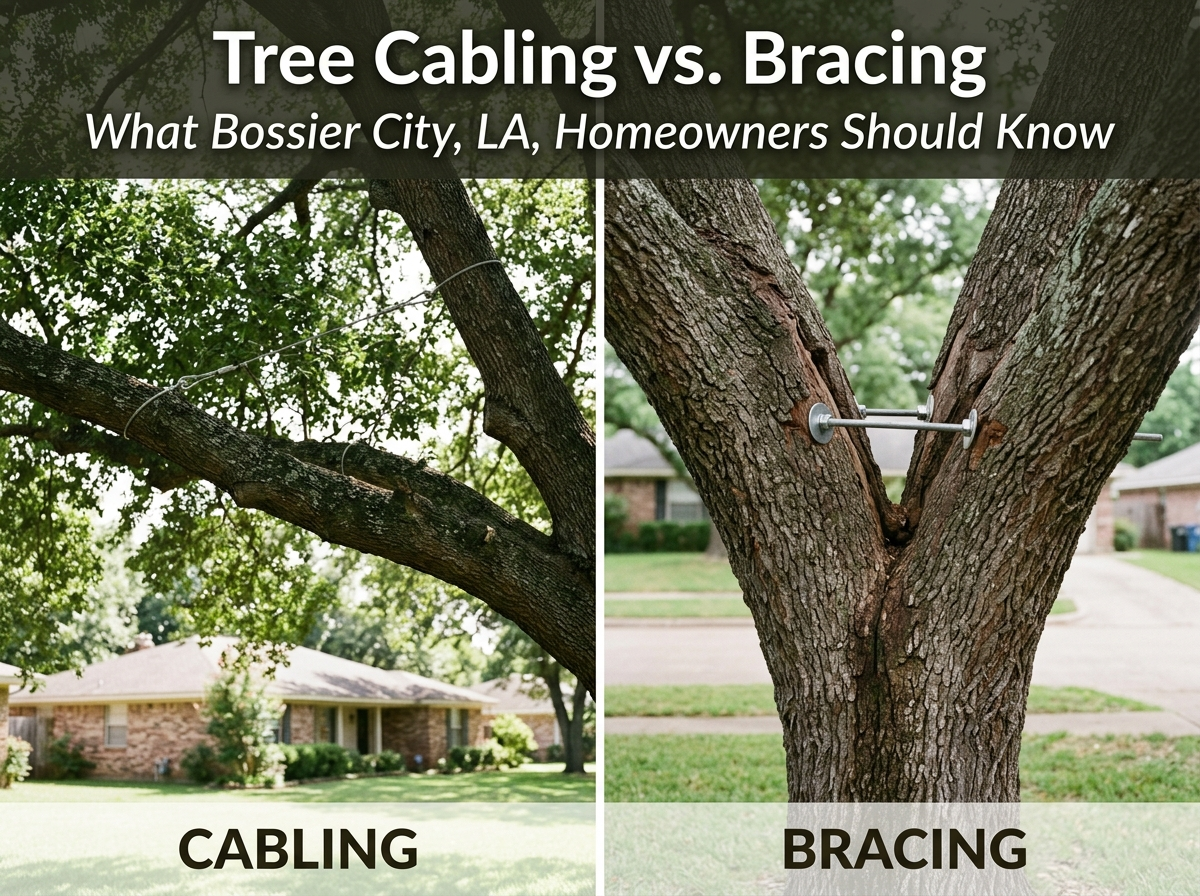
- Tight V-shaped unions with bark pinched inside
Branch attachment strength matters as much as size. A tight V with trapped bark holds on more weakly than a broad U-shaped union, and a crack at that joint raises branch failure risk quickly. A weak limb over your roof is a bad place to gamble on tree structural integrity, so don’t wait for a routine pruning season.
When Branches Grow Too Close to Gutters or Roof Edges
Tree branches near gutters cause trouble even when they never touch the roof. Leaves, twigs, and seed pods pack into the troughs until gutter obstruction sends water over the edge. Better roof clearance along the eaves means fewer trips up the ladder.
What Is the Best Season to Trim Branches Hanging Over a Roof?
No single month fits every tree, because species, local weather, and the reason for the cut all shape the timing.
Late Winter and Early Spring for Planned Pruning
Most deciduous trees handle planned cuts best in late winter or early spring while dormant and before new growth starts. However, spring-blooming species—such as dogwoods and redbuds—should be pruned in late spring immediately after their flowers fade so you don’t cut off next season’s blooms.
When You Should Not Wait for the Ideal Season
A dead, broken, or hanging limb over your roof needs attention now, whatever the calendar says. Routine canopy maintenance can wait. Avoid pruning local oak trees in spring to prevent oak wilt disease, and hold off on heavy cuts during severe heat waves or summer droughts.
Why Louisiana Weather and Tree Species Matter
Northwest Louisiana operates on a different timetable than northern regions. Winters here are short and mild, summers are hot and humid, and severe spring storms arrive early. Late winter (January through February) remains the optimal window for pruning most local shade trees before bud break. However, for spring bloomers like dogwoods and redbuds, wait until right after their spring flowering so you don’t strip away the buds set the previous year.
How Much Space Should You Keep Between Tree Branches and a Roof?
There’s no single number that fits every house. Roof clearance tree trimming depends on the tree’s mature size, how far its limbs travel in the wind, and the condition of the wood.
Start with one firm rule: branches shouldn’t touch shingles, gutters, the chimney, or siding, even in wind. The real gap is the space left after a storm swings the limb. Heavy tree limbs above roof sections need more room than thin twigs because they hit far harder.
| Factor | Why It Matters |
| Tree size and mature canopy | A tree canopy near the house keeps spreading, so today’s gap shrinks. |
| Branch length and weight | Long, heavy limbs bend more and hit harder if they fail. |
| Wind exposure | Open, windy spots let branches swing farther toward the roof. |
| Roof and gutter layout | Valleys, eaves, and chimneys sit closer to limbs and trap debris. |
| Branch condition | Cracks or weak unions can turn a light trim into a full limb removal. |
Good tree clearance around homes prevents foreseeable contact without stripping the tree bare or weakening its structure.
What Problems Can Overhanging Tree Branches Cause?
Overhanging tree branches hurt a house slowly through rubbing and debris, or all at once when a limb breaks.
Shingle Wear and Other Roof Damage
Rubbing wears roofing down the way sandpaper wears wood until shingles curl and crack. A dead limb dropping from height can punch into the decking. Tree branch roof damage scales with branch size, movement, and how often a limb makes contact.
Clogged Gutters and Moisture Problems
Leaves, seed pods, and sticks pile up fast in gutters under a tree, and the overflow can soak fascia boards over time. A clogged gutter doesn’t automatically mean a leaking roof, though. The risk rises when clogs keep coming back.
Storm Damage and Falling Limbs
Storms find weak wood. Rain adds weight a cracked limb may not handle, and leaves bunched at the tip of a long branch put heavy leverage on its union. A heavy limb over an open lawn means a cleanup job, but over a bedroom it’s a different story. Catching heavy branches above the house before storm season is simple storm damage prevention.
How Should Branches Near a Roof Be Pruned Without Harming the Tree?
Tree pruning near the house isn’t about cutting off everything over the roof. Bad cuts and heavy removal weaken a tree, which often responds with weak, fast shoots that cause new problems.
Use Proper Pruning Cut Placement
Every good cut starts at the branch collar, the slightly swollen ring where a branch joins the trunk. Pruning cut placement just outside it lets the tree seal the wound. Flush cuts leave a bigger wound, and long stubs tend to rot. On larger limbs, pros use a three-cut method that starts with an undercut so the bark doesn’t tear.
Preserve the Tree’s Natural Structure
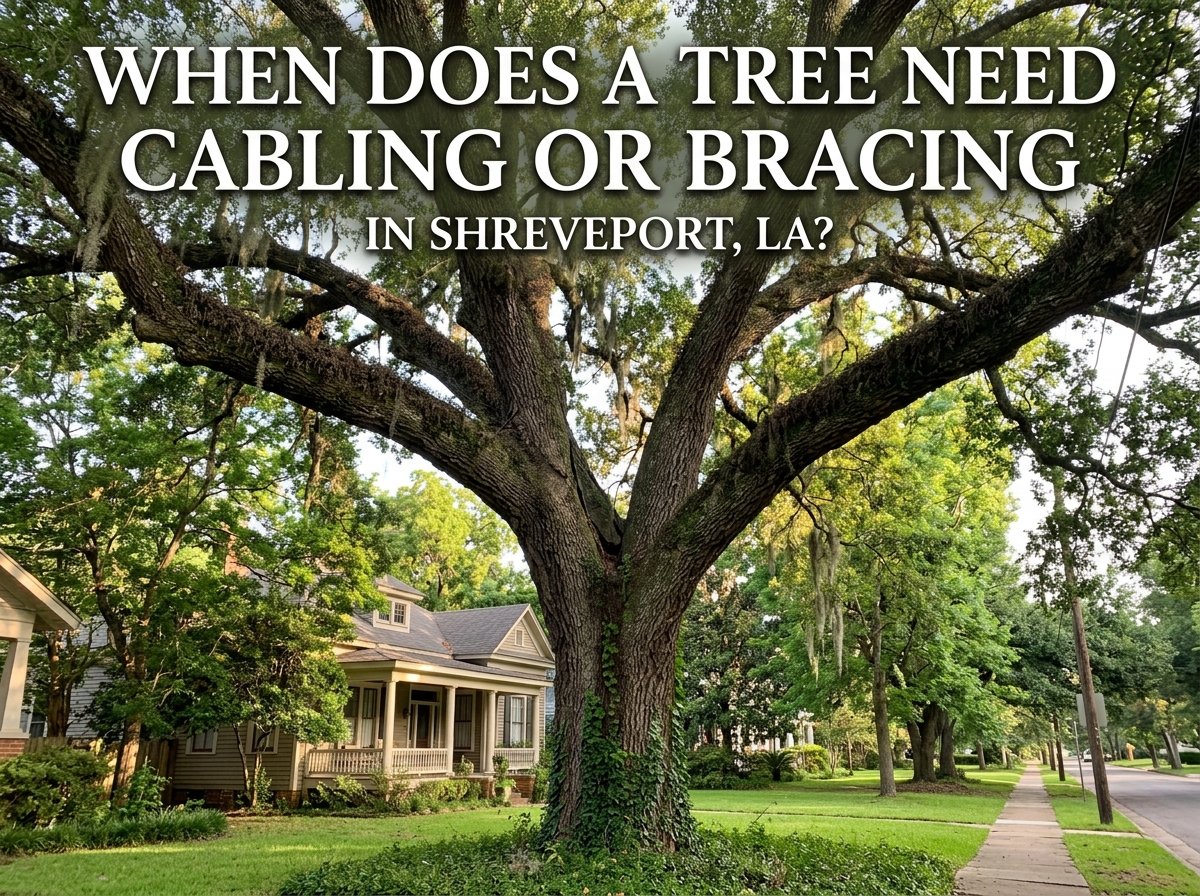
Selective pruning solves most clearance problems by shortening specific limbs back to healthy side branches. That kind of canopy management keeps branch weight distribution even. Topping is the wrong answer because stubbed limbs sprout weak growth and invite decay. Proper tree crown reduction fixes the conflict with the house and keeps the tree’s natural form.
Follow Recognized Tree-Care Practices
ANSI A300 pruning standards set the baseline for professional tree work in the U.S. and treat topping as unacceptable. ISA Best Management Practices show arborists how to apply those standards so every cut fits the species, health, and structure of the tree.
When Should You Hire an Arborist to Trim Tree Limbs Over Your House?
Branches over a roof are harder to handle than branches over a yard. Each limb has to come down without hitting shingles, gutters, or windows.
Stay off the roof and the ladder, since a cut limb can kick back without warning. Pros rig large limbs and lower them in sections. Cracks, heavy limbs, weak unions, and storm damage all call for an arborist risk assessment that covers branch condition, attachment strength, and property clearance. A licensed arborist can then decide whether selective pruning is enough and handle safe tree limb trimming over the home.
| Safety ReminderNever attempt to cut branches touching or hanging near energized power lines. Utility line clearance belongs to the utility provider or qualified line-clearance professionals, so contact them instead. |
Frequently Asked Questions
Should tree branches touching the roof be removed?
Have an arborist assess them, since repeated contact wears shingles and gutters. Selective pruning usually fixes it without removing the whole branch or tree.
Can you trim branches over a roof at any time of year?
Many trees take planned pruning best in late winter or early spring. Dead or damaged limbs can come off any time they pose a risk, and species and local conditions shape the rest.
How do you know if a branch over your house is dangerous?
Look for cracks, dead wood, hanging pieces, weak unions, and fresh storm damage. If you see any of these over the roof, have an arborist check it before the next storm.
Final Thoughts
Branches near a roof need trimming once they touch the house, crowd the gutters, or carry dead and cracked wood. Routine clearance can wait for the right season for each species, but a hazardous limb can’t. Tree Time Elite Tree Care helps homeowners across Northwest Louisiana sort out which of those two situations they’re facing. Owner Kevin Lee is a licensed arborist with the State of Louisiana, and the business brings 30 years of experience to tree trimming, pruning, and roof clearance work. If the limbs over your house have you worried, call (318) 470-5867 to set up an assessment or estimate.