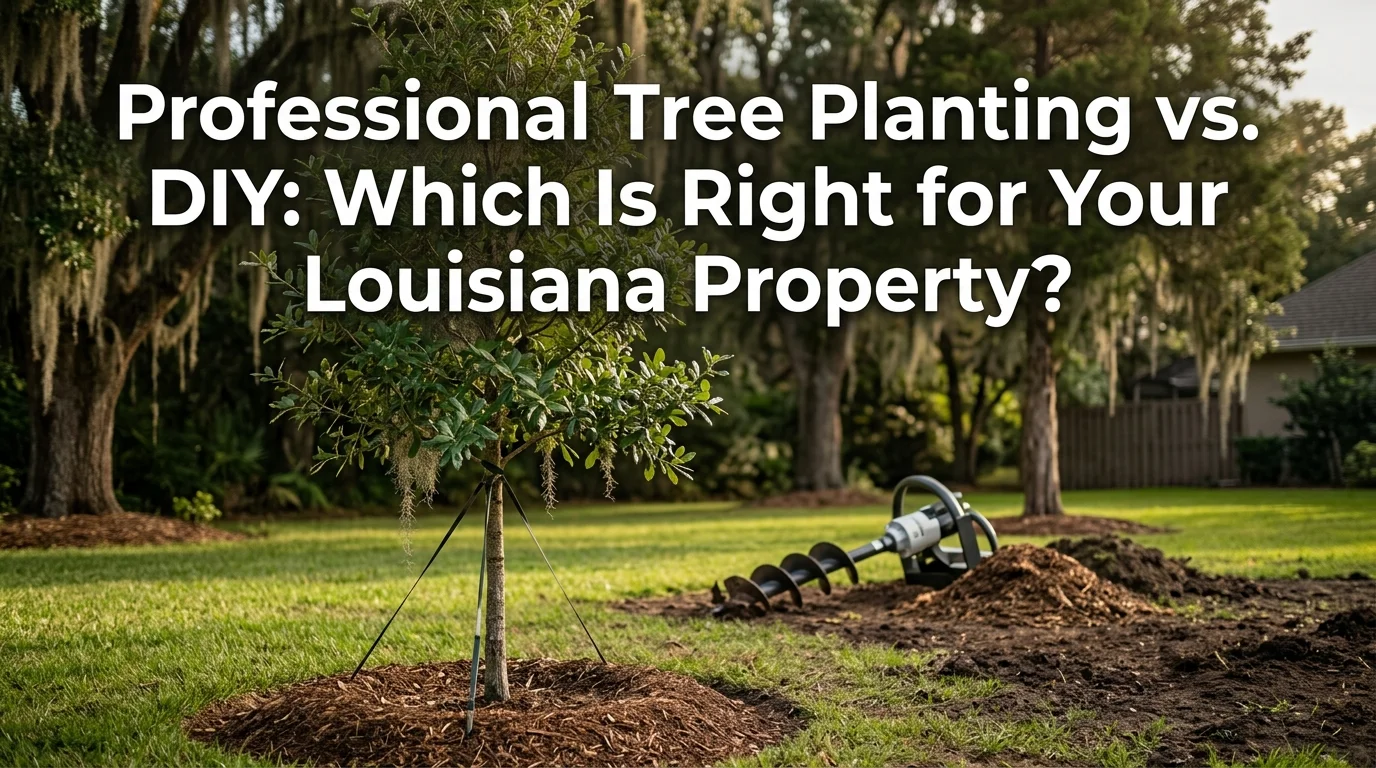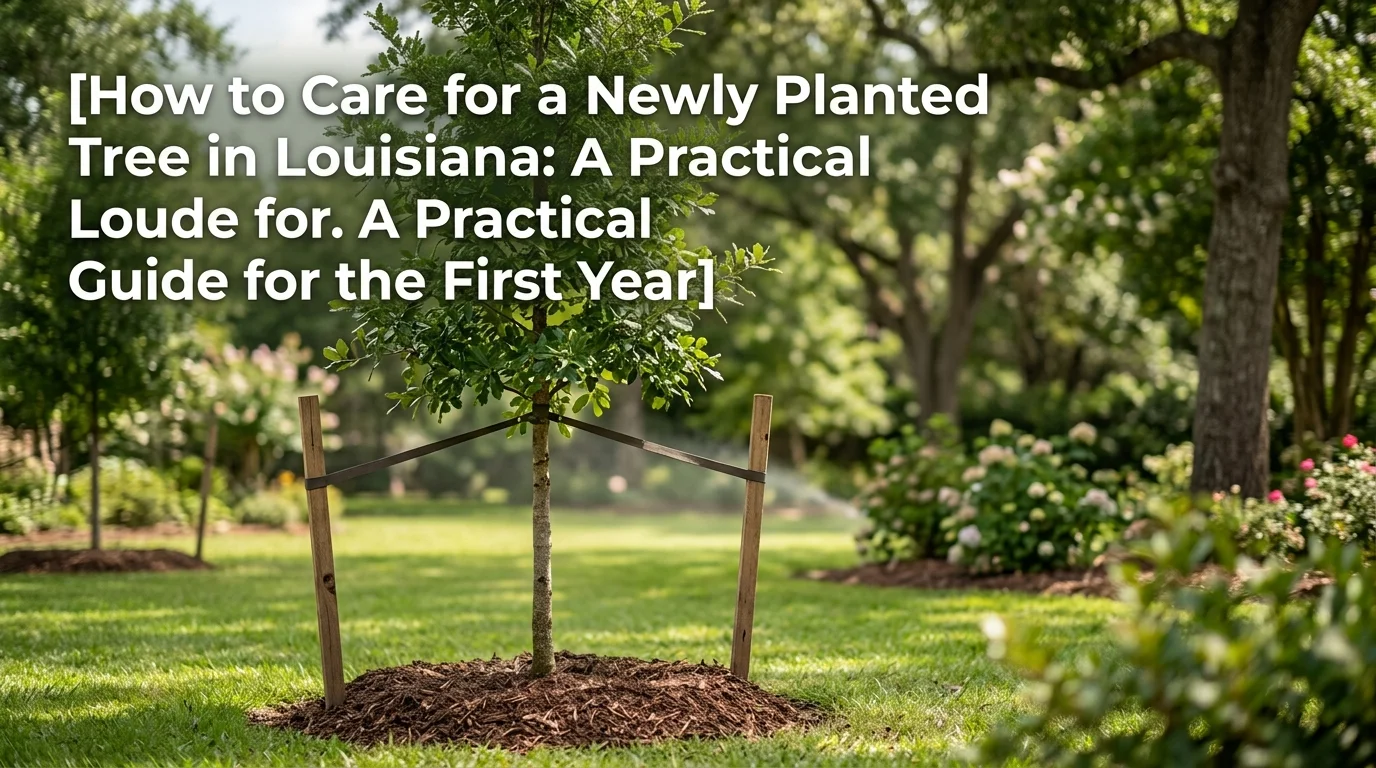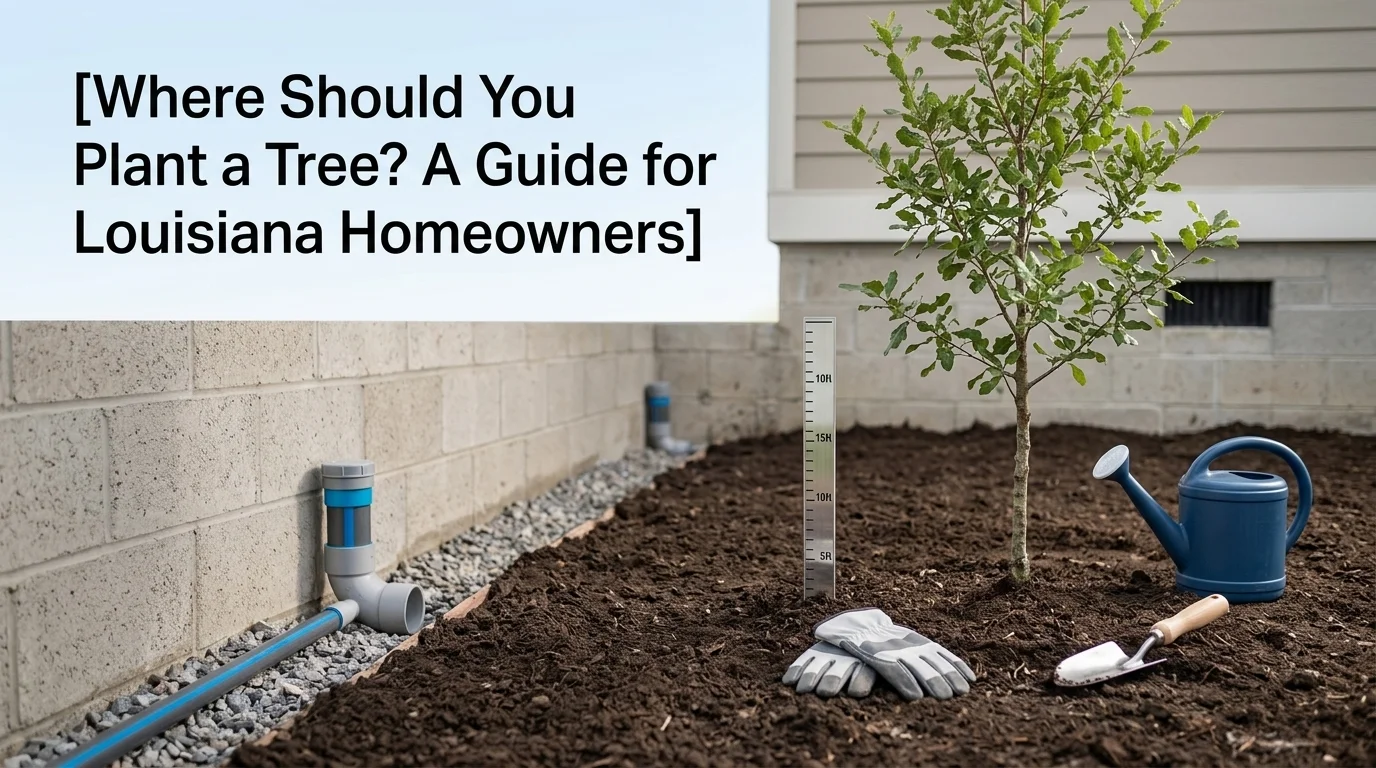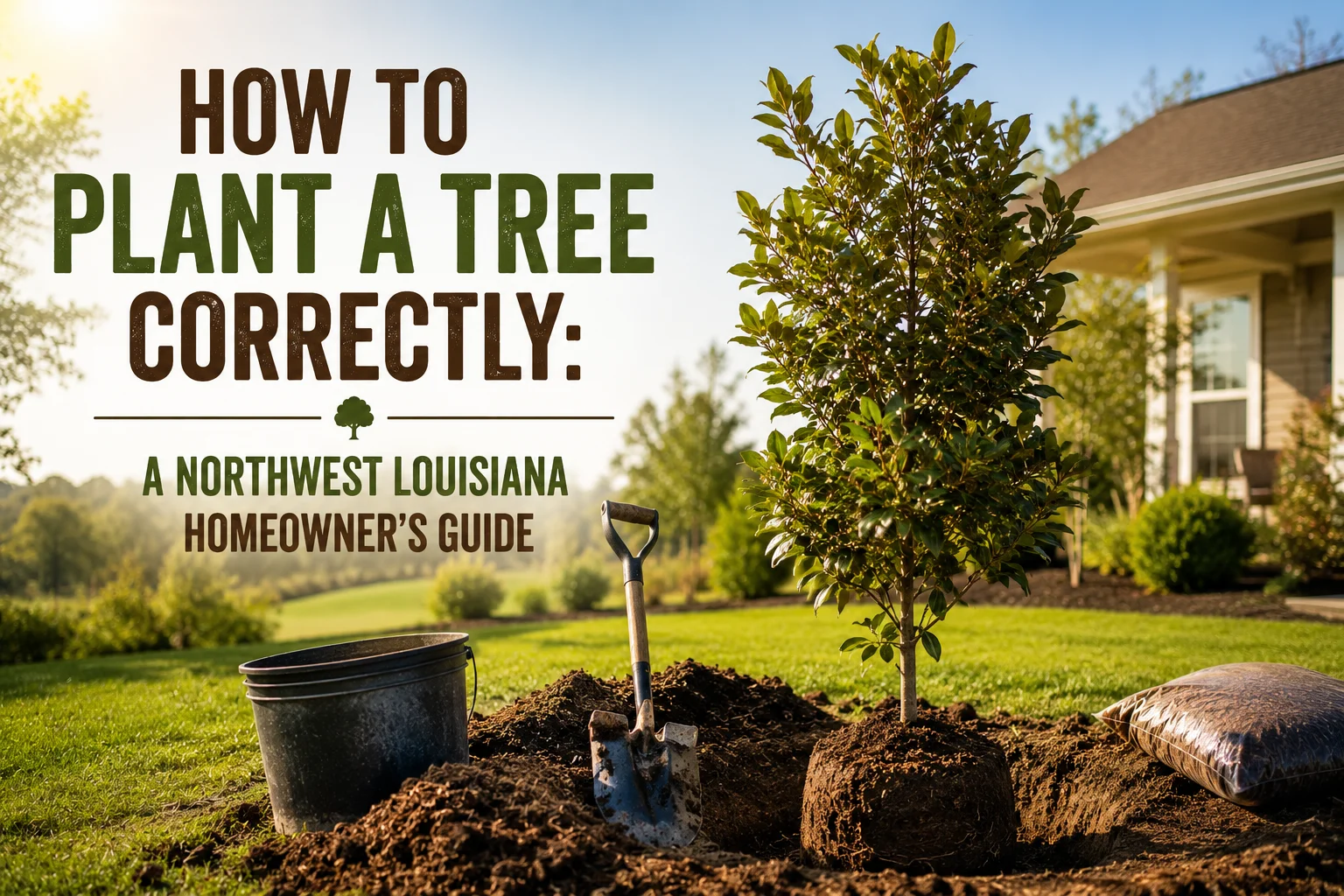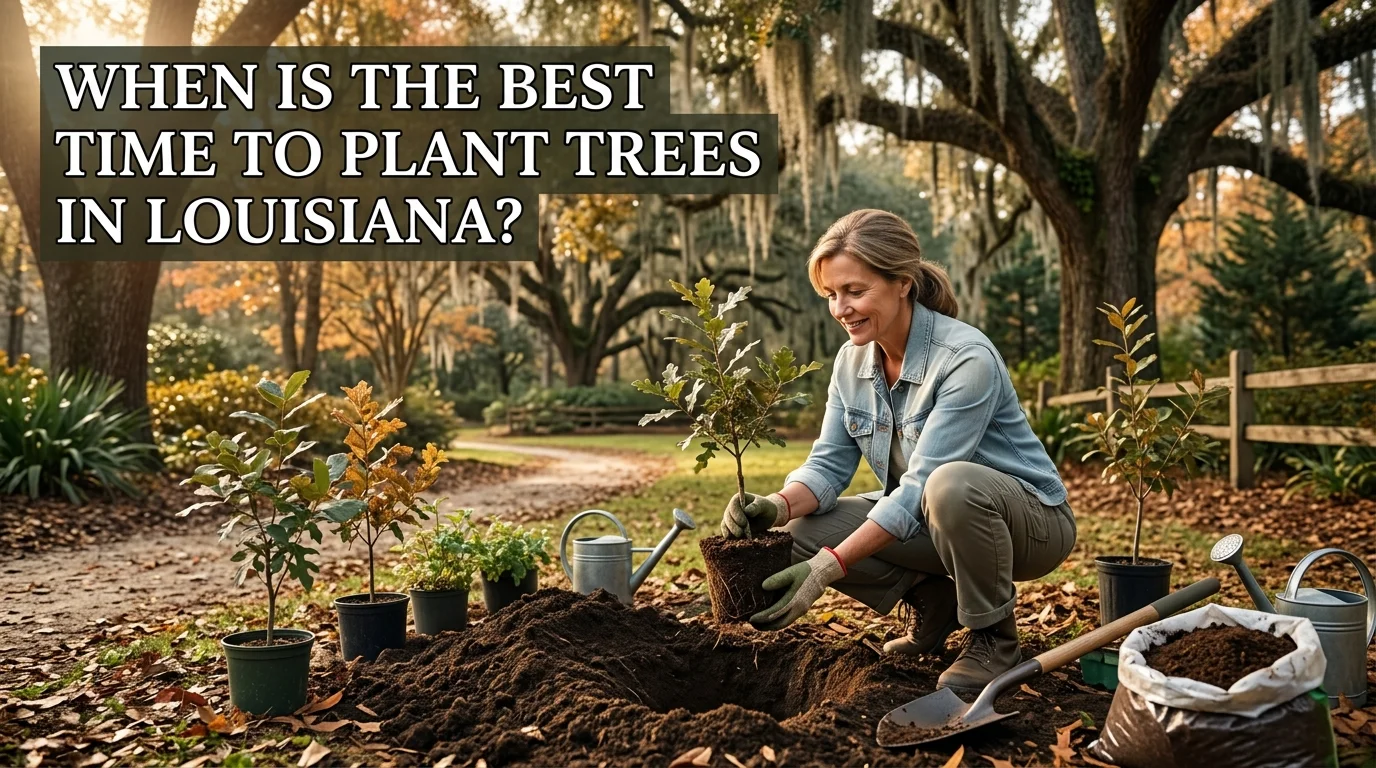

Tree installation in Princeton, LA involves much more than placing a tree in the ground. Every tree needs enough space, healthy soil, proper sunlight, and steady care to grow well. Poor planting can weaken roots, slow growth, and cause costly problems later. A planned process helps the tree adjust to its new location, build a strong root system, and stay healthy. Careful site selection and early maintenance also improve safety, appearance, and long-term growth during changing Louisiana weather conditions yearly.
Why Does Tree Installation Princeton LA Require Planning?
Tree installation in Princeton, LA starts with careful planning. Princeton sits in Bossier Parish in northwest Louisiana. Local trees must also handle summer heat and changing rainfall. Good planning prevents future trouble near roofs, pipes, driveways, and power lines.
A young tree may look small today. Its roots and canopy will keep expanding. Poor spacing can later damage roofs, pavement, or nearby plants.
Your goal should guide the plan. You may want shade, privacy, color, or better curb appeal. Each goal needs a different tree type and planting position.
What Should Be Checked Before Planting a Tree?
A site check should cover sunlight, drainage, soil, space, and nearby structures. The installer should also note overhead wires and underground utilities. Louisiana 811 accepts utility locate requests before digging. This step helps prevent damage and serious safety risks.
Watch the site after heavy rain. A low spot may need a moisture-tolerant tree. Another option is setting the tree in a slightly raised position.
Sunlight also matters. Full-sun trees need direct light for much of the day. Shade-tolerant trees can handle less. The wrong light level may cause weak growth or poor flowering.
How Do You Choose the Right Tree for the Site?
The right tree must match the planting site. Choosing the Best trees to plant requires considering mature height, canopy width, roots, and moisture needs. A tree that fits now may become crowded later. Local growing conditions should come before appearance.
Choose nursery stock with healthy bark and balanced branches. The root ball should feel firm and stable. Avoid major wounds and badly circling roots.
Louisiana has no perfect tree for every yard. LSU AgCenter recommends matching each tree to its location. Fall and winter planting often gives hardy trees more time to form roots before summer heat.
What Does the Tree Installation Princeton LA Process Include?
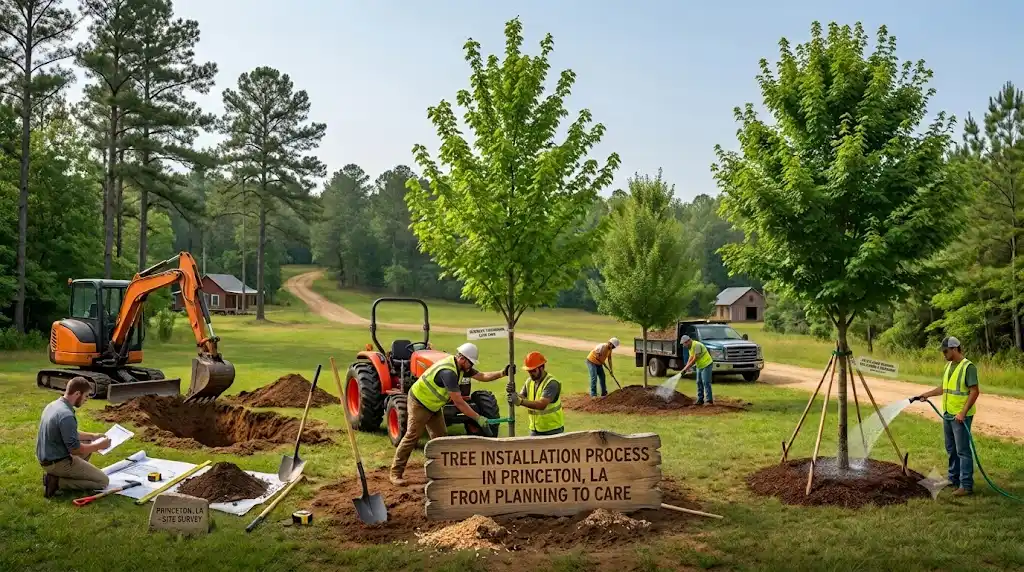
Professional tree installation in Princeton LA follows a clear order. The crew prepares the site and checks the roots. It then positions, backfills, waters, and mulches the tree. Support is added only when the tree needs it.
Rushing creates avoidable problems. Deep planting can limit oxygen around the roots. Hard soil and poor watering can also weaken root growth.
Step 1: How Is the Planting Area Prepared?
The installer marks the planting point and checks future space. Grass, weeds, and surface debris are then cleared. The planting hole is dug wider than the root ball. A wider hole gives new roots softer soil to enter.
The hole shouldn’t be deeper than the root ball. LSU AgCenter recommends digging it at least twice as wide. The root flare should remain visible near ground level.
Large trees may need equipment access. Planning the route protects lawns and nearby surfaces. It also makes delivery and placement safer.
Step 2: How Are the Roots Checked and Prepared?
The roots are checked before the tree enters the hole. Container trees often develop roots that circle the pot. Those roots should be loosened or corrected. Otherwise, they may restrict future root growth.
Lift the tree by its root ball, not its trunk. Plastic, synthetic wrapping, and non-degrading straps must be removed. Careless lifting can damage bark and separate roots from the soil.
The root flare is where the trunk widens into the roots. It should sit slightly above the nearby soil. Planting too deep is a common and damaging mistake. LSU AgCenter considers correct root flare position a key planting detail.
Step 3: How Is the Tree Positioned and Backfilled?
The tree is placed in the center of the hole. The installer checks it from two directions. This makes a lean easier to correct. Repositioning becomes harder after adding the backfill.
Native soil usually works best for backfilling. Too much rich amendment can create a soft pocket around the roots. The roots may stay inside that pocket. LSU AgCenter recommends using removed soil unless it is poor or contaminated.
Add the soil in stages. Break apart large soil clumps. Avoid pressing the soil down with heavy foot pressure. Water can settle the soil and remove hidden air spaces.
Step 4: How Are Water, Mulch, and Stakes Added?
The tree needs deep watering after planting. This moistens the root ball and settles loose soil. The soil should feel damp, not flooded. Standing water can reduce oxygen around the roots.
Mulch helps hold moisture and control weeds. A layer between two and four inches is usually enough. Keep mulch several inches away from the trunk. Mulch touching bark can trap moisture and cause decay.
Stakes aren’t needed for every tree. They help when wind or loose soil moves the root ball. Ties should remain flexible and loose. Remove the stakes after the tree becomes stable.
When Are Tree Transplanting Services a Better Choice?
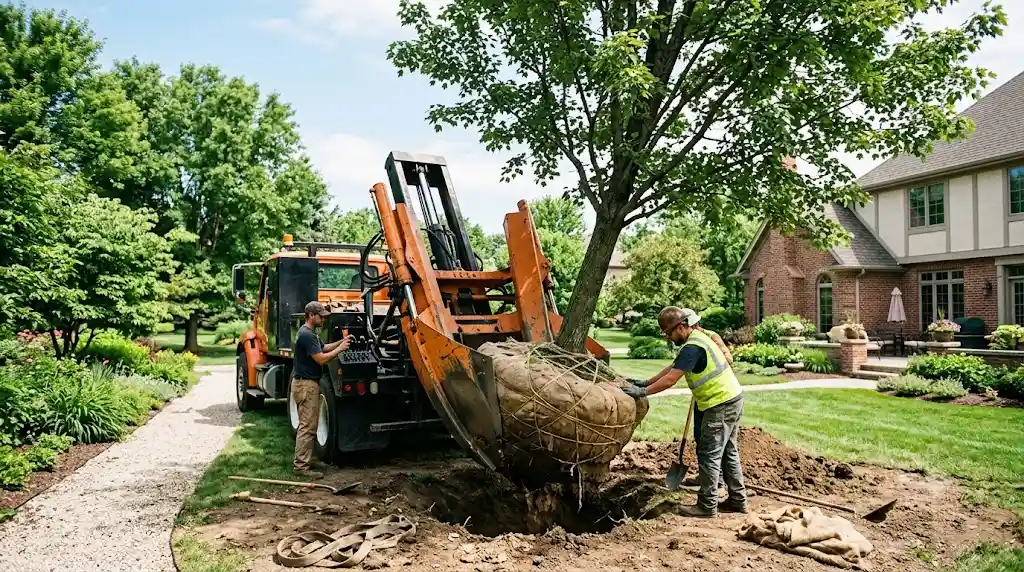
Tree transplanting services move an existing tree to a safer place. This may help when a tree blocks construction or crowds a building. Transplanting can save a valuable tree. However, it isn’t practical in every situation.
Size, species, access, season, and root health affect the result. Small trees are usually easier to move. Large trees need more equipment and a bigger root ball. Sometimes, installing a healthy new tree makes more sense.
How Is an Established Tree Moved Safely?
A professional first checks whether the tree can handle relocation. The crew reviews the trunk, branches, roots, and equipment access. The new site is prepared before lifting begins. This limits the time roots remain exposed.
The root ball must stay large enough to support the tree. Soil around it helps protect small roots. Proper equipment lifts and secures the tree. Workers shouldn’t drag the trunk or lift it by the bark.
After placement, the tree needs correct planting depth. It also needs watering, mulch, and regular monitoring. Transplant shock can still happen after careful work.
What Affects Tree Transplanting Success?
Success depends on root loss, weather, species, and aftercare. A healthy tree with a compact root system has a better chance. A weak or declining tree may not recover. Very hot or dry conditions can add more stress.
Dormant-season work often reduces stress for many trees. The tree has less active top growth to support. Its roots can begin adjusting before strong summer demand returns. LSU AgCenter says late fall through late winter is generally best for planting Louisiana trees.
What New Tree Maintenance Tips Matter Most?
New tree maintenance is simple, but it must remain consistent. Watering, mulch control, light pruning, and regular checks matter most. The first growing season is often the hardest. Missed care during hot weather can slow establishment.
A new tree can’t collect water from a wide area yet. Its roots remain close to the original root ball. Early care should focus on that area.
How Often Should a New Tree Be Watered?
Watering should follow soil moisture, weather, and tree size. The root ball should stay evenly moist. It shouldn’t remain soaked. Always check the soil before watering again.
Slow watering works better than a quick surface spray. It helps moisture reach the full root area. LSU AgCenter suggests about one to two gallons per trunk-diameter inch. Don’t add water when the root ball is already saturated.
Hot and windy weeks require more checks. Rainy periods may require less watering. A fixed schedule without soil checks can cause stress.
How Should Mulch, Pruning, and Fertilizer Be Handled?
Mulch should form a wide and flat ring. It shouldn’t form a tall mound against the trunk. Keep the root flare visible. Replace mulch only when the existing layer becomes thin.
Pruning should stay limited after planting. Remove broken, dead, or unsafe branches first. Heavy shaping can add stress while the roots are rebuilding.
Fertilizer is rarely needed during installation. Fast top growth can strain a small root system. LSU AgCenter notes that fertilizer during establishment doesn’t improve survival. A soil test provides better guidance than guessing.
What Warning Signs Need Quick Attention?
Warning signs include wilted leaves, leaf scorch, and a leaning trunk. Loose soil around the root ball may also show trouble. Standing water and buried root flares need attention too. These issues should be checked early.
Some leaf drop can happen after transplanting. Steady decline isn’t normal. Check soil moisture, planting depth, and stake pressure. Also check whether mulch is touching the trunk.
Should You Hire Professional Tree Installation Services?
Professional tree installation helps when a tree is large or costly. It also makes sense near buildings, utilities, slopes, or wet ground. A trained crew can judge the site and use proper equipment. This lowers the risk of tree and property damage.
Homeowners can sometimes plant smaller trees. The hole must still be wide. The root flare must remain visible, and watering must stay steady. Bad planting often leads to expensive replacement work.
Ask what the service includes before hiring. The quote should cover delivery, digging, installation, mulch, cleanup, and staking. It should also explain utility marking and aftercare responsibilities.
FAQS
What Is the Best Time for Tree Installation in Princeton, LA?
Late fall through late winter is usually the best period. Cooler weather reduces stress on many hardy trees. Roots can begin growing before summer heat increases water demand. LSU AgCenter lists late fall through late winter as Louisiana’s preferred tree planting season. Trees planted at other times need closer watering and heat protection. Soil moisture should be checked often during warm or windy weather.
How Long Does a Newly Installed Tree Need Extra Care?
A new tree needs close care through at least its first growing season. Larger trees may take longer because they must rebuild more roots. Watering needs change with rain, heat, soil, and trunk size. Check mulch and soil moisture often. New leaves don’t always mean the roots are fully established. Continue checking the root area during dry or very hot weeks.
Can a Mature Tree Be Moved to Another Part of the Yard?
Some mature trees can be moved, but the work is difficult. Success depends on species, size, health, root access, and equipment space. A large root ball must stay intact during lifting. The new site should be ready before digging starts. An arborist should inspect the tree before making a final decision. Weak or badly damaged trees may not survive the stress.
What Is the Biggest Tree Planting Mistake?
Planting too deep is one of the most damaging mistakes. The root flare should remain visible near the soil surface. Deep planting can reduce oxygen around roots and bury trunk tissue. Other mistakes include poor site choice, circling roots, excess mulch, and uneven watering. These details are easier to fix during installation. Proper depth and steady aftercare give roots a much stronger start.